

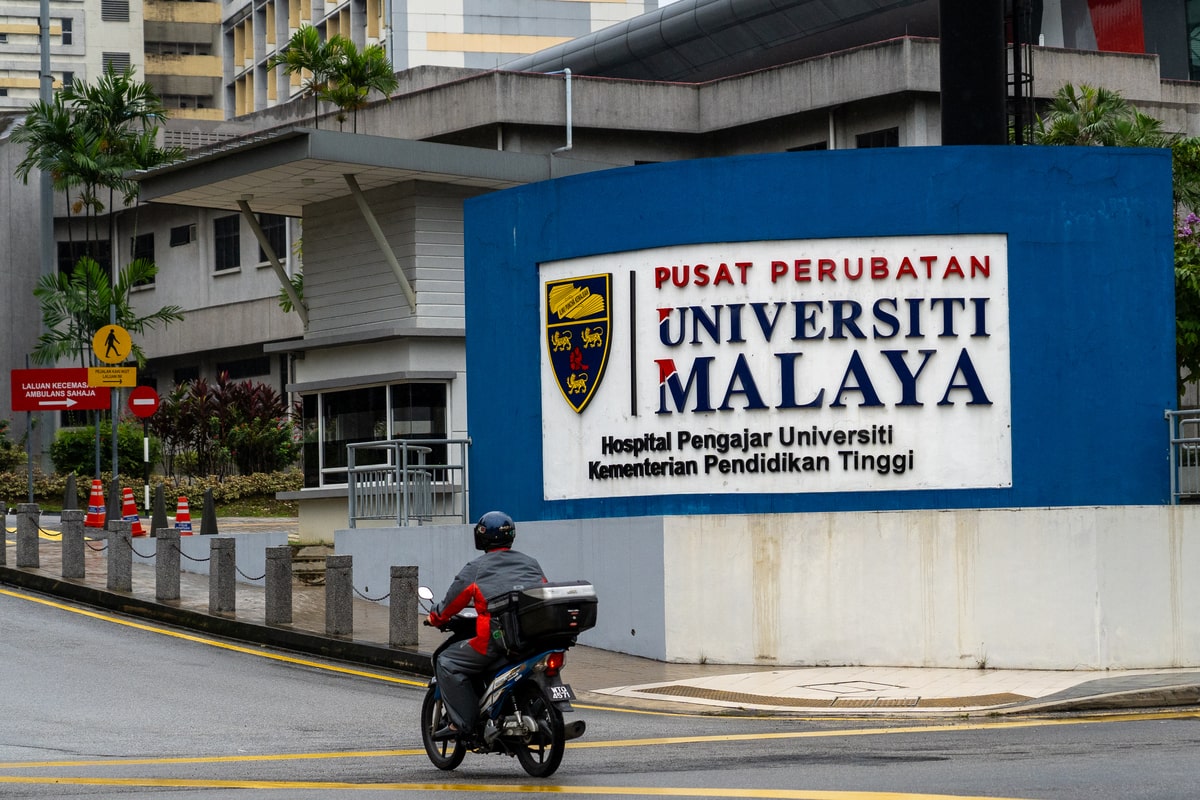
PUTRAJAYA, Jan 17 — A health economist has urged the government to increase its funding for Universiti Malaya Medical Centre (UMMC) by 100 per cent, after the university hospital raised its fees.
Prof Dr Maznah Dahlui, the deputy dean (development) of the Faculty of Medicine at Universiti Malaya, explained that as an autonomous hospital, UMMC is expected to raise its own revenue, aside from its budget from the Ministry of Higher Education (MOHE) that goes towards operations.
“Double than what we’re having now, I suppose,” Dr Maznah told CodeBlue at a town hall on diagnosis-related groups (DRG) at MOH’s headquarters here last January 9, when asked how much budget allocation UMMC wants from MOHE.
UMMC, a quaternary centre in the Klang Valley, received about RM476.8 million under Budget 2025. A 100 per cent increase translates to nearly a billion ringgit, or RM953.6 million.
Former Health Minister Dr S. Subramaniam previously highlighted the discrepancy in annual government funding between university and Ministry of Health (MOH) hospitals, noting that Kuala Lumpur Hospital (HKL) with about 2,300 beds gets some RM1.3 billion to RM1.5 billion, three times more than a university hospital, with over 1,600 beds, that gets federal funding of RM450 million to RM500 million.
UMMC revised its fees this year for all of its services, effective last Jan 1, citing the rising cost of medical consumables and equipment. Fees for consultation and ward admission at the public university hospital increased between 150 per cent and 233 per cent.
At MOH’s town hall, CodeBlue asked Dr Maznah why UMMC increased its fees by up to 233 per cent if the DRG model, which has been implemented in the university hospital for over three years, had indeed improved UMMC’s efficiency.
“With regards to the price increase, the DRG was not a reason for the price increase. We have not reviewed our charges since 2019; the one we did in 2019 was not comprehensive,” Dr Maznah replied.
She added that even though UMMC’s 2025 fees are double or triple the previous rates, the increases, if spread out over the past several years, aren’t “that much.”
“We definitely need to review our charges because of so many issues. We still get our budget, quite a big portion, from MOHE,” Dr Maznah said.
“But of course, with the expansion in our services, more complicated cases that we see, new medical technology that we bring in, we definitely need more budget.”
At the town hall, CodeBlue asked the panel – which included health economist Prof Dr Syed Mohamed Aljunid Syed Junid from IMU University – whether DRG was merely a budgeting tool for administrators instead of a huge solution for the health care system, as problems with underpaid staff, dilapidated wards, and long wait times persist.


