

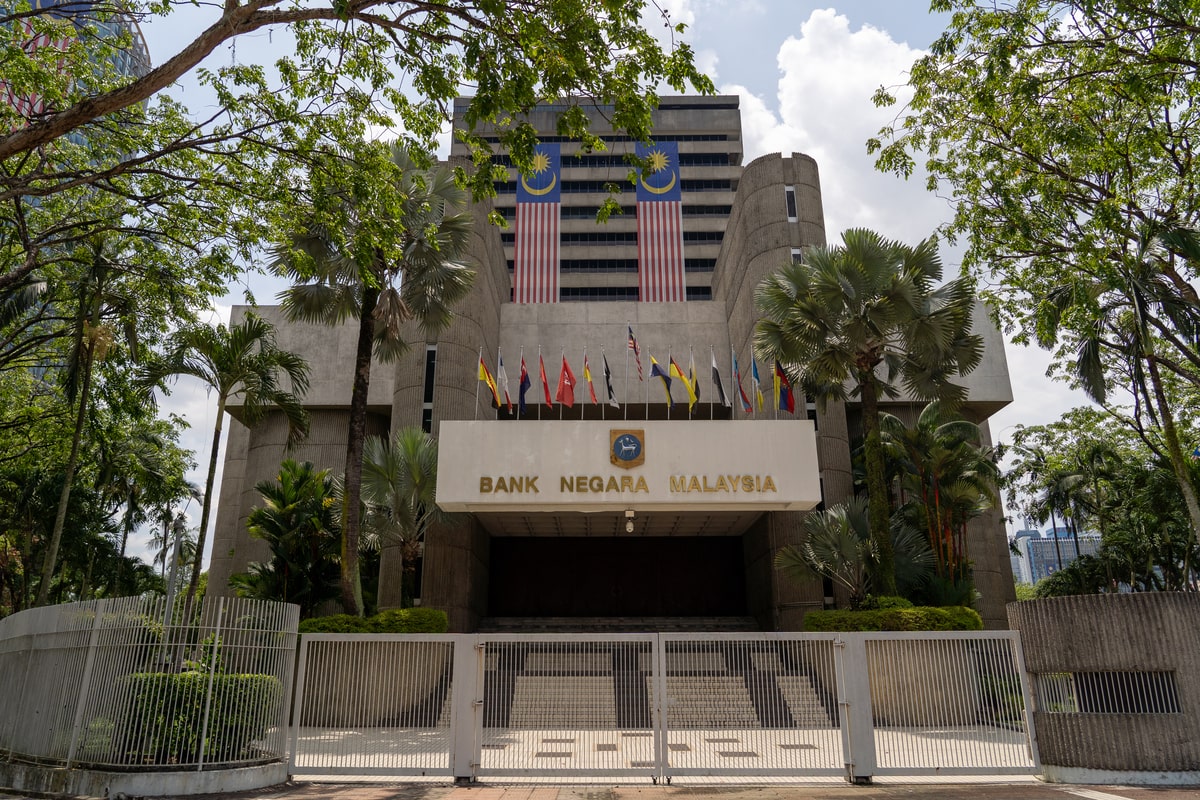
My previous write-up on CodeBlue dated December 23, 2024 briefly highlighted Bank Negara Malaysia’s (BNM) interim measures on December 20, 2024, to address the Malaysian insurance industry premium revision in 2025.
This write-up will address the impact and sustainability of the BNM decisions and present some options for the government, BNM, and the assurers to consider.
BNM Interim Measures: Premium Adjustments
The measures announced are not measures by BNM to help the industry address its challenges; they are issued instructions to companies to appease politicians and public concerns.
The announcement includes spreading the proposed premium adjustment over the next three years, rather than one significant price adjustment in 2025.
However, these restricted premium increases may not apply when a policyholder moves to a higher age band, which means new and intra-band policy owners will be subjected to a 10 per cent premium increase in 2025.
Depending on age, most people will be charged a 10 per cent or higher premium. For those whose age at the next birthday falls into a new age, the price revision can be more than 10 per cent.
For policy owners aged 60 and above, price revision is frozen for one year, but the price will increase subsequently. They will have a one-year reprieve.
BNM requires all assurers to provide appropriate alternative health products at the same or lower premiums for policyholders who do not wish to continue their existing health plans that have been repriced not later than the end of 2025 without the need to do any additional underwriting or being imposed with switching costs.
The sustainability of the proposed measures is a concern. The industry price increase is now broken up annually instead of adjusting once every three years. The public doesn’t realise they are paying more in the long run with the introduced measures, as claims are increasing annually, meaning that policy owners will pay a higher sum yearly.
The fire-fighting measures are not sustainable. They are meant to appease public concerns and political pressure. The assurers are not addressing the underlying issues. They are merely pricing products based on claims charged by the private hospitals.
Assurers failed to lock in the service prices with private hospitals, and some are victims of TPAs that practice double dipping (earning from both sides) while processing the claims.
The Leaking Faucet
Most assurance companies’ have not repriced their products in the last three years. However, private hospitals have been revising their prices to focus on their P&L instead of balanced financial gains with social and ethical considerations.
As highlighted previously, the combined revenue of KPJ Healthcare Bhd (KPJ) and IHH Healthcare Bhd (IHH) is RM7.1 billion, representing 25.6 per cent of the market share in 2023 (23 per cent in 2022). It demonstrates the lucrative nature of the health care business.
KPJ’s revenue in 2023 was RM3.42 billion (RM2.87 billion in 2022), and their net profit for FYE2023 was RM263.41 million (RM166.98 million in FYE2022).
IHH revenue in 2023 was RM3.68 billion (RM3.0 billion in 2022), and net profit for FYE2023 was RM2.95 billion (RM1.55 billion in FYE2022).
As long as private hospitals increase their charges unreasonably and see insurers as their honey pot, no premium adjustment would be sustainable. To assurers, private hospitals are like an unrepairable leaking faucet.
The premium revision will always be painful if these leaks are not repaired. In Malaysia, private hospital charges are not regulated, but the specialist fees for consultation and procedures are regulated under Schedule 13 of the Private Healthcare Facilities and Services Act (PHFSA) 1998.
It is morally and ethically inappropriate for health care companies to make a double-digit profit growth in the likes of KPJ (58 per cent) or IHH (90 per cent).
We must accept that private hospitals will not take any steps to reduce their pricing without any government intervention or being forced into having prenegotiated pricing with insurers. There is no motivation for them to do so. Their shareholders, being GLCs, are pushing the price as they expect a good dividend.
Options For Insurers
Policy owners want cheaper assurance premiums, and insurers can accommodate by selling reimbursement hospitalisation products with or without copay arrangements alongside their current cashless products.
Reimbursement and cashless products must be subjected to “inner limits” and “overall bill limits.”
Policy owners will appreciate the price difference they must pay, control their utilisation, and question hospitals’ excessive charges. To be fair to policy owners, insurance companies must reimburse all admissible claims within 30 days, and for any late reimbursement, policy owners shall be compensated at the same rate as credit card monthly charges (1 per cent monthly of the outstanding amount or whatever the charges credit company imposed on the bill late payment).
This will help ensure that insurers will improve the claim reimbursement experience.
Another option for insurers is for insurance companies to work collectively in one voice and engage individual hospitals to work out fair hospital charges. Insurers have ample data to work on this and justify their hospital payment. This is a shortcut towards a Diagnosis-Related Groups (DRG)-like mechanism.
The amount insurers pay the hospitals deserves a considerable discount, as the amount of business they give hospitals is quite substantial. Non-compliant hospitals shall be removed from their cashless panel.
Insurers must see health business as a service to their policy owners who buy other life products.
Options For BNM
BNM must find ways to reduce insurers’ business costs and limit their after-tax earning to about 5 per cent, and takaful operators must also earn the same net wakalah fee. BNM should not allow surplus-sharing mechanisms for takaful health business portfolios and impose a regulation where health assurance can only be offered as a rider to a life product.
It must be provided as a service to life policyholders.
Assurance company health portfolio after-tax profit should be capped through regulation at 5 per cent, and any excess profits are returned to the assurance fund.
Both takaful and insurance companies should separate their health and life funds to ensure that actual health insurance claims experiences emerge and transparency in the health portfolio accounting.
One of the critical cost contributors to assurers is the legal provision for Capital Requirements (CR). CR amount should be reduced or waived for health products as they are an annual risk with no long-term liability.
The overall company-level CR needs can be derived from other products to protect customer interest. The CR waiver should be given to companies that develop hospital reimbursement products. This will encourage assurers to sell hospital reimbursement products.
BNM should use its regulatory powers to push companies to sell reimbursement products at substantially lower costs, as the burning rate is much lower.
These actions improve the company’s liquidity, reduce capital costs, and address the notion that assurers are making excessive or humongous profits from health products. It will reduce their product prices, and hospitals will indirectly have to lower prices and explain their charges to the patients.
The introduction of a hybrid copay mechanism will help the assurance industry. Copay should be waived for treating chronic illnesses but made compulsory for treating acute diseases.
Options For The Government
To understand the proposed options, the government and the public must appreciate that private hospitals and private hospital doctors are separate entities. The following proposed options are targeted at the companies.
The following options should apply when doctors use a company as a practicing business vehicle, either as general practitioners or specialists. Medical vendors like labs, drug companies, and outsourced services companies like pharmacies, labs, radiology, and nursing companies must be treated similarly to private hospitals from a tax treatment perspective.
There is some degree of conflict of interest for the government when regulating private hospitals. GLCs own these hospitals, and the government indirectly earns taxes and dividends from them.
Therefore, putting in a price intervention mechanism in this company would be complicated and intricate.
They have to consider the impact on investors in the health care sector. There is a need to study whether there is a need to regulate private hospital vendors as they are contributors to hospital costs and indirectly affect treatment charges.
The Private Healthcare Facilities and Services Act must be amended so the government can intervene. Despite making changes in the law, there is no guarantee that the government has the political will to regulate prices.
The government should view the health care business as a social-linked business. As such, net after-tax profits should be capped at 5 per cent to 8 per cent. Anything in excess should be contributed to the National Health Fund through the Inland Revenue Board.
This profit cap should be imposed on private hospitals and General Practitioners’ company income.
DRG has gained traction in the political circle recently. It should be introduced in an environment with one health care system, i.e. government medical services are corporatised and compete with private hospitals. DRG is an essential price referencing element but not critically needed in a National Healthcare Financing Scheme (NHFS) implementation.
At this stage, setting up a task force or team at the Prime Minister’s Office (PMO) or the Ministry of Finance (MOF) is far more critical in developing NHFS. This task force must comprise people from the private sector with various areas of expertise.
The primary task is establishing a legal framework to support setting up and operationalising the National Health Fund, which is independent and statutory. The other components of NHFS can follow suit or run concurrently.
Conclusion
BNM’s interim measures address the current public and political storm. This is not a sustainable solution, and BNM has not offered sustainable long-term solutions. BNM cannot frequently introduce periodical interim measures.
The regulator and the government must find a permanent fix for the current predicament. It requires a delicate strategy and intimate knowledge of the medical business, insurance, statutory fund management, and corporatisation.
It is not the sole responsibility of the government and BNM to address this cyclical issue. Assurers, too, need to play their part to halt the hospital pricing onslaught.
They must negotiate hospital pricing collectively as an industry and reintroduce reimbursement hospital products. They don’t need the Ministry of Health (MOH), BNM, or any government agencies to be the bridge between them and the hospitals. It’s a purely commercial transaction that they must initiate on their own.
Private hospitals and other medical vendors must contribute excessive tax profits to the National Healthcare Fund as part of their social contributions.
Dr Mohamed Rafick Khan, a reassurer and assurance industry consultant, is a trained physician with 12 years of experience in military medical services and over 22 years of experience in the assurance industry. He retired as the CEO of a multinational reinsurance company in 2019. Currently, he remains active as an independent international assurance industry consultant.
- This is the personal opinion of the writer or publication and does not necessarily represent the views of CodeBlue.


