

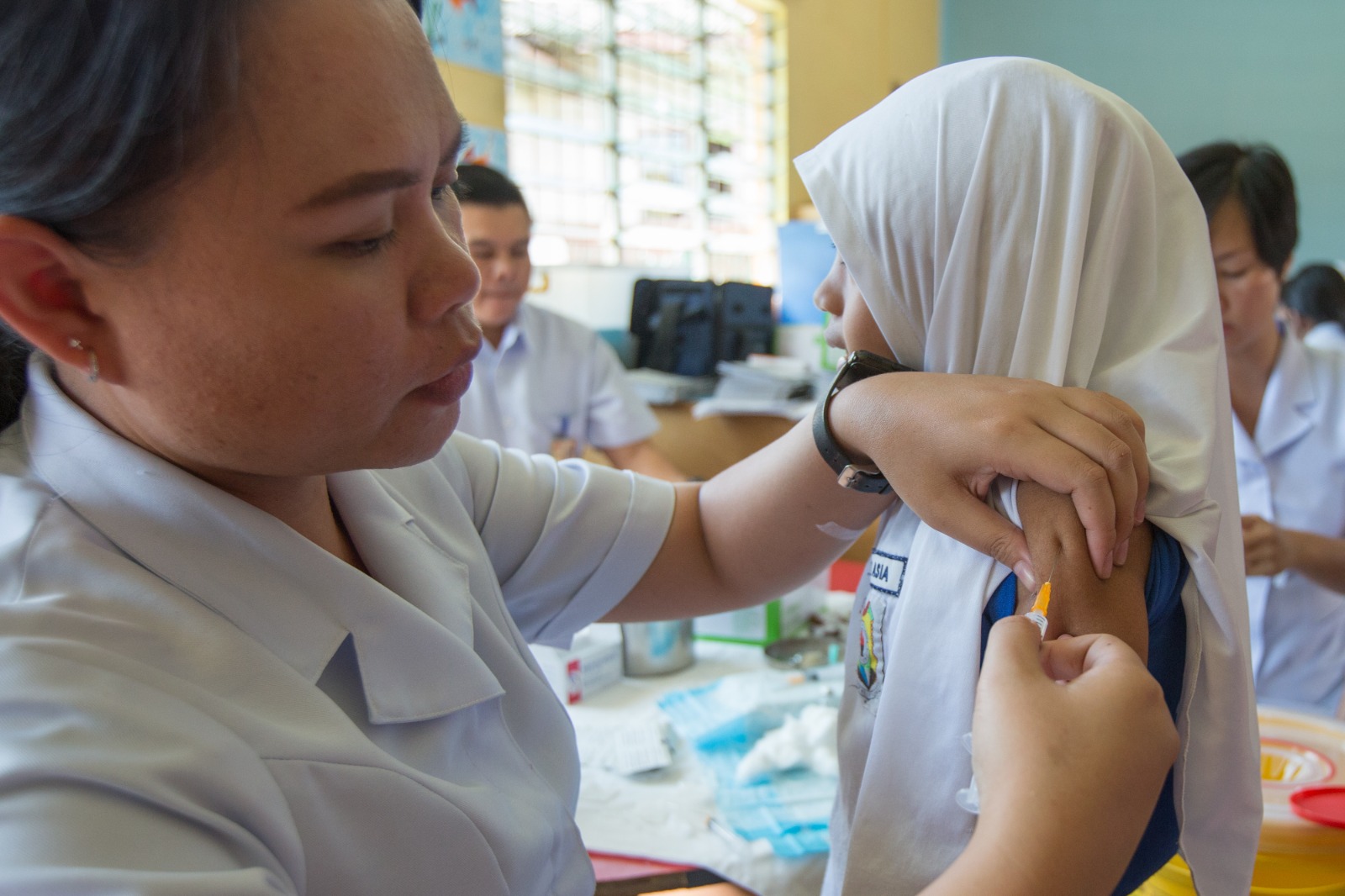
All three are doctors. A primary care doctor is a doctor, a hospital doctor is a doctor, and a public health doctor is also a doctor.
All practise medicine. What differs is their function, the level at which they work, and — in a practical sense — who their “patient” is:
- For the primary care doctor, the patient is usually the individual and family in front of them.
- For the hospital doctor, the patient is usually an individual who needs deeper diagnostic, procedural or specialist care.
- For the public health doctor, the “patient” is often a population.
That difference is important because Public Health Medicine is sometimes misunderstood as administrative work simply because many public health doctors are based in places called Pejabat Kesihatan Daerah (PKD), Pejabat Kesihatan Kawasan (PKK), or Pejabat Kesihatan Bahagian (PKB).
There may be meetings, reports, surveillance data, dashboards, and programme reviews. From the outside, it can look like office work.
But the office is only one working base. The medicine happens across communities, clinics, hospitals, laboratories, workplaces, schools and other agencies.
TB Shows the Difference Clearly
Take tuberculosis (TB), for example. A primary care doctor may be the first person to see a patient with prolonged cough, fever, weight loss, or haemoptysis.
The doctor assesses the patient, suspects TB, arranges investigations, refers when necessary, manages common comorbidities and supports treatment continuity. The primary care function is close to the patient, family and community.
Then there are hospital doctors. A respiratory physician may manage severe or complicated pulmonary TB. An internal medicine physician may deal with major comorbidities.
A radiologist interprets imaging. A pathologist or microbiologist helps establish the diagnosis and identify drug resistance. Orthopaedic or spinal teams may become involved when TB affects bones or the spine. Their collective function is specialist clinical care.
The public health doctor starts with the same disease but asks different questions:
- Why is TB occurring within this population?
- Where is the transmission happening?
- Who else may have been exposed?
- Are cases being detected early enough?
- Are contacts being investigated?
- Are patients being lost somewhere between hospital diagnosis, primary care, and follow-up?
- Are some communities, workplaces or institutions experiencing more cases than others?
- Are ventilation, crowding, or working conditions contributing to the spread of the disease?
- Are diabetes, smoking, undernutrition, or other risk factors affecting disease burden and outcomes?
These are medical questions too. The difference is that they are asked at population and health-system level. That is why describing Public Health Medicine as “administration” misses the point.
The Clinical Knowledge Is Still Needed There
A public health doctor still needs to understand disease clinically. To interpret TB surveillance properly, it matters whether the cases are infectious pulmonary TB, extrapulmonary TB, drug-resistant disease, recurrent disease, or treatment failure.
It matters what the laboratory result means, what the radiology suggests, whether the treatment regimen is appropriate, whether adverse effects may affect adherence, and whether diabetes or another condition changes the patient’s risk.
Without clinical knowledge, population data can easily become numbers without meaning.
Public Health Medicine takes that clinical knowledge and integrates it with epidemiology, prevention, health protection, health services, and policy and population-level decision-making.
That integration is what clinical public health is about. It connects clinical medicine’s understanding of individual illness with public health’s responsibility for populations, prevention and systems.
More Than Clinical Governance
Public Health Medicine is also more than clinical governance.
Clinical governance is important. Quality, safety, appropriateness of care and service performance matter. But Public Health Medicine goes much further.
The World Health Organization’s (WHO) Essential Public Health Functions include surveillance and monitoring, emergency management, public-health stewardship, multisectoral planning, health protection, disease prevention and early detection, health promotion, community engagement, workforce development, quality and equity of health services, research and evaluation, and access to essential health products and technologies.
TB can touch almost all of them:
- Surveillance tells us where the burden is.
- Epidemiology helps us understand patterns of transmission.
- Health protection addresses risks in health care facilities, workplaces and other settings.
- Primary health care supports detection and continuity of care.
- Family health identifies vulnerable household contacts.
- Occupational health considers worker exposure.
- Environmental health looks at ventilation, crowding and other conditions affecting transmission.
- Non-communicable disease epidemiology becomes relevant when diabetes, smoking and other risk factors influence TB risk and outcomes.
- Health management asks whether the workforce, laboratories, medicines, referral pathways and services are organised around actual population needs.
- Research and evaluation tell us whether the programme is working. That is far broader than overseeing clinical standards.
Different Doctors, Different Functions
The point is not that one type of doctor is more important than another. Their functions are different:
- The primary care doctor may ask: What does this patient and family need over time?
- The hospital specialist may ask: What specialist diagnosis or treatment does this patient require?
- The public health doctor may ask: What does this case tell us about the population, and what needs to change so that fewer people develop disease, are diagnosed late, suffer complications or transmit infection to others?
All three questions are medical questions, require medical judgement, and are part of the same health system.
Malaysia’s own Public Health Medicine competency requirements reflect this. Training includes epidemiology, biostatistics, environmental and occupational health, family or population health, health policy and health-services management.
Specialist competencies include Applied Clinical Practice in Public Health, monitoring population health, public-health consultation, immediate-risk mitigation, policy and programme development, communication and collaboration.
This is not training for an administrator, but training for a doctor who must understand disease, populations and systems at the same time.
The ‘Patient’ Is Different
Perhaps the simplest way to explain Public Health Medicine is as follows:
- A primary care doctor sees the patient and family.
- A hospital doctor sees the patient who needs specialist care.
- A public health doctor sees the population behind those patients.
Sometimes that population is a district. Sometimes it is a workplace, a school, an institution, a vulnerable group or everyone exposed to a particular health threat.
The public health doctor may still discuss individual cases, review radiographs, interpret laboratory findings and speak with clinicians.
But the purpose is often to understand what those cases mean collectively and what population-level action is needed.
The consultation room is simply larger, and so is the responsibility.
There is administrative work in Public Health Medicine, just as there is administrative work in every medical specialty. But administration is not the specialty.
Public Health Medicine is clinical public health: integrating clinical knowledge and medical judgement with epidemiology and the Essential Public Health Functions to protect and improve the health of populations.
A public health doctor may work from a Health Office, but that does not make them an “office doctor”. Their consultation room extends beyond four walls — it covers the whole population under their responsibility.
References
- Choi, B. C. K., Pakes, B., Bilotta, R., Graham, K., Gupta, N., et al. (2021). Defining clinical public health. Clinical and Investigative Medicine, 44(2).
- Choi, B. C. K., King, A. S., Graham, K., Bilotta, R., Selby, P., Harvey, B. J., et al. (2022). Clinical public health: Harnessing the best of both worlds in sickness and in health. Health Promotion and Chronic Disease Prevention in Canada, 42(10), 440–444.
- Kindig, D. A., & Stoddart, G. (2003). What is population health? American Journal of Public Health, 93(3), 380–383.
- Malaysian Medical Council. (2025). Specialty-Specific Requirements (Public Health Medicine): 1st Revision. Malaysian Medical Council.
- World Health Organization. (2024a). Application of the essential public health functions: An integrated and comprehensive approach to public health. World Health Organization.
- World Health Organization. (2024b). Global competency and outcomes framework for the essential public health functions. World Health Organization.
The author is a specialist doctor. CodeBlue is providing the author anonymity because civil servants are prohibited from writing to the press.
- This is the personal opinion of the writer or publication and does not necessarily represent the views of CodeBlue.


