

PUTRAJAYA, August 4 — Artificial intelligence (AI) can help livestock farmers reduce antibiotic use by identifying only sick animals that need treatment, instead of routinely medicating entire groups of animals, a veterinary expert says.
Prof Dr Goh Yong Meng, dean of Universiti Putra Malaysia’s (UPM) Faculty of Veterinary Medicine and chair of the Education and Promotions Committee of the Animal Welfare Board (AWB), said AI-driven monitoring systems can detect early signs of disease through animal movement, sound, and biometric data, enabling targeted treatment while supporting efforts to curb antimicrobial resistance (AMR).
Speaking at the Global Animal Production and Veterinary Industry Summit (Gavis) 2026, Dr Goh cited a pig farm in China that uses AI to detect coughing among individual animals.
“There was actually a mechanism established in a farm in China, whereby they can actually reduce antibiotic use by using AI to detect coughing in a particular cage rather than giving blanket antibiotics to the entire pens of pigs,” Dr Goh said during his presentation at GAVIS 2026 on July 21.
“You just use movement and sound to detect which are the animals that are actually coughing. And those animals could be the ones requiring treatment.”
He said the idea reflects a broader shift taking shape in animal agriculture, where advances in sensors, biometric monitoring and predictive AI are making it possible to track the health of individual animals, rather than treating a herd or flock as a single unit.
Dr Goh said continuous monitoring of movement, stress indicators, and other biological signals could enable veterinarians to intervene much earlier before illness spreads and large-scale antibiotic treatment becomes necessary.
“This will actually allow us to intervene accurately with the animals that require our attention in the very first instance and the ones that require our attention the most,” he said. “This will be much better than blanket prophylactic antibiotic use.”
Dr Goh said the technology is not simply about improving efficiency but also about changing how humans care for the animals they raise.
“We can monitor the animals individually through prevention, individual tracking and predictive care,” Dr Goh said. “This again contributes to our One Health and One Welfare concept. By safeguarding animals, humans and the environment alike, we ensure that this will be sustainable.”
Animal Welfare Is A Public Health Strategy

The One Health concept recognises that human, animal and environmental health are interconnected. Dr Goh said animal welfare should therefore be viewed not only as an ethical obligation but also as a public health strategy.
“It is important because you don’t stress the animals, so they don’t become a hotbed of diseases that are going to affect human societies,” he said.
Dr Goh argued that improving welfare reduces the conditions under which infectious diseases emerge and spread, lowering the risk of future zoonotic outbreaks.
“Animal welfare is not an isolated moral choice anymore,” he said. “It is an inescapable ecosystemic requirement to safeguard ourselves.”
Yet modern livestock production often moves in the opposite direction, he said. For decades, breeding programmes have produced animals that grow faster, yield more milk, or produce more meat, making food production more efficient while placing increasing physiological demands on the animals themselves.
“We produce animals that grow faster, we produce animals that give more milk and all kinds of things, but not without properly understanding the physiological burden on them,” Dr Goh said.
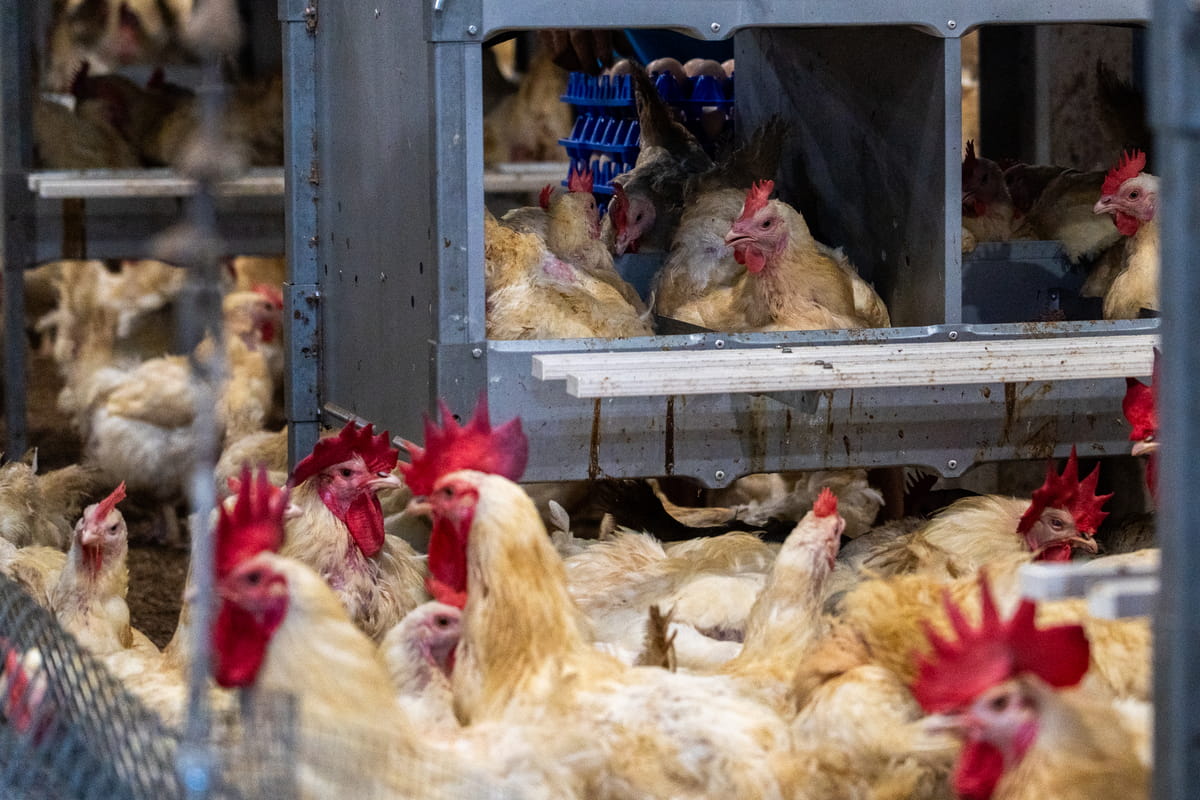
He pointed to broiler chickens bred for rapid growth, saying some develop bone disorders because their skeletons struggle to support their weight.
“The key thing here is stress,” he said. “If you impose that, you are going to get into all kinds of problems like AMR and other issues. So the key word here is balance.”
Animal Welfare Matters For Trade
Animal welfare is also becoming an economic issue, Dr Goh said, as countries tighten import requirements for livestock and animal products and welfare standards increasingly function as trade requirements rather than voluntary guidelines.
Dr Goh said Malaysia’s Animal Welfare Act 2015 was introduced in part to help ensure the country could continue importing live animals from countries with stringent welfare expectations, including Australia.
“One way to ensure that Malaysia could continue importing live animals was to have a well-established welfare code,” Dr Goh said. He added that standards imposed through trade can sometimes accelerate improvements in animal welfare.
“Tariffs and standards would be good to some extent,” Dr Goh said. “They will push, let’s say, animal welfare standards in certain countries that initially did not think about them.”
Ultimately, however, he argued that the challenge extends beyond regulation and technology, requiring a fundamental rethink of the relationship between people and the animals they depend on.
“We need to transition the human-animal interaction from transactional exploitation towards a sustainable mutual stewardship,” Dr Goh said. “I take care of you, you take care of me.”


