

As the proverb goes, ‘The road to hell is paved with good intentions.’ Simply having good intentions is not enough. Well-meaning plans often lead to disastrous or unintended consequences if they aren’t properly executed or if the potential outcomes are never actually considered.
This simple, uncomfortable truth lies at the heart of Malaysia’s most well-intentioned yet potentially damaging policy initiative: the proposed Senior Citizens Bill and its accompanying Parental Care Bill.
The government is currently reviewing legislation that would require adult children to support ageing parents that is to be tabled at Parliament in the fourth quarter of this year.
The Preamble: Transitioning Malaysia To A Legally Enforceable Framework For Older Individuals
Malaysia has been preparing a Senior Citizens Bill since 2023 to protect older adults from neglect, abuse and exploitation. The Malaysia Senior Citizens Bill (also known as the Older Persons Bill) has been drafted but not yet formally passed into law.
This is now being prepared alongside parallel discussions regarding a dedicated Parental Care/Maintenance of Parents Act that would require adult children to support ageing parents, as the country prepares for a sharp rise in its elderly population.
The draft aims to transition Malaysia from basic welfare assistance to a rights-based, legally enforceable framework for older individuals.
Yet even in its unfinished state, the Bill’s trajectory is cause for serious concern. The most controversial element is the proposal to legally penalize adult children who neglect their parents or place them in aged care homes.
Punitive Actions
Malaysia is considering legal options to make adult children responsible for their ageing parents. While the broader Senior Citizens Bill aims to protect elderly welfare and prevent abuse, separate proposed “filial piety” laws could include punitive measures — like fines, imprisonment, or salary deductions — for adult children who neglect or abandon their parents.
The Ministry of Women, Family, and Community Development has explored the creation of a specific Parental Care Act to address the legal duty of care.
Malaysia currently does not have a single, comprehensive piece of legislation specifically dedicated to older persons. Instead, the rights, care, and protection of the ageing population are managed across several sector-specific laws, policies, and a highly anticipated pending statute.
The Demographic Imperative: A Crisis Of The State, Not Of Families
The numbers are stark. Malaysia is expected to become an aged nation by 2030, when 15 per cent of its population will be aged 60 and above.
By 2040, health care costs for older Malaysians will exceed RM21 billion annually, representing about 1.08 per cent of the nation’s total GDP. By 2056, one in five Malaysians will be a senior citizen.
As of 2025, the elderly population has surpassed 2.9 million, while falling fertility rates, smaller households and rising female labour force participation continue to increase demand for long-term care.
For decades, the traditional family unit served as the primary safety net for the elderly. But rapid urbanisation, economic pressures, and changing family dynamics have severely strained this time-honoured system.
Adult children are forced to migrate to cities for work, leaving parents in rural isolation. The causes of elderly neglect are structural – economic migration, urbanisation, and inadequate support systems, not simply moral failure.
The Fatal Flaw: You Cannot Coerce Compassion
The most controversial aspect of the Bill is the mandatory legal duty of children to care for their elderly parents. No law can truly replace genuine love and gratitude. The best care for parents comes from the heart, not from compulsion.
This is not about defending parental abandonment. This is about questioning whether a law that threatens jail time or financial penalties for overwhelmed, struggling families will solve anything, or simply breed resentment, guilt, and the destruction of the very filial piety it claims to protect.
The Ethical Minefield: A History Of Pain
Codifying a legal mandate for financial maintenance or care without accounting for historical domestic abuse, severe parental neglect, or abandonment creates a profound moral hazard.
It forces a legal obligation of piety onto children who may themselves be survivors of childhood trauma inflicted by the very parents now demanding support.
Furthermore, framing elder care through the narrow lens of family filiality fundamentally misdiagnoses a macroeconomic crisis as a private moral failure.
An ageing population is a predictable demographic shift, not an unexpected family emergency. The structural support of the silver generation must be treated as a collective, public endeavor rather than a localised domestic burden.
The Disproportionate Burden On Women
We cannot ignore the gendered dimension of this legislation. With women often performing the lion’s share of care work in the home, filial support laws threaten to disproportionately affect women. Mothers, daughters, and daughters-in-law are already scaling back careers, leaving jobs, and setting aside ambitions to become unpaid full-time caregivers.
Traditional assumptions — especially the expectation that women within families will shoulder caregiving responsibilities — are becoming increasingly unrealistic in dual-income households.
Adding the threat of legal penalties to this already impossible equation is not protection — it is persecution.
The Regulatory Vacuum: A Commission Without Teeth
The Bill proposes the establishment of a Senior Citizens Commission to monitor enforcement and oversee standards of care at residential care homes. On paper, this is a welcome development. But a commission without adequate funding, enforcement powers, and independent authority is merely a talking shop.
The reality is that Malaysia currently suffers from a severe imbalance in care home oversight. The Private Aged Healthcare Facilities and Services Act 2018 (Act 802) was passed to address this, but its regulations have never been approved by the Attorney-General’s office, rendering the law unenforceable.
Industry players argue that the Senior Citizens Bill may not be the appropriate vehicle for regulating care homes, suggesting that Act 802 is better suited for this purpose.
The Funding Gap: A Law Without Resources
The government provides RM600 in monthly assistance to eligible older persons through the Social Welfare Department via the Elderly Assistance (Bantuan Warga Emas or BWE) scheme.
For the millions of elderly Malaysians who need care, this is a drop in the ocean. The Bill, without adequate funding, is an unfunded mandate, a collection of well-meaning provisions that will remain unenforceable.
Greater awareness and financial incentives would be more effective in easing the burden on the “sandwich generation” – those simultaneously caring for elderly parents and raising their own children.
The structural and financial burdens of an ageing population are being shifted away from state infrastructure and onto individual family units already squeezed by rising medical inflation and stagnant wages.
True elder care reform requires an expansion of universal social safety nets, institutional health care subsidies, and robust strategies to curb rising private medical costs.
A Question Of Values: A Dangerous Abdication Of State Responsibility
A society is judged by how it treats its oldest members. By that measure, Malaysia is failing. The proposed Senior Citizens Bill, in its current form, represents a dangerous abdication of state responsibility.
It promises protection while delivering punishment. It claims to strengthen families while threatening to destroy them. It speaks of dignity while offering only the indignity of legal battles and financial penalties.
State, not filial piety, should bear the primary responsibility for elder care.
The time for symbolic gestures is over. The time for meaningful action is now. But meaningful action requires more than a Bill.
It requires courage, commitment, and the humility to admit that you cannot legislate what only love can provide.
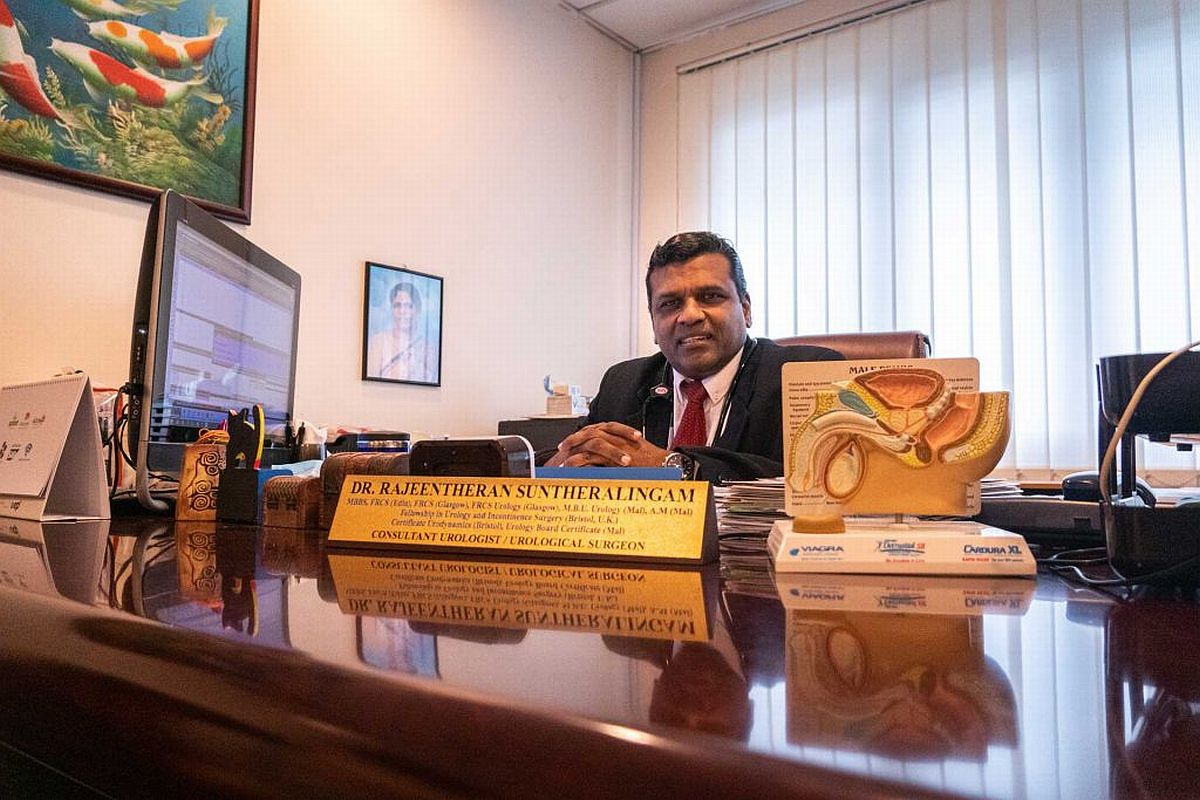
The author is a senior consultant urologist and urological surgeon at Damansara Specialist Hospital.
- This is the personal opinion of the writer or publication and does not necessarily represent the views of CodeBlue.


