

“We do not inherit the earth from our ancestors; we borrow it from our children.” Yet in Malaysia, we are doing something far more reckless. We are borrowing the future from our elderly, and leaving them with nothing but empty promises.
A man is not old until regrets take the place of dreams. For millions of ageing Malaysians, however, the dream of a dignified, secure final chapter is being replaced by a far grimmer reality: overcrowded hospital wards, exorbitant nursing home fees, and a care system that barely exists.
The Silver Tsunami
The “silver tsunami” is a metaphor used to describe the rapid increase in the proportion of older adults – typically those aged 65 and older – within a population. This demographic shift is primarily driven by longer life expectancies and declining birth rates worldwide.
The term highlights the major socio-economic waves this aging population creates, which heavily impact various key sectors including .health care, economy and housing and infrastructure.
Malaysia is confronting an unprecedented demographic shift, transitioning into an aged nation at a rate 1.5 times faster than Japan. With the elderly population growing exponentially, the country faces systemic challenges regarding .health care sustainability, pension adequacy, and long-term care infrastructure.
By April 2026, the number of Malaysians aged 60 and above had surpassed 4.1 million, accounting for approximately 11.6 to 12 per cent of the population.
By 2030, that figure is projected to reach 5.8 million, surpassing 15 per cent of the total population, pushing Malaysia into official “aged nation” status.
By 2040, health care costs for older Malaysians will exceed RM21 billion annually, representing about 1.08 per cent of the nation’s total GDP. By 2056, one in five Malaysians will be a senior citizen.
The demographic clock is ticking, and it is counting down to a crisis for which we are catastrophically unprepared.
The Care Gap: A Nation Running Out Of Time
Malaysia currently has fewer than 10,000 registered caregivers, which is far below the estimated 50,000 needed to meet current demand.
The shortage of geriatricians is equally alarming. Malaysia has only around approximately 70 geriatricians serving the entire nation, approximately one specialist for every 65,000 older Malaysians, against an ideal of one per 10,000 people.
The consequences are already visible. Hospitals across Malaysia are filled with older patients who are medically stable but cannot safely return home. Some remain for weeks or months because there is nowhere else to go.
This phenomenon, known as “bed-blocking,” is both inefficient and harmful. When hospital beds are occupied by patients who need rehabilitation rather than acute treatment, emergency departments become overcrowded and elective surgeries are delayed.
The Affordability Chasm: Care For The Rich, Neglect For The Rest
The rich man has his ice in the summer and the poor man gets his in the winter. In Malaysia’s aged care landscape, the wealthy enjoy resort-style living, while the poor are left with only a handful of government-run elder care centres under the Social Welfare Department.
Most families find themselves trapped in the middle – not poor enough for subsidies, not rich enough for private care. This is not merely a social issue, but an economic one.
When adult children are forced to reduce working hours or leave their jobs to care for ageing parents, productivity drops, companies lose skilled workers, and household incomes shrink.
The Regulatory Vacuum: A System Without Standards
The Senior Citizens Bill, which promises to protect older adults from abuse, neglect, and financial exploitation, has been pending for too long. The health minister has acknowledged that “the elderly cannot afford the wait”, yet the Bill keeps being delayed as stakeholders insist their views be heard first.
The government has completed the draft and expects it to be tabled in the next Parliament session, but for every month of delay, more elderly Malaysians are left vulnerable.
An Invisible Tax On Women
There is a shadow economy running in Malaysia that does not appear in any national budget. It runs on love and obligation, and it is quietly breaking people.
When formal care is unavailable, families fill the gap. And when families fill the gap, women fill it. Mothers, daughters, and daughters-in-law are scaling back careers, leaving jobs, and setting aside ambitions to become unpaid full-time caregivers.
A 2018 study revealed that Malaysian women still carry out 63.6 per cent more unpaid care work than men. The cost? Missed promotions, lost income, and deteriorating mental health.
The cultural narrative of filial piety, beautiful in principle, has become in practice an invisible tax levied almost exclusively on women. This is not sustainable.
The Dementia Time Bomb
Perhaps the most terrifying dimension of the aged care crisis is dementia. In 2022, dementia and Alzheimer’s disease affected between 202,000 and 216,000 older Malaysians, costing the country up to RM8.5 billion (about 0.5 per cent of the GDP).
A study of provider costs for treating dementia in Malaysian government hospitals revealed an average treatment cost of RM12,806 per episode of inpatient care.
Beyond these direct medical costs, however, lies the heavy, hidden burden placed on families. Unpaid caregiving forces many relatives to reduce their working hours or quit their jobs entirely to provide full-time care.
With the prevalence of dementia rising, advocates and experts warn that without the rollout of the National Dementia Plan first proposed in 2019, the nation risks facing a public health emergency fuelled by widespread caregiver burnout and unsustainable financial strain.
The Impact Of The Silver Tsunami
The “silver tsunami” is significantly reshaping Malaysia’s economic and .health care landscapes as the nation rapidly transitions toward becoming an aged society.
It causes severe strain on the .health care services, galloping medical inflation, escalating costs and places major strain on productivity and national pension systems.
Many older adults face inadequate retirement savings, forcing a heavier reliance on state social protection.
There is a need to establish a national long-term care framework. Malaysia urgently needs a coordinated system that integrates home care, community services, assisted living, and nursing homes.
There should be a mandatory long-term care insurance. There should be training of caregivers. The target of 50,000 trained caregivers by 2030 is ambitious but achievable, if accompanied by proper wages, career progression, and recognition of caregiving as a skilled profession.
There should be an expansion of affordable public aged care facilities. The government must move beyond the current patchwork of licensed facilities and build a network of publicly subsidized care centres. As experts have urged, this is not charity – it is infrastructure.
Finally there is a necessity to pass the Senior Citizens Bill without further delay. The Bill, which promises to protect older adults from abuse, neglect, and financial exploitation, has been pending for too long. The government must prioritise it in the next Parliament session.
Conclusion: The Reckoning We Cannot Escape
As the demographic shift known as the Silver Tsunami approaches, it is critical to recognize that time and tide wait for no man.
To prevent infrastructure and .health care systems from being overwhelmed, actionable preventive and adaptive measures must be implemented early. The people are waiting for proactive, forward-looking solutions.
For decades, Malaysia has offered its people empty rhetoric via policy papers, strategic frameworks, and parliamentary promises, while the aged care crisis continues to swell.
The reason is simple. We have treated ageing as a private burden rather than a public responsibility.
We have relied on the kindness of daughters while refusing to build the infrastructure that would make their sacrifice unnecessary.
We have subsidised sugar while starving elderly care. We have built hospitals while ignoring the nursing homes that would keep them from overflowing.
By 2030, one in six Malaysians will be elderly. By 2040, one in five. The question is not whether we can afford to act. The question is whether we can afford not to. As the proverb concludes, “a stitch in time saves nine.”
The threads of reform are already in our hands. The question is whether we have the courage to sew.
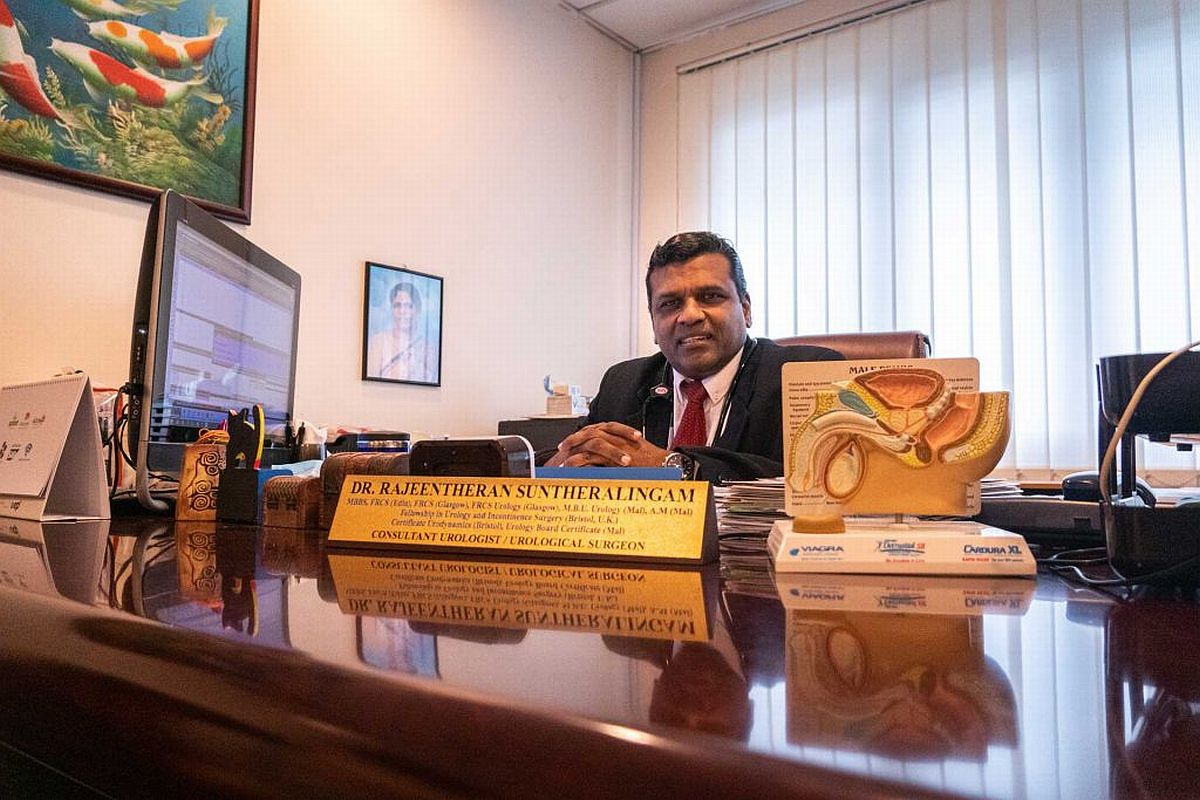
The author is a senior consultant urologist and urological surgeon at Damansara Specialist Hospital.
- This is the personal opinion of the writer or publication and does not necessarily represent the views of CodeBlue.


