

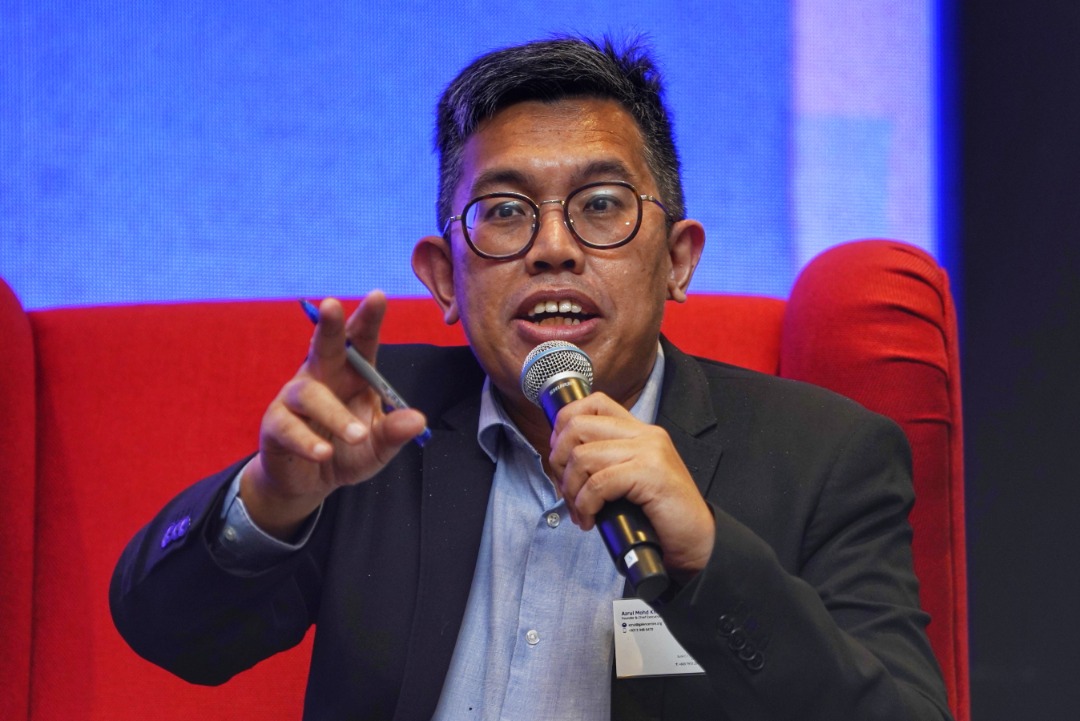
KUALA LUMPUR, Feb 16 — The Galen Centre for Health and Social Policy has warned of a spike in tuberculosis (TB) cases from the upcoming Chinese New Year and Ramadan period, and Hari Raya later on.
Galen Centre chief executive Azrul Mohd Khalib noted that these periods involve large gatherings of people doing communal activities in close proximity, without wearing face masks or social distancing.
He cautioned about congregational prayers during Ramadan especially, calling for the reinstatement of precautionary measures from the Covid-19 pandemic.
“We’re coming up to a point in time right now when I get deja vu vibes from the Covid-19 period,” Azrul told the New Straits Times’ “Beyond the Headlines” podcast last Friday.
“We’re definitely looking at a spike of incidence of cases related to TB in the next few months. It’s almost certain.”
Yesterday, the Ministry of Health (MOH) reported 503 new TB cases, pushing total cases to 2,571 active cases for the fifth epidemiological week of 2026 (up to February 7).
Outbreaks have been reported in every state and federal territory in the country.
- Sabah: 614 cases
- Selangor: 476 cases
- Sarawak: 257 cases
- Johor: 233 cases
- Kuala Lumpur and Putrajaya: 202 cases
- Penang: 148 cases
- Kedah: 144 cases
- Perak: 127 cases
- Kelantan: 96 kes
- Pahang: 81 cases
- Terengganu: 60 cases
- Negeri Sembilan: 58 cases
- Melaka: 42 cases
- Perlis: 17 cases
- Labuan: 16 cases
Previously, the MOH reported that the 2,571 TB cases reported by the fifth epid week of 2026 was a 9.8 per cent increase (229 cases) compared to the same period in 2025 that reported 2,342 cases. There are currently more than a dozen active TB clusters across every state in the country.
In a statement released earlier today, the Galen Centre noted that TB is endemic to Malaysia. Around 85 per cent of all cases are Malaysians, while 15 per cent are non-citizens.
It highlighted that TB symptoms and a long incubation period complicate prevention and control efforts.
“It’s almost like a peat fire, slow burns in the background, it’s there but not really present. It’s not like a wildfire, like Covid-19. Covid-19 was more like a wildfire,” said Azrul.
He explained that the BCG vaccine taken during childhood may not provide sufficient protection against TB once people are older, especially for the elderly.
“So you can assume at some point in your life, you won’t have protection from that vaccine anymore because you’ll contract TB.”
Azrul added that TB is spread from aerosol droplets that can hang in the air for several hours. Symptoms like long periods of coughing, fatigue, and loss of weight may be waved off as nothing extraordinary.
“This is very hard for people to understand. We see active clusters of infection in places of work, factories, in dormitories, and even in places where there’s a lot of people gathering, like recent Thaipusam celebration activities,” he said.
“Studies in high-incidence areas indicate that over 80 per cent of transmission can occur outside the household in places like workplaces, public transport, and social gatherings.”
TB, an infectious disease caused by bacteria that most often affects the lungs, is treatable with antibiotics.
Malaysia’s mortality rate for TB is around 7.6 deaths per 100,000 population, a decline from previous years. In 2024, Malaysia reported 2,580 TB-related deaths out of 26,183 cases. But states like Sarawak have a much higher fatality rate at 12.6.
“It’s because the way you treat tuberculosis is a little bit more complex,” said Azrul.
He pointed out that Malaysia’s TB treatment regimen involving standard first-line antibiotics, like rifampin, ethambutol, and isoniazid, needs to be taken for up to six to nine months, during which patients must adhere to treatment instead of stopping antibiotic use when they get better.
“There’s a reason why TB has directly observed treatment. When you take the drug that treats TB, you have to take it in front of your doctor. The doctor has to confirm that you took the medication, to ensure you adhere to that and be cured of TB,” he said.
But Malaysia has a high treatment default rate of around 24 per cent and an 81.5 per cent success rate for new cases, which are below World Health Organization (WHO) targets, Azrul noted.
When asked whether people with TB should be quarantined, Azrul said a person diagnosed with tuberculosis simply needs to wear a face mask.
The Galen Centre also warned of the ongoing threat of drug-resistant TB in Malaysia, where tuberculosis strains are resistant to antibiotics due to excessive or inconsistent use of antibiotics.
“We don’t want an outbreak of drug-resistant TB,” said Azrul. “That’s what I’m worried about.”
This article was updated with the Galen Centre’s press statement.


