

When the government announced that it would come up with a basic medical and health insurance/takaful (MHIT) product as an alternative choice for people facing steep premium hikes, I thought it would be better than existing products in the market.
However, the government-designed “base MHIT plan” – strangely unnamed; a missed opportunity to call it Madani Care – turns out to be of lesser value than my existing medical plan under AIA.
My AIA medical plan, which I purchased in 2021, has an RM1,375,000 annual limit. My monthly premium for this year is RM169 in my late 30s, while my deductible is RM300 per disability. A deductible is the amount that I have to pay upfront upon hospital admission, while my insurer pays the rest of my bills.
The government’s base MHIT plan targets a monthly premium of RM80-RM120 for the Standard Plan (RM100,000 annual limit) and RM50-RM70 under the Standard-Plus Plan (RM300,000 annual limit) for those aged 31 to 35.
For some unexplained reason, the White Paper on the base MHIT plan omits target premiums for those aged between 36 and 60, among other excluded age groups.
The Standard Plan with higher premiums comes with a deductible of RM500 per disability (RM1,000 for those aged above 60), whereas the Standard-Plus Plan with lower premiums has a whopping RM10,000 to RM15,000 deductible.
I’ll compare my AIA plan with the government’s Standard Plan, since both have similar deductibles, albeit a little more expensive with the latter.
Assuming that the government’s Standard Plan charges me RM120 monthly premiums at my age, this would be RM49 cheaper than my current RM169 premium. But the difference in coverage is huge.
The annual limit of the government’s base MHIT plan is only RM100,000, which is 1,275 per cent lower than my RM1.375 million limit, compared to the 41 per cent difference in premiums.
Put another way, if I were to apply the premium-coverage ratio from my AIA plan, I should only be paying RM12.30 monthly premiums for an RM100,000 limit, nearly 10 times less than the RM120 proposed by the so-called “base” MHIT product.
The only way the government can justify such overpriced premiums for its base MHIT plan is by providing benefits that aren’t available in the market, like covering pre-existing conditions without any premium-loading or free annual health screenings and vaccinations without out-of-pocket payments. But it doesn’t.
Putrajaya claims that an RM100,000 annual limit is sufficient to cover 99 per cent of treatment costs. But I took up health insurance to protect myself from emergencies, especially after my father died from cancer when I was 16. What if I’m in the 1 per cent?
The Standard-Plus Plan with an RM300,000 annual limit doesn’t interest me either because of the exorbitant RM10,000 to RM15,000 deductible, compared to my RM300 deductible for near RM1.4 million coverage.
If I get something as pedestrian (but dangerous) as dengue fever, it doesn’t make sense for me to fork RM10,000 to RM15,000 out of pocket when insurance is supposed to cover me. Besides, I don’t have such large amounts of cash lying around.
My 36-year-old sister, who is active and doesn’t have comorbidities, was hospitalised for severe dengue at a private hospital in Petaling Jaya last July. Her five-day admission cost more than RM15,000; it was fully covered by insurance, cashless.
One of the most concerning issues with the government’s base MHIT plan – which was designed by the Ministry of Health (MOH), Ministry of Finance (MOF), and Bank Negara Malaysia (BNM) under their Reset strategy – is a proposal to treat dengue, influenza A and B, and bronchitis and pneumonia/bronchopneumonia in outpatient settings.
When my sister went to emergency for dengue, she felt fine outwardly, with just a fever. It took an hour to clear her guarantee letter and to be admitted to a regular ward. When her blood test results came in five minutes later, she was immediately sent to an intensive care unit.
Her doctor told me that my sister’s hematocrit (HCT) level, which indicates plasma leakage, was sky high at 59; a normal level is 40. She came to the hospital in the nick of time as she might have suffered organ damage otherwise – or something unimaginable.
If MOH’s own standard of care is to admit patients who are suspected or confirmed dengue, why does the government’s base MHIT product propose outpatient treatment? Insurers are reportedly pressuring private hospitals to treat dengue fever and the same conditions named in the White Paper as outpatient instead of inpatient.
So it seems that the government is promoting potentially poorer quality of care than what it provides in its own health care system.
The base MHIT plan lacks benefits like outpatient kidney dialysis treatment, which is provided in my AIA plan, even though more than 55,000 people were on dialysis as of 2024.
The government’s product covers “selected” high-cost outpatient medications for cancer, but my AIA plan, which is only RM49 dearer a month, has a more general outpatient cancer treatment benefit as charged, subject to the annual limit.
Policyholders who buy the base MHIT plan will get discounted rates for preventive health like vaccinations and screening, but they must pay for it out of pocket.
Again, my AIA plan has better value because with a no-claim bonus, I get benefits like RM300 for health screening and vaccination. It’s not much, especially since this prevention benefit can only be used once every two years, but at least my insurer gives me some cash.
My only complaint with AIA is that its app has a financial health check feature that prominently blasts “Attention Required”, with a sad emoji, about how my RM1,375,000 annual medical limit is below the average RM1.5 million for “people-like-you at AIA”.
But I’ve resisted upgrading my plan to avoid a 20 per cent copayment imposed if I don’t follow AIA’s SMART journey (mandatory referrals from a SMART general practitioner or specialist for admission to a SMART hospital, except for emergency treatment), as I don’t want gatekeeping of my care.

My 65-year-old mother doesn’t find RM200 plus in monthly premiums under the base MHIT plan to be affordable. For the 61-65 age group, the target monthly premium is RM280 to RM350 (Standard Plan with RM1,000 deductible) or RM220 to RM280 (Standard-Plus Plan with RM10,000 to RM15,000 deductible).
She thought that the “crazy high” RM10,000 deductible was a typo. “Who except the rich has RM10k to pay upfront?” Even an RM1,000 deductible is too steep for her.
“Nobody cares (much) about oldies,” she lamented. When I said the government was targeting the middle class, she replied, “So old folks go line up at government hospital lah.”
My mother, who is a pensioner as my late father was a civil servant, said she would go to a public hospital if needed. At least I’ll be reassured of admission in an MOH hospital if she gets dengue or pneumonia. She’s in good health as she keeps herself active and likes the services at a nearby government clinic where she does annual check-ups.
Since I’m bringing my entire family into this discussion, my 32-year-old brother says he doesn’t believe in insurance but pays for it because of peer pressure.
My biggest peeve with the base MHIT plan, besides its poorer value relative to my existing plan and unaffordability for senior citizens, is that the government has no skin in the game.
The government should provide partial (if not full) subsidies for above-60s, especially if seniors consider monthly premiums above RM200 or even RM100 to be excessive, even if the base MHIT may be cheaper than certain commercial products by insurance and takaful operators (ITOs) for this age group. Obviously retirees shouldn’t be charged any deductibles or copayments.
If the government had decided to introduce National Health Insurance (NHI) instead, with mandatory contributions from all working adults (government-subsidised for the elderly and unemployed), then pre-existing conditions can be covered and premiums community-rated, since the risk pool is an entire population. As a single payer, the government would be able to negotiate far better rates from health care providers.
A simpler solution is to double funding for the public health care system that serves all Malaysians, rich or poor.
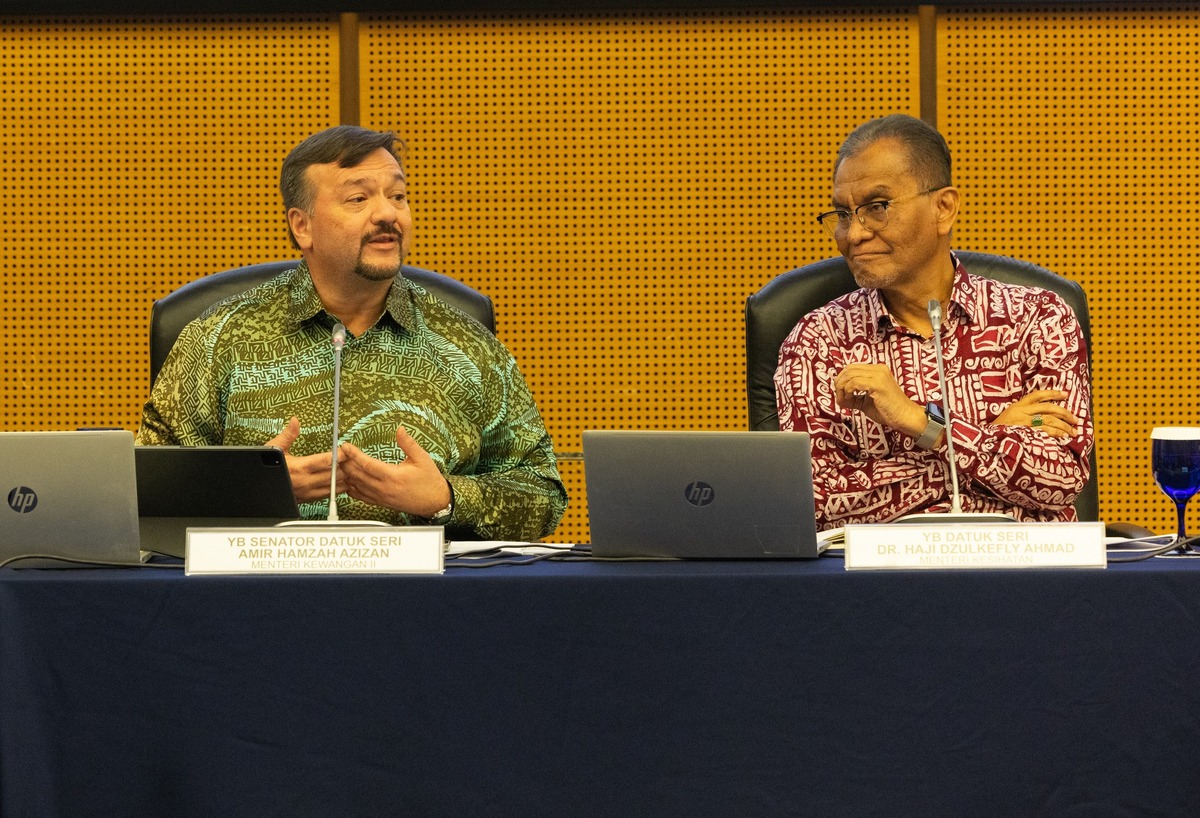
This is what Health Minister Dzulkefly Ahmad should be fighting for. Finance Minister II Amir Hamzah Azizan seems to have forgotten about our national health service by saying health care can’t be a “luxury reserved only for the few”, as if we were America.
The government designs an expensive and inferior health insurance product, tells ITOs to sell the plan, and expects consumers to pay for it themselves. How does this “reset” private health care?
I’ll end with BNM’s own ABC advice to the public before buying MHIT products: Assess your needs and ask the right questions, Browse options available, and Choose wisely from options provided.

Boo Su-Lyn is the co-founder and editor-in-chief of CodeBlue.
- This is the personal opinion of the writer or publication and does not necessarily represent the views of CodeBlue.


