

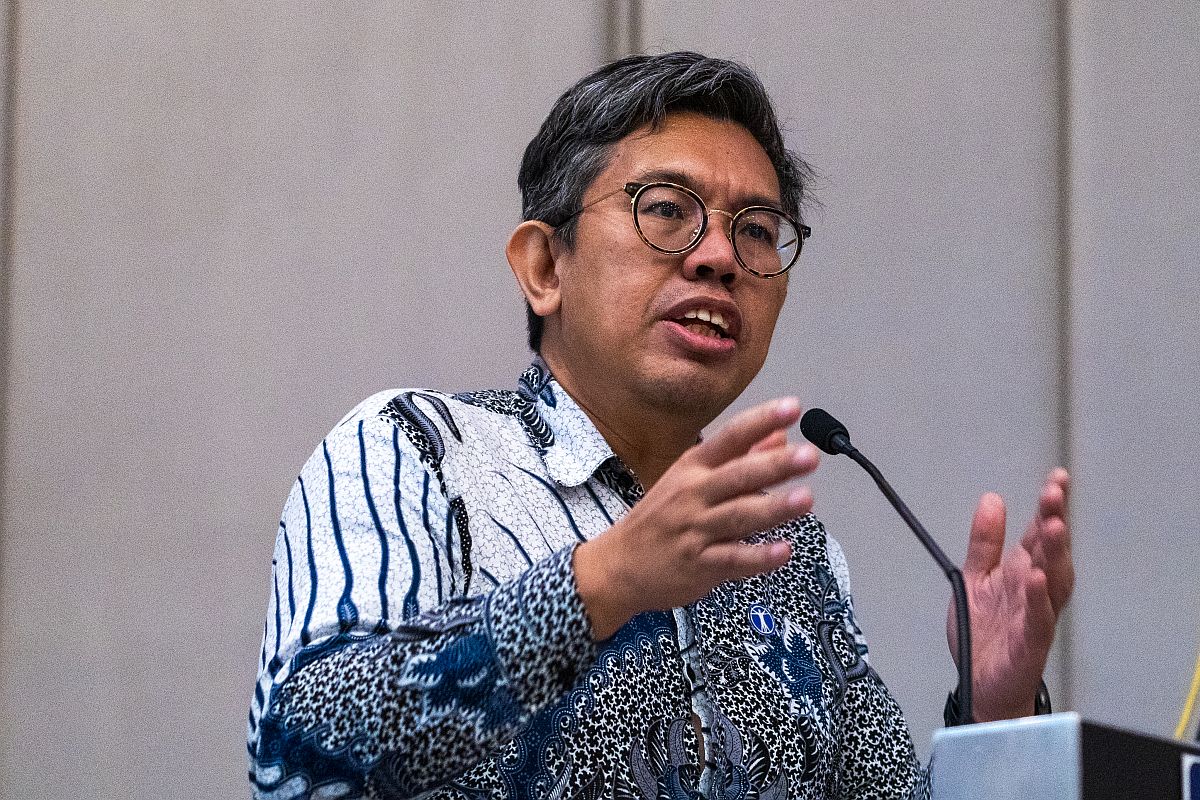
KUALA LUMPUR, Jan 22 — The Galen Centre for Health and Social Policy has suggested that the government provide partial subsidies for vulnerable Malaysians to purchase short-term private health insurance.
According to Galen Centre chief executive Azrul Mohd Khalib, these cash subsidies should be offered to those aged above 60 years and the unemployed who are seeking assistance under the Social Security Organisation’s (Socso) employment insurance system.
“The period should be over three years and would cease once the recipient has obtained employer-provided insurance or the person has no need for it.
“The subsidy should be on a co-pay basis to ensure that premiums are paid,” Azrul told CodeBlue.
CodeBlue had asked Azrul, as well as two other health policy analysts, Dr Mohamed Rafick Khan and Chua Hong Teck, for comments on whether parts of United States president Donald Trump’s new Great Health Care Plan should be adopted in Malaysia.
The US’ Great Health Care Plan unveiled last week touted providing government subsidies directly to eligible Americans to buy the health insurance of their choice, besides transparency mandates for health insurance companies and health care providers.
The Star reported earlier this month that a moratorium on medical insurance premium hikes for senior citizens above the age of 60 has come to an end, as policyholders have reportedly begun receiving notices from their insurers about a 30 per cent increase in their premiums this year.
Interim measures by Bank Negara Malaysia (BNM), which were announced in December 2024, to cap premium adjustments due to medical claims inflation to less than 10 per cent for at least 80 per cent of policyholders will end in December this year.
While praising the Trump administration’s proposal of a “Plain English Insurance” Standard to enable consumers to understand health insurance products in plain language instead of industry jargon, Azrul said the standard implemented by the Malaysian health insurance industry was sufficient.
He pointed out that the bigger problem in the Malaysian context was health and financial literacy.
“People are purchasing Vellfire level policies when they only need a Bezza level policy,” said Azrul.
“This requires a better understanding of what they need based on their understanding of their health and financial means. Buying policies beyond their means is a recipe for failure and termination of those policies.
“Those literacies are more important and a higher priority compared to knowing percentage of revenues, and claims paid and denied. I am not convinced that the Malaysian public cares enough at this point. They are worried about whether they are able to access care when they need it.”
When asked if private hospitals should be mandated to display the fees of common procedures, beyond drug prices, Azrul said it was sufficient for these rates to be published on their websites.
However, he questioned whether consumers would bother looking at a long price list.
“When going for and accessing health care services, especially for surgical procedures, we do not go to hospitals and clinics like shopping at a supermarket and look at prices being displayed with calculators in hand,” said Azrul.
He pointed out that Malaysians already make decisions about which hospital to seek treatment from via word-of-mouth, recommendations, health websites, and marketing materials.
Rafick: ITOs Should Publish Revenue And Claims, Private Hospitals Should Display Prices Of All Procedures

Dr Rafick, a trained physician who is an independent international assurance industry consultant, disagreed with providing government subsidies to senior citizens to purchase private health insurance.
“Providing cash subsidies is an unhealthy solution. It will further increase private hospital charges,” said Dr Rafick. “It’s not a solution but a band-aid that will give rise to many unnecessary complications.”
However, he suggested that the US’ transparency measures could be adopted for insurers and takaful operators (ITOs) and private hospitals for Malaysia.
“Trump’s solution on transparency should be emulated and enhanced,” he said.
“The public doesn’t know that the law (in Malaysia and around the world) does not allow cross-subsidisation between different product assurance funds. Companies are required to maintain a separate fund for Health, Life, Motor, Fire etc. and no cross-subsidisation is allowed.
“Hence, the public needs to be shown in simple diagrammatic illustrations on the size of the Health Fund (income and claims) on every social media channel as part of education.”
Regardless, Dr Rafick said the general public likely won’t care about such transparency measures. “As far as the public is concerned, they have a medical card with a high ceiling limit. It behaves like a credit card for them to use, but they don’t have to pay.
“In a nutshell, most consumers will say, ‘this is not my problem’.”
Dr Rafick also said private hospitals should be mandated to display not just drug prices, but the fees of all procedures provided.
He proposed instead the establishment of a National Health Contribution Fund (NCF) that would allow contributors to access public and private health care, saying the proposed diagnosis-related groups (DRG) reimbursement method has been misunderstood as a silver bullet.
“DRG is only appropriate for 60 per cent of hospital admissions that require surgical intervention. Non-surgical cases have a wide range of parameters that are impossible to quantify based on diagnosis,” he said.
He explained that an NCF Authority would be able to negotiate the cost of treatment on a bulk basis, pointing out that the MOH is already doing this in its outsourcing of cardiology cases to private hospitals due to issues with Sultan Idris Shah Serdang Hospital and a backlog.
“Suddenly, private hospitals that used to charge RM22,000 for angioplasty are willing to do the cases for RM17,000. This means that there is decent profit at RM17,000, and they are willing to do it.”
Chua: Create ‘Plain English Insurance’ Standard, Private Hospitals Should Display Fees Of Common Procedures

Chua, who is an independent public policy and public policy analyst, did not support government subsidies for senior citizens to buy private health insurance, saying most with medical insurance are those who can afford it.
“The public health service is already heavily subsidised (or free for most) by the government and everyone can get access to this service,” he said.
“This is unlike in the US where if you do not have insurance or the company that you work for does not pay for your insurance, then you will not have access to health services.”
Chua, however, endorsed the creation of a “Plain English Insurance” standard in Malaysia to enable policyholders to understand their insurance policy.
“The government should also mandate private hospitals to display prices of common procedures. This can be easily done, as in Singapore,” he added.
However, Chua questioned how this would improve Malaysia’s health care system.
“In the private sector, patients choose or follow doctors and not hospitals. At present, because there is ‘cashless’ access, patients do not care or bother about the cost as the insurance picks up the costs.
“Most of the patients do not or cannot be bothered about the cost unless their insurance coverage is not enough and they have to top up the difference.”
CodeBlue also asked Chua if ITOs should be mandated to publish, on their websites, the percentage of their revenues that are paid out to claims versus overhead costs and profits, as well as the percentage of insurance claims denied and average wait times for routine care.
“More information from insurance companies and hospitals is always good. But with more information, there are always the costs involved and whether this information will be useful and beneficial to consumers is another thing,” said Chua. “But for us as analysts, it is always good.”
Instead, Chua stressed on copayments and deductibles to rein in private health care costs. “The ‘cashless’ system must go, or else patients will not even look at the costs of health care.”