

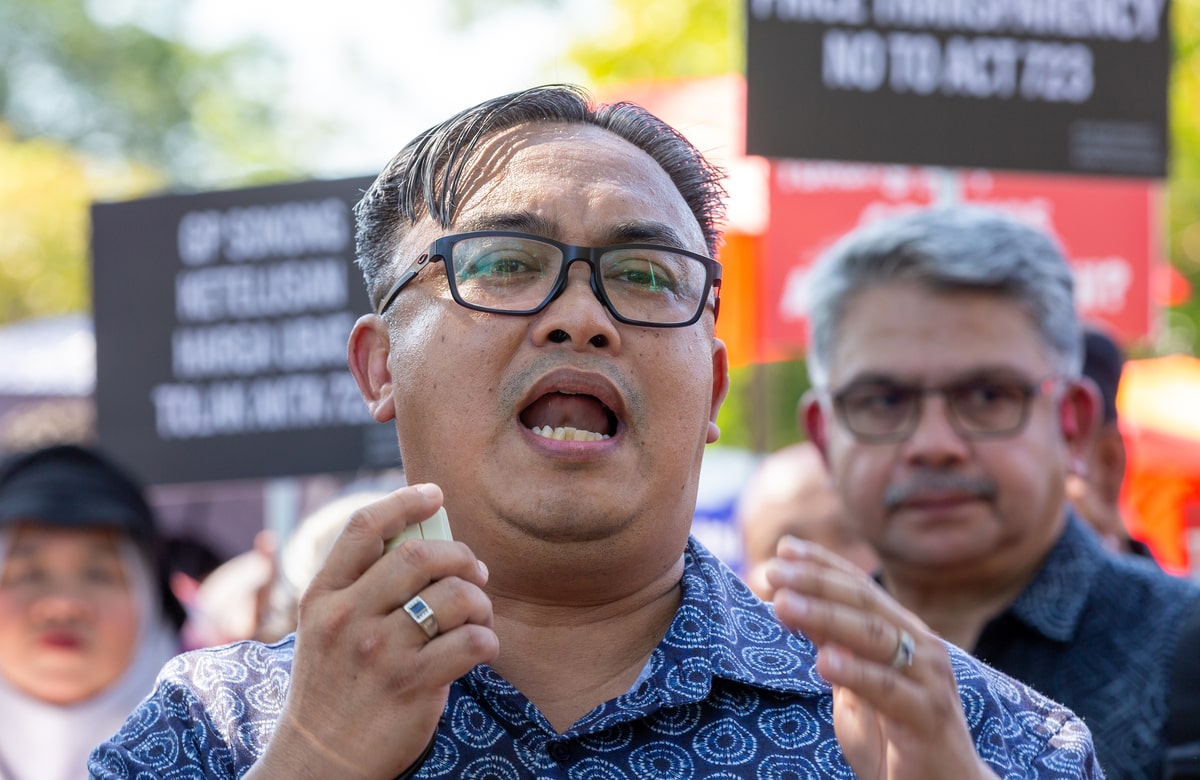
KUALA LUMPUR, Dec 16 — Recalling its own failure in setting up a third-party administrator (TPA), the Organisation of Malaysian Muslim Doctors (Perdim) prefers the enactment of legislation to regulate TPAs.
The doctors’ group had once tried to establish its own TPA, MyTPA, in partnership with Serba Dinamik IT Solutions Sdn Bhd, a subsidiary of Serba Dinamik Holdings Bhd, but the initiative collapsed after Serba Dinamik entered liquidation following a High Court winding-up order in January 2023.
“Setting up a TPA is not easy. You need manpower, and it has to be run as a business entity, whereas we are only an association. We do not have the manpower, the funding or the expertise to establish a TPA on our own,” Perdim president Dr Boi Saidi Abd Razak told CodeBlue when contacted yesterday.
He said Perdim therefore partnered with Serba Dinamik, which funded and operated MyTPA. “It was run by Serba Dinamik, and we ensured that private clinics were not disadvantaged. There was no hanky panky or cutting corners, and general practitioners (GPs) at that time were quite happy with our TPA.”
However, MyTPA only operated for about a year and a half before Serba Dinamik collapsed. “In the end, the company went bankrupt. We tried, but it is very difficult for us to establish and sustain a TPA on our own because it is fundamentally a business,” he said.
Dr Boi Saidi estimated that setting up a TPA would require between RM4 million and RM5 million in startup capital, along with significant manpower and operational capacity. “When you open a TPA, you must have panels – companies that participate. It is a continuous process, and as an association, we are not able to do that.”
Senator Tells Doctor Groups To Set Up TPAs
Senator Dr Lingeshwaran R. Arunasalam suggested during his Dewan Negara debate on the Supply Bill 2026 on December 8 that medical associations representing private GPs should establish their own TPAs to protect doctors from rising operating costs.
He told medical bodies, such as the Malaysian Medical Association (MMA), the Federation of Private Medical Practitioners Associations Malaysia (FPMPAM), and Perdim to take “proactive” steps and stop being “victims of circumstance”.
“The time has come for medical associations to take proactive steps. Establish your own TPA,” he said, urging the creation of a doctor-led medical claims management system that is “fairer, more transparent, and that understands the true cost of treatment”.
Describing private GPs as “strategic partners of the national health system”, Dr Lingeshwaran warned that clinics were being squeezed by escalating operating costs, while consultation fees and payment rates set by TPAs remained stagnant.
“Operating costs, medicines, staff salaries and rent continue to rise, but the payment rates or floor prices set by TPAs remain static, and some are even unreasonable,” he said. “Our GPs are trapped. If they raise charges, patients leave. If they maintain existing prices, clinics shut down.”
Dr Lingeshwaran also questioned who ultimately profits in the managed care system, noting that even TPAs, in reference to CodeBlue’s interview with PMCare Sdn Bhd last month, had said they were under financial pressure.
“If TPAs themselves are facing difficulties, then it is only appropriate that our GPs reduce their dependence on TPAs,” the DAP lawmaker told the Senate.
Despite opposition from doctors’ groups that cited low payments from TPAs, the government decided to retain the RM10 consultation fee floor for GPs, raising only the ceiling fee from RM35 to RM80 in a decision announced during Budget 2026.
PMCare CEO Kamal Aryf Baharuddin told CodeBlue recently that contrary to doctors’ complaints about TPAs “double-dipping”, managed care entities were actually “suffering”, as PMCare reported claim receivables of RM41 million past due 31 to 120 days last year.
Perdim Wants New Act To Regulate TPAs, Insurers
Instead of lawmakers telling doctors’ groups to create their own TPAs, Dr Boi Saidi said the more urgent need is legislation to regulate insurers, managed care organisations (MCOs), and TPAs.
“We need legislation,” he said. “There needs to be an Act to regulate TPAs and insurance companies.”
Perdim said the absence of regulation allowed TPAs to dictate consultation fees, drug prices, and payment timelines. “There are TPAs that delay payments. There are TPAs that dictate drug prices – how can drug prices all be the same? Kuala Lumpur and Kuala Lipis cannot have the same drug prices.”
Dr Boi Saidi also raised concerns about “fee-splitting”, where TPAs charge both insurers and clinics.
“TPAs charge the companies for their services and they also charge us, the clinics,” he said. “This should not happen, but because it is not governed by an Act, we cannot take them to court. So TPAs profit twice.”
He argued that a dedicated Act would allow the Ministry of Health (MOH) to regulate TPA practices, which Perdim perceived as currently falling outside the ministry’s jurisdiction.
“The MOH has no power to regulate them, so it would be best to enact an Act that enables MOH to regulate the TPA business.”
The MOH recently instructed TPAs and MCOs to submit information to it by next month for the establishment of a new national TPA/MCO registry.


