

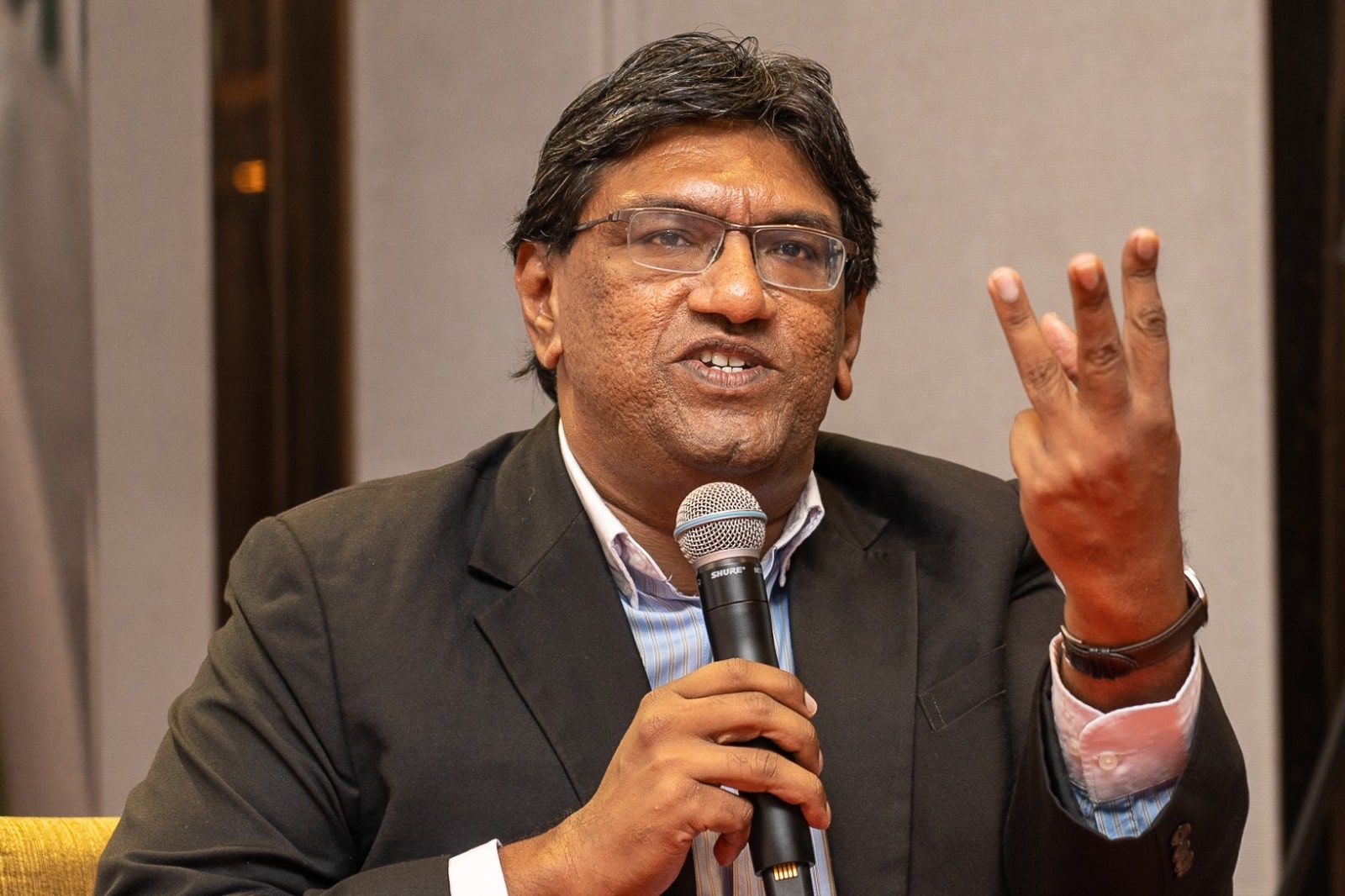
KUALA LUMPUR, Dec 23 — The Malaysian Council for Tobacco Control (MCTC) today called for a wider public inquiry into alleged attempts to influence tobacco legislation, following claims that a former health minister was offered RM50 million to drop the generational end game (GEG) provision from a tobacco control bill.
MCTC said the revelation by G. Sivalamar, a former aide to then Health Minister Dr Zaliha Mustafa, raised serious concerns about public sector integrity, the rule of law, and the protection of public health policy. Sivamalar said the attempted RM50 million bribe was rejected.
MCTC president Prof Dr Murallitharan Munisamy said the issue was not political but legal in nature and went to the heart of national integrity.
He said any attempt to offer money to influence the content of legislation constituted bribery, which is a serious criminal offence under Malaysian law.
Dr Murallitharan added that failure to report an attempted bribe, even if rejected, could itself amount to an offence, a point that former Health Minister Khairy Jamaluddin has publicly raised in response to the disclosure.
“This matter directly implicates the Rukun Negara principle of the rule of law, which demands that all individuals without exception are subject to and bound by the law,” Dr Murallitharan said in a statement today.
MCTC said the claim reinforced then-Deputy Health Minister Lukanisman Awang Sauni’s admission in Parliament that tobacco/vape industry representatives had lobbied Members of Parliament and influenced the removal of the GEG provision from the Control of Smoking Products for Public Health Bill, which was later enacted as the Control of Smoking Products for Public Health Act 2024 (Act 852).
Taken together, the anti-tobacco group said these developments pointed to a systemic and organised pattern of industry interference in public health policymaking.
“This is no longer a matter of perception, but a clear public interest issue warranting urgent, transparent investigation,” Dr Murallitharan said.
MCTC has over 40 member organisations, including doctors’, pharmacists’ and cancer groups, such as the Malaysian Medical Association (MMA), the Malaysian Pharmacists Society (MPS), the National Cancer Society Malaysia (NCSM), and Lung Cancer Network Malaysia (LCNM).
MCTC called for an independent public inquiry to be initiated immediately by the relevant authorities, including the Malaysian Anti-Corruption Commission (MACC), to investigate who made the alleged offer, how it was conveyed, why no report was lodged, and the extent of industry influence on the legislative process. It also called for full public disclosure of the findings.
MCTC’s call echoes earlier demands by anti-tobacco groups including MyWatch and the Southeast Asia Tobacco Control Alliance (Seatca), which urged authorities to look beyond a narrow corruption probe and examine wider tobacco industry interference in the removal of the GEG policy.
MCTC said the allegations raised broader concerns about tobacco and vape industry interference that went beyond a single alleged bribe. MACC’s remit, however, is limited to corruption offences and does not extend to tobacco industry interference as a whole.
The council said the episode exposed structural weaknesses in protecting public policy from the influence of harmful industries.
It urged the government to enact a Political Financing Act to ensure transparency in political contributions, prohibit funding from industries whose interests conflict with public health, and strengthen enforcement.
MCTC also renewed calls for Malaysia to adopt and enforce a binding code of conduct in line with Article 5.3 of the World Health Organization (WHO) Framework Convention on Tobacco Control (FCTC).
The council said such a code should protect public health policies from industry interference, ensure transparency in government industry interactions, minimise engagement with the tobacco and vape industries, prevent preferential treatment, and strengthen conflict of interest safeguards across all branches of government.
“This issue is not merely about individuals, but a test of the nation’s commitment to upholding the rule of law, the integrity of the political system, and Malaysia’s dedication to protecting public health and future generations,” Dr Murallitharan said.
He warned that failure to act would send a dangerous message that attempted bribery and industry interference could occur without consequence.
Smoking Cessation Expert Cites Worsening Tobacco Interference In Malaysia
Separately, Prof Mohamad Haniki Nik Mohamed, head of the smoking cessation task force under the Academy of Professors Malaysia, said the alleged RM50 million offer should be investigated by MACC because it involved national policy.
“Of course this should be investigated by MACC since it involved a national policy,” Haniki told CodeBlue.
The clinical pharmacist said investigators should also examine whether similar offers were made to other Cabinet members or MPs, especially since the GEG was eventually removed from the tobacco bill.
“As reported by the then Deputy Health Minister Lukanisman Awang Sauni, GEG was dropped due to influence by the tobacco industry. Hence, we need to investigate who, if any, accepted bribes from the tobacco industry,” Haniki said.
He added that the recently released Tobacco Interference Index reflected the seriousness of the problem.
According to the Global Tobacco Industry Interference Index 2025 by the Global Center for Good Governance in Tobacco Control, Malaysia’s score worsened to 77 this year from 66 in 2021 (a higher score means greater interference). The exclusion of GEG provisions from the tobacco bill was highlighted in the Malaysia report.
Haniki agreed that Act 852 was now tainted by the circumstances surrounding the removal of the GEG provision, even if the alleged RM50 million bribe offer was rejected.
He also backed proposals to require public officials and legislators to publicly record all interactions with tobacco and vape industry representatives.
“A code of conduct has been requested for ages, especially by NGOs like MyWatch to safeguard tobacco control policy from tobacco industry interference. Hopefully this will be the wake-up to finally realise the code of conduct,” he said.
Haniki said he was not sure whether the alleged RM50 million offer was the worst example of tobacco industry interference he had seen, but added, “it is the worst that has been admitted in such a manner.”
Prof Dzulkifli Abdul Razak, a neuropharmacologist and recipient of Malaysia’s Tobacco Control Icon Award 2023, called for nicotine vape to be relisted under the poisons list of controlled substances.
“On this issue, the current government has suffered a tremendous trust deficit that makes it urgent, that carries a life-threatening risk for the younger,” he told CodeBlue.


