

We write in response to CodeBlue’s recent reporting on insurance interference in medical care, which includes a five-part series of articles and a nationwide specialist survey.
This body of work has played an important role in bringing to light concerns that clinicians and patients have long experienced, but rarely had the space to articulate publicly.
We would like to add context to that conversation — not to dispute the findings, nor to single out insurers, clinicians, hospitals, or policymakers — but to reflect on what emerges when these issues are discussed openly, respectfully, and with solutions in mind.
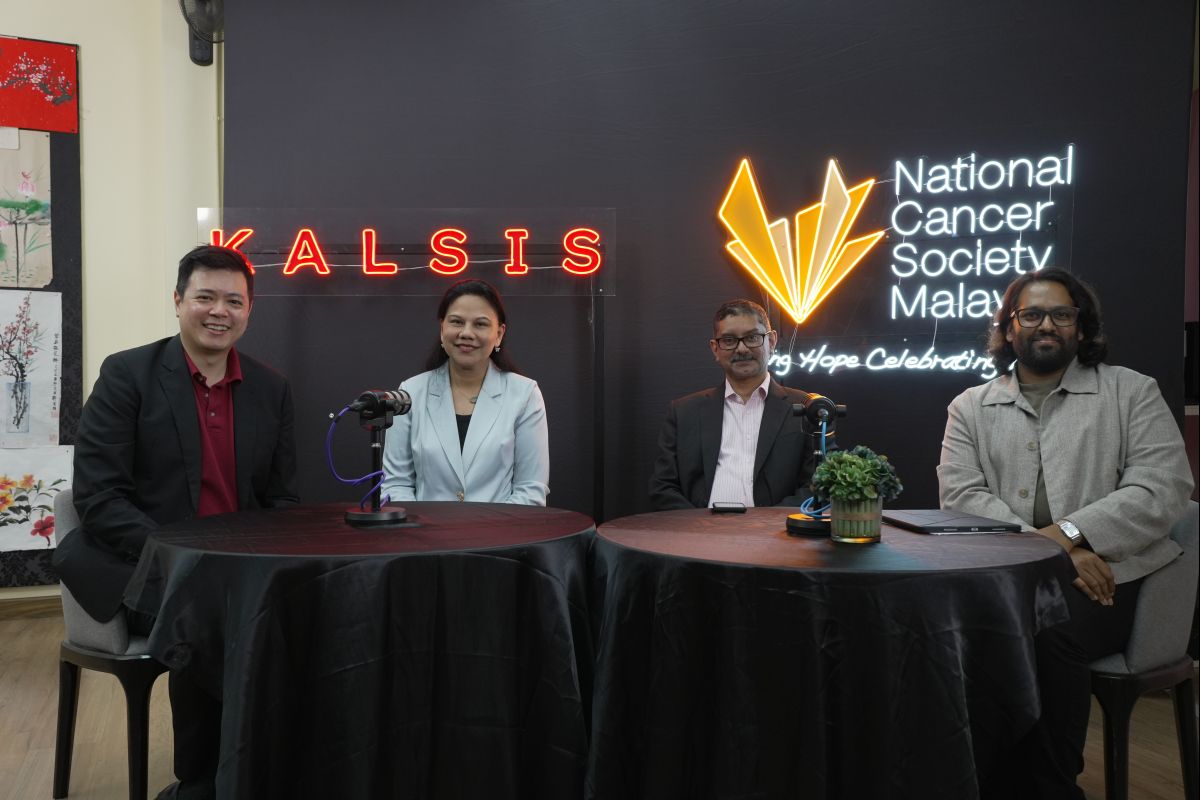
This letter is anchored in a recent Cancer Matters podcast co-produced by the National Cancer Society Malaysia (NCSM) and KALSIS, which brought together senior clinicians and system practitioners to speak candidly, on the record, about the realities of cancer care financing in Malaysia today.
Not An Anti-Insurance Conversation
At the outset, it is important to state clearly: this is not an anti-insurance argument. All contributors acknowledged the necessity of insurance, the reality of rising medical costs, and the need for utilisation management to keep risk pools viable.
Insurers are operating under real financial pressures, and sustainability matters.
The concern raised was not whether costs should be managed, but how cost management plays out in time-sensitive, high-stakes care such as oncology, emergency medicine, and critical care.
When Uncertainty Becomes The Risk
One recurring theme brought up by clinicians was that patient harm often arises not from outright denial, but from delay, ambiguity, and fragmented decision-making.
In cancer care, weeks matter. In emergencies, minutes matter.
When approvals, guarantee letters, or policy interpretations lag behind clinical timelines, doctors face a difficult dilemma: proceed and assume financial risk for the patient, or wait and risk clinical deterioration.
This is not an accusation of bad intent. Rather, it reflects how administrative systems designed for predictability and control can struggle when applied to complex, evolving clinical realities.
Modern Medicine, Legacy Policy Language
Another issue raised was the widening gap between modern medical practice and legacy insurance policy wording.
Much of contemporary oncology such as immunotherapy, molecular diagnostics, long-term oral treatments, and outpatient radiotherapy did not exist when many policies were written.
As a result, patients who believe they are “insured against cancer” may discover that parts of today’s standard of care sit in grey zones: classified as outpatient, supportive, unrelated, or simply unforeseen.
This creates frustration not only for patients, but also for clinicians who must explain whenever medically necessary care is financially contested.
Where Copayments Fit, And Where They Don’t
Copayments were discussed in the podcast, but with nuance. They were not presented as a universal fix.
Clinicians expressed support for co-pay structures when they expand access to better treatment, particularly for newer therapies that fall outside older policies.
At the same time, they cautioned against uncapped or poorly designed copays that could push patients toward inferior care or create financial hardship disproportionate to income.
In other words, copayments are a tool — useful in some contexts, harmful in others — and must be designed with clinical input and social realities in mind.
What Behaviour Reveals About System Design
An observation shared during the discussion was that when patients enter care pathways with financial certainty (whether through savings, assistance programmes, or alternative financing), behaviours across the system often change.
Clinicians plan more intentionally. Hospitals become more transparent on pricing. Patient assistance programmes are activated. Care pathways move faster.
This is not an argument to replace insurance with out-of-pocket payment. Rather, it suggests that certainty and clarity — not the absence of insurance — are what allow systems to function more smoothly.
A Call For A New Compact
What emerged from the conversation was not a search for any “villains”, but a recognition that Malaysia’s health care financing architecture is under strain from multiple directions at once.
We believe the way forward lies in a new compact between insurers, clinicians, hospitals, policymakers, and patients; one where:
- Care remains accessible.
- Costs are more predictable.
- Clinical autonomy is respected.
- Financing is sustainable within risk pools.
This requires ongoing dialogue, transparency, and willingness from all parties to engage, especially as national reforms around medical, health insurance and takaful (MHIT) design, diagnosis related group (DRG) based payments, and cost transparency take shape.
An Invitation, Not An Indictment
We offer this letter in the spirit of contribution, not criticism.
CodeBlue’s reporting has been vital in bringing to light the problem. We hope this reflection adds another layer, one that acknowledges constraints on all sides, centres patient outcomes, and keeps the door open for collaborative solutions.
Ultimately, no stakeholder benefits from a system where trust erodes, clinicians burn out, insurers struggle to sustain coverage, and patients lose confidence in protection they believed they had.
We believe Malaysia can do better, but only if the conversation continues in good faith.
Dr Gunalan Palari Arumugam is a consultant anaesthesiologist and critical care physician, Dr Mastura Md Yusof is a consultant clinical oncologist, Poovenraj Kanagaraj is associate editor, Cancer Matters, National Cancer Society Malaysia (NCSM), and Jonathan Teoh is founder and CEO, KALSIS.
- This is the personal opinion of the writer or publication and does not necessarily represent the views of CodeBlue.


