

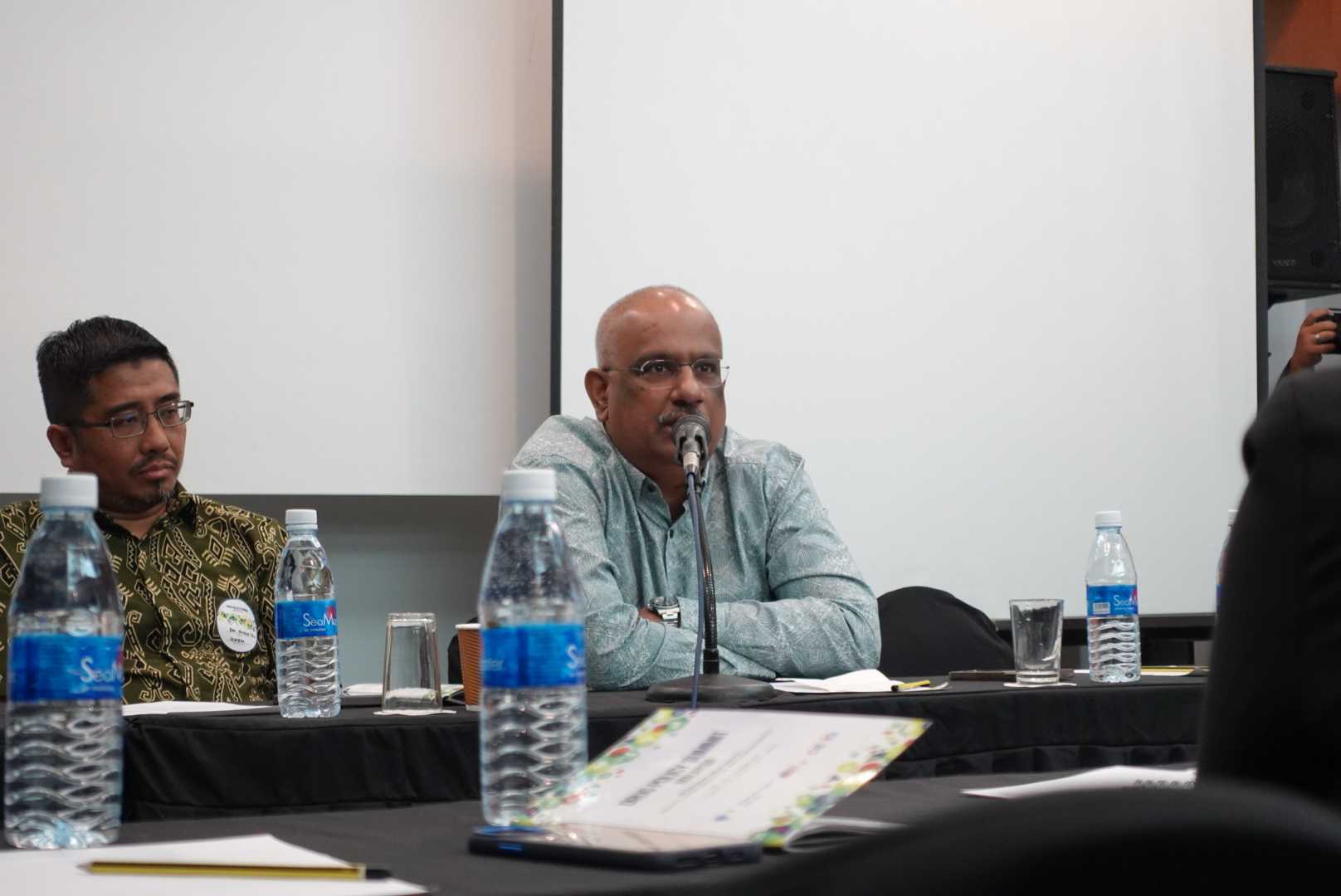
KUALA LUMPUR, Nov 7 — Malaysia’s harm reduction policies and public messaging remain centred on heroin-use models, even though amphetamine-type stimulants (ATS) have become the dominant drug in the market, an addiction researcher said.
Prof Vicknasingam B. Kasinather, professor of addiction at the Centre for Drug Research, Universiti Sains Malaysia (USM), said harm reduction conversations still revolve around needle exchange and methadone substitution, rather than psychosocial treatment that is clinically recommended for ATS use.
“The language we use for harm reduction is still very much used during the opioid era. We still talk about needle exchange, methadone – it’s no more applicable,” Vicknasingam said at the Drug Policy Summit Malaysia 2025 in Kuala Lumpur on Wednesday.
“ATS is now the dominant drug in the market. So where is the harm reduction for ATS? It doesn’t come out very clearly.”
Vicknasingam noted that a United Nations Office on Drugs and Crime (UNODC) has already developed a harm reduction module for ATS and that training was previously conducted in Malaysia, but said its adoption and adaptation in local programmes “is still far from effective”.
“And even in conferences when we talk about harm reduction, I find the psyche is still very much in the heroin era. We keep showing data about how we reduced HIV infection rates, but we do not talk about harm reduction for ATS use per se,” he added.
Vicknasingam pointed to a police presentation at the summit where an officer questioned why there was “no treatment” for ATS, implying that psychosocial intervention did not count as treatment. He said this reflected a broader misunderstanding among stakeholders that treatment must involve medication.
The addiction researcher said the misconception is partly due to how harm reduction has been communicated. Enforcement officers, policymakers, and the public continue to associate treatment with methadone or other medical substitution models drawn from heroin-use contexts.
“We have not communicated, we have not advocated, we have not educated,” Vicknasingam said, referring to psychosocial intervention for ATS. “When people hear the word treatment, they think of medication. But for ATS, psychosocial intervention is treatment.”
Hidden Populations Missing From Outreach
Panelists also noted gaps in reaching hidden populations, particularly men who have sex with men (MSM) who use ATS in chemsex settings.
A community group representative said stimulant use among MSM is higher than in the general population, citing local and international studies that estimate prevalence in some MSM networks at up to 30 per cent.
They said MSM who use ATS face layered barriers because both drug use and same-sex relations are criminalised, making them less likely to access public health services. The representative said services must be safe and affirming to be effective for these groups.
Vicknasingam said harm reduction efforts are still oriented toward older patterns of heroin use, such as outreach focused on street-based injection sites like Lorong Haji Taib in Kuala Lumpur. “If harm reduction conversations stay around the heroin era, we will miss these communities,” he said.
Safe Use Spaces And Drug Checking Raised As Harm Reduction Measures
Participants also raised the idea of supervised consumption spaces and drug checking to reduce poisoning and overdose from adulterated stimulant supplies.
Vicknasingam said discussions on safe-use spaces in Malaysia would likely be perceived as moving toward legalisation. “I think if you talk of safe spaces to use drugs, I think you may be moving towards legalisation. And that’s something I’m not sure we’re ready to start,” he said.
However, he noted that such facilities already operate in several countries that have not legalised drugs.
He explained that supervised spaces often provide pharmaceutical-grade substances to prevent poisoning from street supplies. “The drugs bought on the street are passed down many layers. There’s a lot of adulterants, chemicals. Sometimes it’s not the drug that’s killing you, it’s the other things,” he said. “When you have a safe room, you provide pharmaceutical grade. So drug poisoning can be avoided.”
Vicknasingam said another advantage is the ability to build sustained engagement with people who use drugs, who are often not visible to the health system. “Drug use is a hidden population. They exist among us, but you don’t see them,” he said.
“When someone comes to your clinic and uses drugs every day, you have the opportunity to build that bridge. Even if you say one word to him a day, you are building rapport. And that allows you to start intervening medically – to reduce use, to stop use, or to manage use.”
CodeBlue previously reported on a similar model in Montreal, where harm reduction group L’Anonyme operates a mobile supervised injection van that provides a safe space to use drugs under supervision to prevent overdose deaths during Canada’s opioid crisis.
Dr Fadzli Md Isa, addiction psychiatrist at Hospital Kuala Lumpur (HKL) and a representative of the Ministry of Health (MOH) suggested that Malaysia could consider leveraging MOH’s existing One Stop Centre for Addiction (OSCA) clinics as safer access points, given that they are already positioned within public health services.
However, he noted that this would require sufficient staffing, training, and clearer communication about OSCA’s role and services.
Shortage Of Trained Clinicians Limits Addiction Treatment Services
Dr Fadzli said the OSCA network currently has about 111 primary care sites nationwide, but many remain underdeveloped and public awareness is low. “If you ask patients, nine out of ten would not know about OSCA,” he said.
The HKL doctor said some OSCA centres are able to manage a broad range of substance use cases – not only opioids – particularly where staffing and clinical leadership are stronger. However, many sites lack trained personnel and remain limited in scope.
OSCA clinics can be run by family medicine specialists, but addiction medicine training requires at least three additional years, including rotations across multiple training sites, which has slowed expansion.
In hospitals, specialised addiction services are led by addiction psychiatrists, although basic addiction care can be provided by general psychiatrists. However, uptake for addiction subspecialisation remains low.
“You have already sacrificed five years in medical school, two years of housemanship, and four years to become a specialist. Then you are asked to do another three years, with no difference in pay,” Dr Fadzli said. “There is money to support training, but the interest is low.”
Malaysia currently has about 10 addiction psychiatrists. “We produce good addiction psychiatrists,” Dr Fadzli said, adding that many leave due to better career opportunities overseas.


