

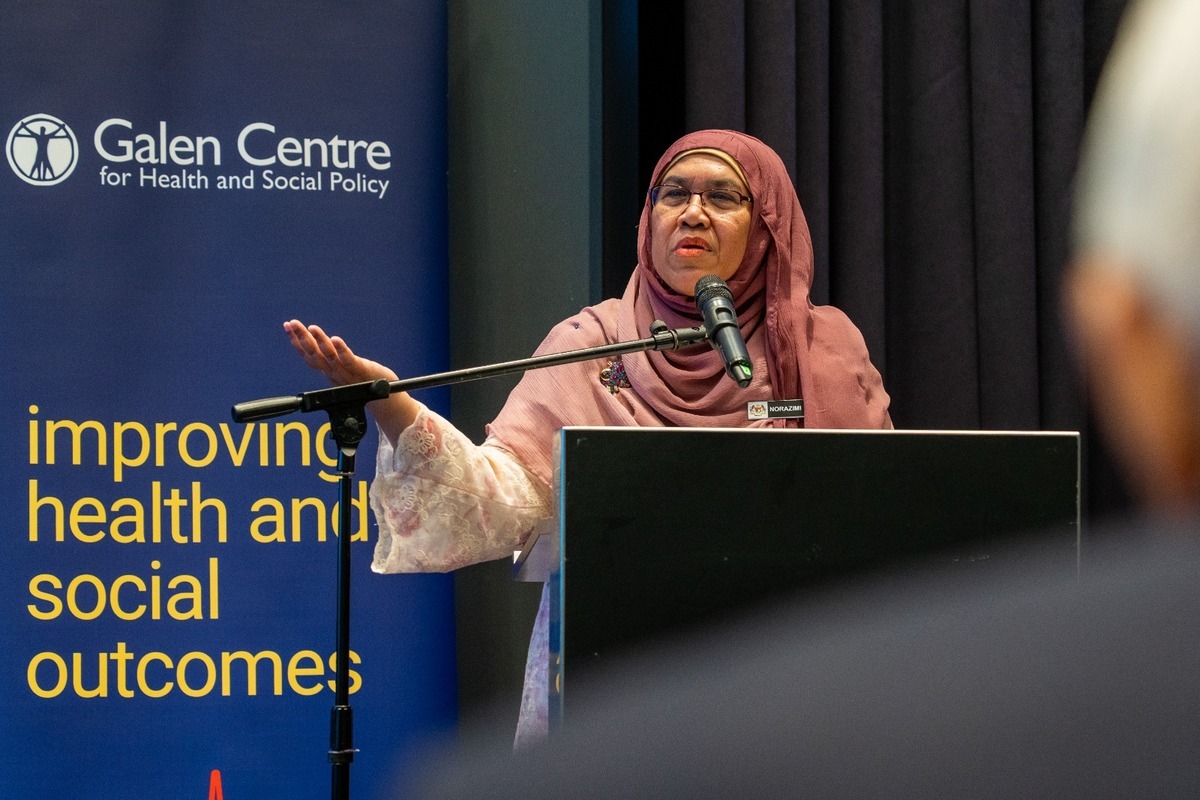
KUALA LUMPUR, Oct 3 — Malaysia can no longer sustain the expansion of haemodialysis services as kidney failure cases continue rising without pause, said a top Ministry of Health (MOH) official.
Health deputy director-general (medical) Dr Nor Azimi Yunus said the national dialysis burden — both financial and clinical — has reached an unsustainable level. The rising number of dialysis patients each year reflects an alarming trend with no signs of plateauing.
“Are we proud to have more dialysis centres every year? No. We can no longer afford to keep building new dialysis centres – whether by MOH, the private sector, or NGOs. ‘Tak cukup mesin dah sekarang.’
“How much can the government afford to spend, and for how many more years?” Dr Nor Azimi said at the Galen Centre for Health and Social Policy’s symposium, “Saving Lives: Strengthening Peritoneal Dialysis Care in Malaysia Through Public-Private Partnerships”, supported by Vantive Health LLC, on April 15.
Malaysia’s health care system is grappling with a growing burden of chronic kidney disease, driven primarily by diabetes and other comorbidities. Diabetes accounted for 52 per cent of all new dialysis patients in 2022.
Approximately 51,000 Malaysians currently require dialysis, with projections estimating this number could surpass 106,000 by 2040 — potentially costing the health care system RM3.2 billion annually, according to the Galen Centre.
Dr Nor Azimi said the incidence of kidney disease has been rising continuously without any signs of stabilising. She emphasised the urgent need to slow the progression of chronic kidney disease before patients reach end-stage renal failure.
“Are we failing at this? I’m not sure – but when we look at the numbers, the graphs are continuously rising. They are a lot. It has never plateaued – not even for one year. In fact, it keeps increasing. So we must take this seriously,” she said.
A nationwide population-based study in 2018 found a chronic kidney disease prevalence of 15.48 per cent among Malaysian adults aged 18 and above — up from 9.07 per cent in 2011. The burden is further compounded by the growing number of younger patients requiring dialysis.
“We are seeing more young patients. Some are in secondary school and already on dialysis – and for how long? Until they’re 50? This isn’t something to be proud of. We must find a way to slow down the growth in kidney disease that leads to dialysis.
“That’s why I always say – prevention is better than cure. Once you have kidney disease, you must make sure to retard its progression before it reaches end-stage renal failure.”
Dr Nor Azimi revealed that the Social Security Organisation (Socso) allocates more than RM400 million annually for dialysis alone.
“This isn’t just a clinical burden. It’s also a financial, logistical, and moral challenge – for patients, for us as health care providers in both the public and private sectors, and for the entire system – especially for caretakers.
“This isn’t something we do suka-suka. This is a very serious matter, and we need to discuss it thoroughly with all stakeholders,” Dr Nor Azimi said.
PD-First Policy Must Be More Than Just A Statement

In 2022, MOH adopted a Peritoneal Dialysis-First policy as a strategic move to promote peritoneal dialysis as the preferred initial dialysis modality for suitable patients, particularly in rural and underserved areas with limited access to haemodialysis.
Peritoneal dialysis (PD) is a home-based treatment that uses the lining of the abdomen to filter waste from the blood. It offers greater flexibility and independence for patients compared to haemodialysis, which requires regular visits to dialysis centres. PD is also considered more cost-effective and practical in areas with limited infrastructure.
Dr Nor Azimi said the policy is backed by medical evidence showing PD is safe, effective, and cost-efficient, with added benefits for patients’ quality of life.
However, she acknowledged that uptake remains slow. “After three years, only 40 per cent of dialysis patients in MOH facilities are on peritoneal dialysis.”
Sabah currently has the highest PD adoption rate in Malaysia due to geographical constraints, but PD remains poorly adopted in the private and NGO sectors, where haemodialysis dominates.
Public services currently bear most of the PD load, while haemodialysis accounts for 90 per cent of all dialysis treatments in Malaysia. The private sector typically focuses on haemodialysis due to existing infrastructure, profitability, and significant investments. Misconceptions about PD’s complexity and suitability for home use, along with lack of awareness, continue to hinder uptake.
“We must bridge the gap between policy and practice. This requires meaningful cooperation between the public sector, private providers, and NGOs.”
Dr Nor Azimi also urged nephrologists and medical professionals to take greater responsibility in championing peritoneal dialysis as the first-line dialysis treatment.
“Personally, I feel we don’t do enough. We’re not strong enough when it comes to professional advocacy. This is our duty – our strong message to health care professionals – to make sure we advocate for peritoneal dialysis instead of haemodialysis,” Dr Nor Azimi said.
“Don’t just jump to the conclusion – ‘Oh makcik, pergi lah dialysis.’ That’s the wrong message. We need to explain the safety of PD – of course, for selected, suitable patients. But we must first convince the patient to opt for PD. If it’s not suitable, only then proceed with haemodialysis – especially for younger patients. Our nephrologists know this better.”
Financial, Logistical, And Systemic Challenges

Dr Nor Azimi said that while it’s relatively easy to build a haemodialysis centre with “10 machines and 10 chairs,” the long-term cost of operating and sustaining such facilities is significant. “In the long run, how much more can the government afford to spend? For how many more years?”
The number of dialysis centres in Malaysia grew from 706 in 2012 to 987 in 2022, largely driven by private sector expansion. However, coverage gaps remain in rural coverage and underserved areas.
Dr Nor Azimi warned that continued haemodialysis expansion may become unsustainable — not only financially, but also in terms of manpower, logistics, and health system capacity.
To make PD viable and accessible, Dr Nor Azimi said Malaysia must align clinical protocols and training across sectors — particularly among junior doctors, nurses, and dialysis support staff.
She also stressed the need to optimise the logistics and supply chain for PD solutions and consumables, which are especially costly for rural patients. Logistics providers and NGOs, she said, can play a transformative role.
Galen Centre chief executive Azrul Mohd Khalib suggested partnerships with providers like Lalamove to store and transport PD machines and supplies, including dialysate, tubing, and disinfectants. Deliveries could be made monthly or bi-weekly, or patients could collect the items at partnered private centres.
Dr Nor Azimi added that the private sector has the potential to drive innovation in digital health, patient education, and home-based care models.
“If these are effectively integrated with the public sector, they can help enhance patient outcomes – because our goal is to reduce complications.”
Call For Whole-Of-Society Response

Dr Nor Azimi reiterated that MOH remains committed to strengthening PD care through an integrated, system-wide approach.
This includes:
- Expanding PD availability, especially in underserved communities;
- Building capacity through dedicated training for nurses, junior doctors, and support staff; and
- Co-developing care pathways and financing mechanisms with private partners to increase PD uptake in both public and private sectors.
“Improving access to PD is not just about delivering treatment. It’s about upholding patient dignity, empowering self-care, and ensuring that every Malaysian, regardless of geography, has access to a safe, sustainable and effective option,” Dr Nor Azimi said.
She called on industry partners to help expand PD access and affordability, NGOs to continue supporting patients, and policymakers to consider incentives that reward high-quality, cost-effective care, including PD.
“To our nephrologists and clinical professionals, we need stronger professional advocacy. Please, advocate the use of PD unless the patient is not suitable.”


