

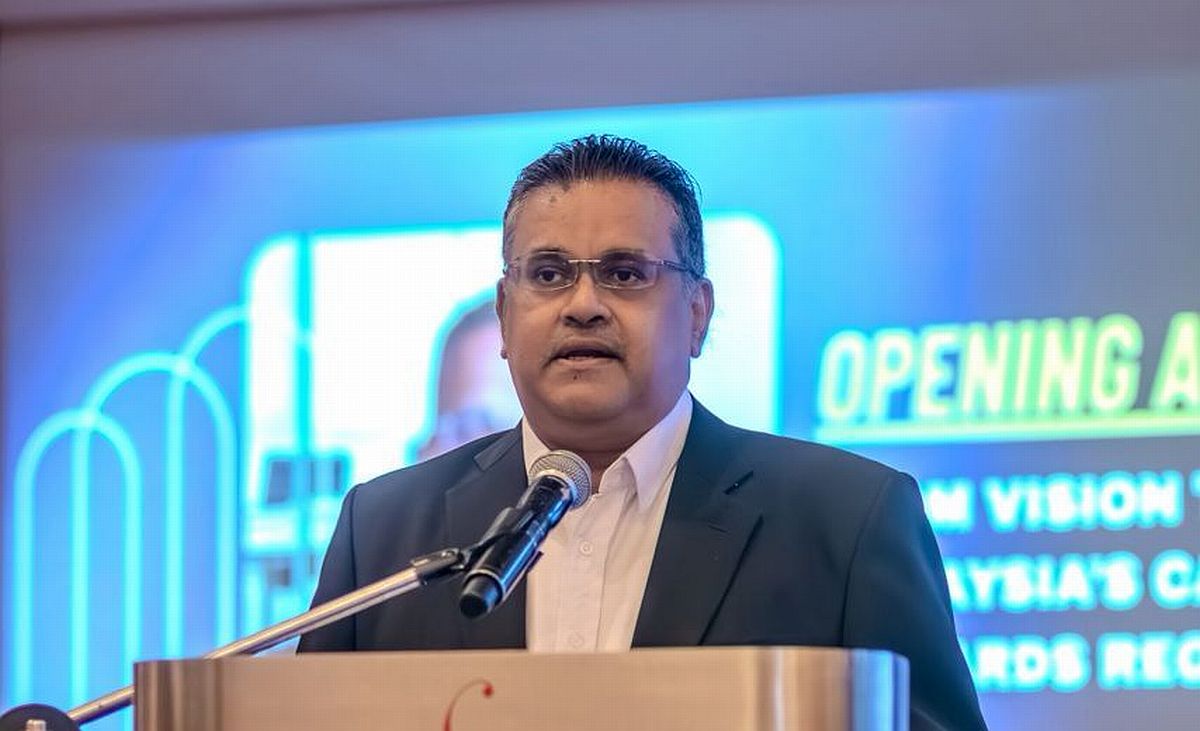
KUALA LUMPUR, Oct 31 — Malaysia’s commitments under the Malaysia-United States Agreement on Reciprocal Trade (ART) are expected to significantly reshape the country’s approach to animal-disease control and trade governance, said veterinary policy expert Dr Saravanakumar S. Pillai.
Under the bilateral agreement, signed by Prime Minister Anwar Ibrahim and US president Donald Trump here last Sunday, Malaysia must apply county- or zone-based restrictions for highly pathogenic avian influenza (HPAI) and African swine fever (ASF) instead of blanket nationwide bans – a “progressive but technically demanding” shift that will test the country’s veterinary surveillance capacity and inter-agency coordination.
“Historically, the Department of Veterinary Services (DVS) relied on national gazetting based on the Animals Act 1953 (Act 637) and disease containment protocols during outbreaks.
“Transitioning to a zoning system will require an enhanced surveillance infrastructure, a live data-sharing mechanism with the US Department of Agriculture’s Animal and Plant Health Inspection Service (APHIS), and rapid-response protocols to update import eligibility as disease statuses change,” Dr Saravanakumar told CodeBlue when contacted yesterday.
He said Malaysia already has a digital import-permit system that reflects disease-free zones, but additional integration with US data and officer training may be needed to fully implement the new zoning requirements under ART. Laboratory diagnostic capacity and communication between federal and border units must also be strengthened.
“Although ambitious, zoning is realistic if supported by training, technology, and bilateral transparency,” said Dr Saravanakumar, former DVS senior deputy director and current adviser to the Malaysia Cage-Free Egg Producers Organisation (MCFEPO) and the Asia Cage-Free Association Alliance (ACFAA).
“This system would allow Malaysia to adopt precise, science-based import controls, maintaining trade continuity while safeguarding animal health, a significant advancement toward modern veterinary governance.”
CodeBlue reported yesterday that the ART, published by the White House, compels Malaysia to recognise US food safety, sanitary, and phytosanitary systems for meat, poultry, dairy, and other agricultural products as meeting Malaysia’s import requirements.
The pact also restricts Malaysia’s ability to impose blanket import bans in response to animal-disease outbreaks, requiring instead county- or zone-based restrictions consistent with World Organisation for Animal Health (WOAH) guidelines for HPAI and ASF. Under ART, these localised disease-control measures must be implemented within 180 days for poultry and 15 months for swine.
Dr Saravanakumar said that a potential rise in import volumes under ART would not necessarily increase Malaysia’s disease risk if veterinary oversight and border controls remain strong. The main test is whether Malaysia can replace blanket bans with targeted, risk-based controls for HPAI and ASF, he said.
“Malaysia should implement a dynamic import-risk matrix that adjusts control measures based on outbreak trends and disease alerts from the US. During high-risk periods, imports should be limited to heat-treated or processed poultry, while raw products undergo intensified inspection and testing.
“Pre-border certification, port-of-entry document checks, and cold-chain integrity verification must be mandatory,” he added.
Dr Saravanakumar said DVS should also work closely with importers to ensure full traceability and reporting compliance. He added that strict biosecurity practices such as vehicle disinfection, waste control, and feed hygiene, must be reinforced to prevent local disease introduction and cross-contamination between farms.
Local Oversight Key As US Food Systems Gain Recognition
Dr Saravanakumar cautioned that Malaysia’s recognition of US food safety and inspection systems under the trade pact must not weaken the authority of domestic regulators.
He said the Malaysia-US Agreement on Reciprocal Trade is meant to facilitate trade, not replace Malaysian verification and oversight.
“While this benefits trade flow, it demands stronger inter-agency coordination between DVS, the Food Safety and Quality Division (FSQD), and the Department of Islamic Development Malaysia (Jakim) to ensure that facilitation does not compromise Malaysia’s animal-health and halal integrity,” he said.
Dr Saravanakumar said Malaysia should continue to require equivalence verification, documentation checks, and border inspections for imported products while maintaining full sovereignty over its domestic safety and quality standards.
He also recommended that Malaysia upgrade border inspection systems, establish real-time data exchange with the US Department of Agriculture (USDA), and enhance disease-monitoring mechanisms to support effective implementation.
“Importantly, ART does not replace Malaysia’s animal-welfare codes but complements them, allowing the nation to retain full control over humane handling, slaughter, and labelling requirements.
“Hence, while the agreement modernises trade governance, Malaysia’s veterinary authority must remain the gatekeeper of food safety, animal welfare, and halal compliance,” he said.
Trade Simplification Must Not Dilute Halal Standards
Dr Saravanakumar said the ART clause requiring Malaysia to accept halal certification from US certifiers designated by Jakim “without additional requirements” presents a sensitive regulatory dilemma.
While intended to simplify trade, he noted that this provision could conflict with Jakim’s halal standards, which are rooted in Shariah law and Malaysia’s existing audit framework, involving rigorous inspection and documentation procedures.
“A common ground must be established through a bilateral technical committee between Jakim, DVS, FSQD, and USDA to reconcile procedural differences and ensure continued oversight integrity.
“Jakim must retain its right to audit, inspect, and verify the operations of all foreign certifiers it recognises, including periodic field audits and document reviews to confirm compliance with Malaysian halal specifications and humane slaughter requirements,” he said.
“Malaysia cannot afford to compromise its internationally respected halal assurance system or its domestic religious confidence. Therefore, this clause should be operationalised as recognition with verification, not blind acceptance,” he added.
Dr Saravanakumar also pointed out that Malaysia’s continued shift toward humane and ethical production systems gives local producers a strong comparative advantage.
Locally produced poultry and eggs – which are fresher, ethically sourced, and fully traceable – offer attributes that imported products may struggle to match due to logistics, pricing, and freshness limitations.
Malaysia’s Ethical Farming Standards Offer Edge Despite US Market Access
From a welfare and production standpoint, Dr Saravanakumar said Malaysia’s transition toward cage-free and higher-welfare farming practices is already well underway, placing local producers ahead in ethical standards and consumer trust through reputable third-party certifications such as Certified Humane.
Huat Lai Resources Berhad recently became Malaysia’s largest cage-free egg producer after earning Certified Humane accreditation from the US-based Humane Farm Animal Care (HFAC) – the first for cage-free liquid eggs – marking a major milestone in Malaysia’s animal-welfare food production.
“While US imports may comply with the recognition of US sanitary and phytosanitary (SPS) measures and the registration of US dairy facilities based on USDA’s list, they will face competitive disadvantages in Malaysia’s market due to higher logistics costs, longer transport times, and reduced freshness compared to locally produced cage-free eggs.
“Malaysia’s higher-welfare products can reach consumers within days of laying, ensuring superior freshness and nutritional value, whereas imported products rely heavily on extended cold-chain systems,” he said.
Dr Saravanakumar added that local producers, who have invested significantly in welfare housing and certification, should receive government-backed incentives such as green financing, tax relief, and inclusion in institutional procurement to remain competitive.
“The government must also enforce truth-in-labelling regulations defining ‘cage-free’, ‘free-range’, and ‘humane’ claims uniformly across all brands – local or imported – to maintain market integrity,” he said.
In essence, Dr Saravanakumar said Malaysia’s trade commitments under ART can coexist with strong veterinary oversight, halal assurance, and higher-welfare farming standards if implemented through science-based risk management, institutional coordination, and clear policy safeguards.
DVS must continue strengthening disease surveillance and zoning systems, while Jakim must preserve its halal audit authority through structured bilateral cooperation. Policymakers should support welfare-oriented producers with financial and procurement incentives.
“Malaysia’s edge lies in its integrated approach of combining food safety, halal integrity, and animal welfare to define a ‘Malaysian Model of Ethical and Sustainable Trade’. With the right governance, Malaysia can honour its ART obligations while reinforcing its identity as a global leader in humane, halal, and high-integrity food systems,” he said.


