

Let’s face an uncomfortable truth: you love us most on the worst day of your life. When the chest tightens, when the fever spikes, when a child won’t wake—when you fear life is about to shrink to six pieces of wood—suddenly the nearest government hospital or klinik kesihatan becomes the safest place in the country. And we will be there, as we always are.
Once, an MP, a father to twins, called me in a panic past midnight. One baby was burning, listless, refusing oral meds. “Doctor, tolong… can you bring the suppository?” I drove across town with paracetamol suppositories, checked her, counselled the parents, stayed until the numbers came down and the cries softened.
It is a reminder that in the small hours, titles fall away. We’re all just mothers and fathers hoping someone will answer.
If you want that promise to still be true tomorrow, then hear this clearly: Please take care of government doctors so that we can take care of you and your family when you need us in the future.
We shoulder rolling on-calls, run high volume overstretched clinics, and heavier complexity as patients switch to the public system mid-treatment when private insurance limits run out.
We don’t complain at the bedside; we triage, cannulate, operate, comfort. But behind the curtains the arithmetic is breaking: pay that does not reflect responsibility or hours, allowances that trail inflation, and a conveyor belt of attrition that replaces experience with vacancies.
In some localities, frontliners even report clinics pushed to run from 8am until 12 midnight—workdays that sprawl far beyond the official “extended hours” model. If you prize safety, you cannot build it on exhaustion.
We keep the same promise, every day, to B40 and VIP alike. We do not ask who you voted for, how much you earn, or whether your coverage lapsed last week.
We ask only, “How can we help? What do you need now?” Then we chase the potassium and the troponin, the haemorrhage and the malignant shadow on a scan—because that is what a public service does.
You cannot stretch a safety net forever and expect the weave to hold. When trained hands leave, a night shift turns into a dice roll. When a 24-hour oncall is priced below the cost of a quiet meal with our children, fewer of us will be here when your emergency arrives. It is that simple—and that serious.
The director of Kuala Lumpur Hospital (HKL) recently confirmed what many of us live daily: as private costs rise and insurance coverage runs out, more M40, T20 and even VIP patients cross over to HKL—drawn by quality and compelled by affordability.
HKL now runs with hundreds of specialists and nearly a thousand medical officers, caring for up to two million patients a year. The care is equal, the queues are longer, and the workload heavier. Don’t look away; this could be your future too.
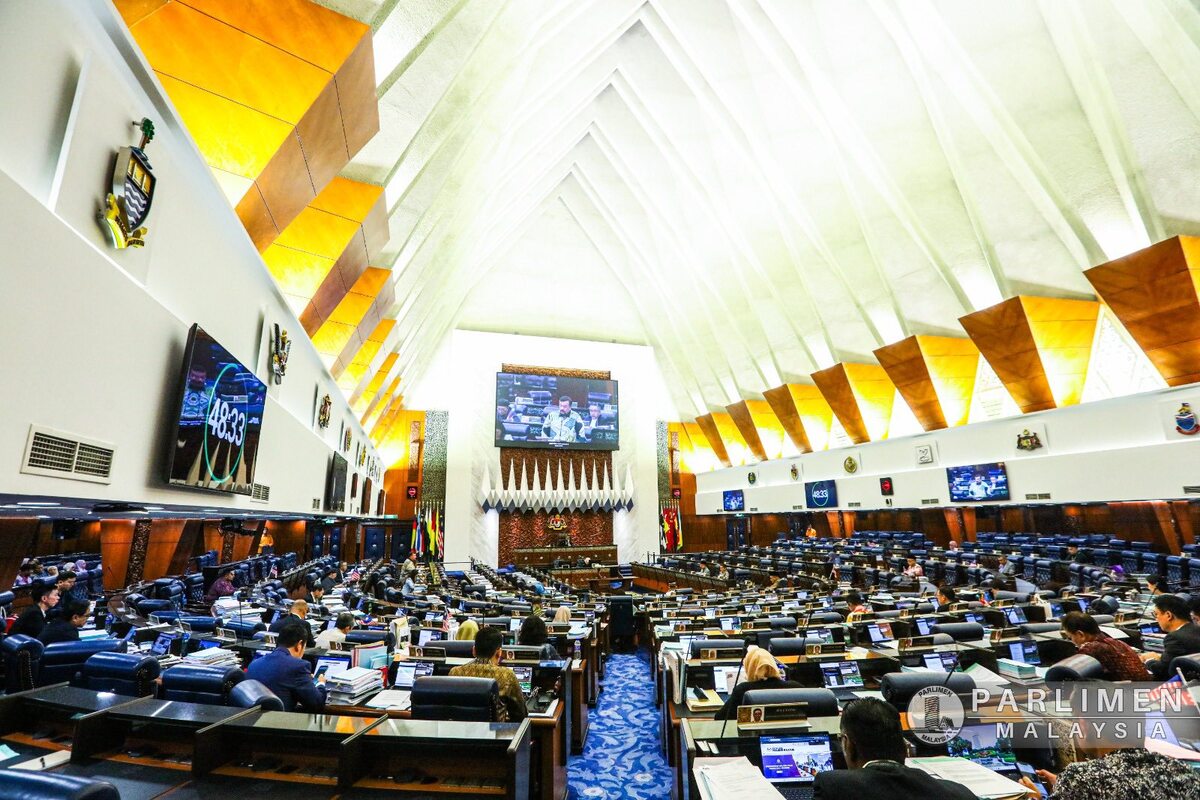
Remember, there was a moment when Parliament did not sit—when emergency rules (darurat) muted the microphones and dimmed the Chamber lights. In those hours, your hospitals did not go quiet.
Health care workers fought for you in fogged visors and split knuckles, in the emergency department and intensive care units (ICUs) that hummed like engine rooms, on phone calls that began “I’m sorry” and ended in shared silence.
We did not suspend compassion. We took oaths that were not prorogued or adjourned. In the worst storms, your politics paused; our duty didn’t.
A Tale Of Two Payslips
Let’s talk about the elephant in the room. Members of Parliament draw generous fixed monthly allowances, lifted further by daily sitting and committee payments.
Government doctors start low, climb slowly, and patch the gap with 24-hour on-calls that pay only a few hundred ringgit a shift, often stacking six to ten calls a month just to keep the household afloat.
One role writes the laws; the other resuscitates your loved one at 3am. Yet the payslips read like the inverse of where urgency lives. That mismatch is not merely unfair; it is unsafe. It fuels attrition, hollows out experience, and turns your future emergency into a gamble.
Do not dilly-dally with on-call pay; announce it, fund it, implement it—now—and tie it to the hours and intensity actually worked, indexed to inflation and to nights and weekends.
Do not mistake stopgaps for policy; temporary relief without permanent staffing and fair pay simply relocates the queue from one door to another. Do not stitch together piecemeal fixes; a tweak to one allowance or a pilot in one hospital will not mend a national retention crisis.
What we need is a whole-system upgrade—fair pay and modern ETAP (on-call allowance), enforceable safe-staffing ratios, protected training and rest, and transparent metrics that hold leadership to account.
What ‘Take Care Of Us’ Actually Means
It means paying for the work instead of the rhetoric. It means plugging the leaks where the bleed is worst—ED, Surgical, Medical, Pediatrics, O&G, Orthopedic, Psychiatry, Anesthesia, Oncology, Radiology, ICU—so expertise stays where risk is highest.
It means staffing for safety rather than luck, publishing the numbers on vacancies and waits, and tying careers to improving them.
It means fixing the insurance cliff so patients aren’t forced to change horses mid-stream, by standardising catastrophic top-ups that keep continuity of care intact.
And it means respecting time—training time, leave, rest—because fatigue in a clinician is not a budget win; it is a patient-safety risk.
Do not be silent and do not be reluctant to act. Silence is a decision. Reluctance is a decision. Both have consequences measured in waiting lists, vacant posts, and avoidable farewells.
The trend at HKL shows exactly where we are headed: when insurance is exhausted and private bills surge, we will meet at the triage desk of a government hospital. Better that we meet with a fully staffed ward, a rested team and a system that values the people holding it up.
So keep this line close—say it to your MP, your ministry, your social media groups and to yourself: Please take care of government doctors—so we can take care of you and your family when you need us in the future.
Because one day—may it be far from now—you will need us. And when you do, you will want us rested, respected, and ready. No dilly-dallying, no stopgaps, no piecemeal fixes—just the steady hands you’ll be counting on.
The author is a government doctor from Perak. CodeBlue is giving the author anonymity because civil servants are prohibited from writing to the press.
- This is the personal opinion of the writer or publication and does not necessarily represent the views of CodeBlue.


