

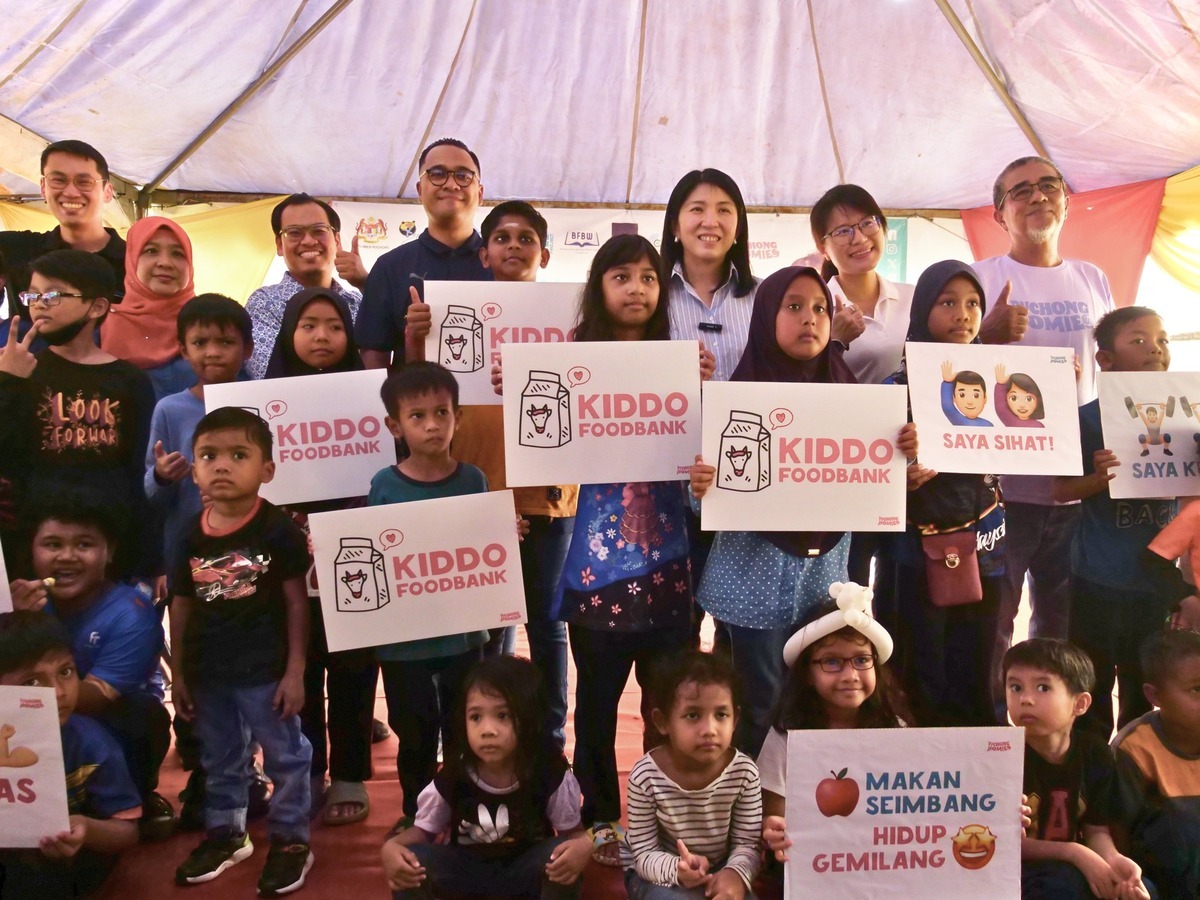
KUALA LUMPUR, August 19 — Puchong MP Yeo Bee Yin said a food bank project by her office helped reduce child stunting in her urban constituency in Selangor, the country’s most developed state.
Yeo launched the Kiddo Foodbank project in the Puchong constituency some two years ago in October 2023, after a screening by the Puchong Parliament Service Centre of 228 children aged below six years in a health event found that more than a third, or 35 per cent, suffered malnutrition, including stunting, underweight, and wasting.
“Subsequently, my office organised the Kiddo Foodbank intervention project, providing these children free formula milk, fresh milk, and multivitamins each month,” Yeo said when debating the 13th Malaysia Plan (13MP) in the Dewan Rakyat.
“At the same time, volunteers have continued recording their height and weight with an app until now. With assistance from nutrition experts from public health clinics, parents were also taught about food nutrition and growth monitoring.”
Yeo told Parliament that about 65 per cent of Kiddo Foodbank recipients have since shown improvement in their height-for-age z-score, the measurement for stunting.
The DAP lawmaker acknowledged constraints that forced her parliamentary office to only tackle diets, without addressing pregnant women’s health, sanitation, or cleanliness.
“However, despite these constraints, we still saw improvements from interventions.”
Citing Our World In Data statistics, Yeo noted that Malaysia’s prevalence of stunting among children under five is the fourth highest in Asean at 24.3 per cent, after Laos, the Philippines, and Myanmar.
The most recent Ministry of Health (MOH) data on under-five child stunting was from 2022 at 21.2 per cent. This indicates that child stunting has worsened in Malaysia.
Yeo noted that child stunting in Malaysia began rising every year since 2010 at 17.8 per cent then until a near one-in-four rate now.
The former minister also pointed out that neighbouring countries with lower gross domestic product (GDP) per capita than Malaysia recorded lower child stunting rates: Thailand (12.3 per cent), Vietnam (19.2 per cent), Cambodia (22 per cent), and Indonesia (22.6 per cent).
Besides stunting, Yeo said 11 per cent of Malaysian children are also “wasted”, characterised by low weight-for-height due to chronic malnutrition.
“This is a malnutrition crisis,” she told the House.
“What worries Puchong is that when we look at the stunting trend in Asean countries, Malaysia is the one country in Asean that has been experiencing an increase, not a decline, of the rate of stunting in the past 20 years.”
Yeo added that the MOH’s Health Transformation Office has invited her for an engagement session on a First 1,000 Days initiative for children to resolve stunting problems.
Malaysia suffers a triple burden of malnutrition: obesity, anaemia, and stunting.


