

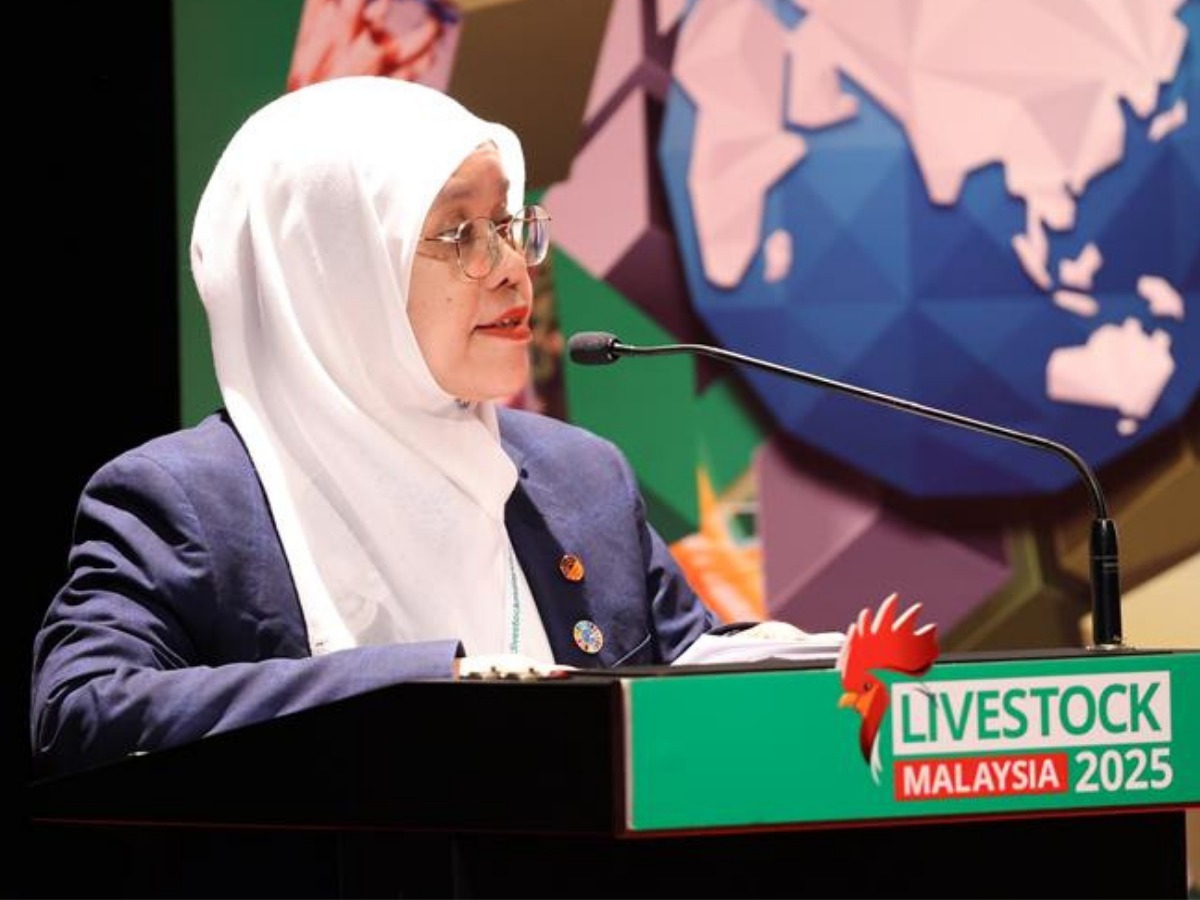
KUALA LUMPUR, August 28 — Malaysia’s livestock sector is struggling with a shortage of skilled workers, including veterinarians, a gap that threatens animal health standards and the integrity of food supply.
The Department of Veterinary Services (DVS) said the shortage of veterinarians in particular risks undermining disease prevention and food safety, warning that even the most advanced farming technology cannot replace trained professionals.
“Without the right people, even the best technology and policies cannot achieve their full potential,” Dr Aida Muhid, senior director of the disease control and veterinary biosecurity division at DVS, said in a special address at Livestock Malaysia 2025 yesterday.
She said DVS is working with universities and industry partners to expand technical training in animal health, farm management, and biosecurity, while creating clearer career pathways to attract youth into agriculture.
Agriculture and Food Security Deputy Minister Arthur Joseph Kurup acknowledged that manpower shortages are part of broader structural pressures facing the industry, alongside feed costs, import dependence, disease threats, climate impacts, and land constraints.
“We must acknowledge the challenges before us. Rising feed costs, reliance on imports, disease threats, and climate impacts all weigh heavily on our farmers. Shortages of skilled labour, limited land, and intense competition from imports further narrow profit margin.
“These realities remind us that constant improvement and resilience have become necessities,” Arthur said.
Biosecurity Gaps Raise Public Health Concerns
The shortage of veterinary manpower comes as Malaysia faces heightened biosecurity threats. Disease outbreaks, antimicrobial resistance (AMR), and climate change are amplifying risks to both the livestock sector and public health.
Arthur pointed to the rising threat of diseases such as African swine fever (ASF) and the need for stronger veterinary systems. “We are strengthening biosecurity protocols and veterinary capabilities so comprehensively that Malaysia becomes a model for livestock health management in Southeast Asia,” he said.
Dr Aida cautioned that the industry is under “unprecedented challenges” from rising feed costs and shortages of skilled manpower to transboundary animal diseases and the growing impacts of climate change, and to the global pressures of antimicrobial resistance, sustainability, and animal welfare.
She pointed to ongoing initiatives such as developing climate-resilient breeds, piloting blockchain traceability systems, and advancing halal livestock standards as part of efforts to maintain Malaysia’s competitive edge.
Malaysia’s National Agro-Food Policy 2021-2030 targets 60 per cent self-sufficiency in protein sources, but the path forward will depend on whether the government can close gaps in veterinary manpower and enforce robust biosecurity.
Dr Aida framed the path forward as one of collaboration rather than regulation. “We see every farmer as a partner, every integrator as a collaborator, and every industry player as an ally. We are here to remove barriers, not create them, while upholding the highest standards.”
Low Self-Sufficiency Rates
Beyond manpower and biosecurity, Malaysia’s self-sufficiency in key proteins remains far below national targets.
“The SSR (self-sufficiency ratio) for certain commodities remains relatively low and falls short of national targets. For instance, the SSR for beef is only 15.9 per cent, mutton stands at 10.6 per cent, while fresh milk and pork perform better at 66.8 per cent and 69.6 per cent, respectively as of 2024,” Arthur said.
Chicken and eggs have achieved higher SSR levels of 90.2 per cent and 106.5 per cent, but Arthur cautioned against complacency: “We must continue to push forward and strengthen our efforts to unlock greater export potential.”
Under the National Agri-Food Policy 2021-2030 and the 13th Malaysia Plan (13MP), Malaysia aims to raise the SSR of chicken and eggs to 140 per cent and 123 per cent respectively, while increasing the SSR for meat to 50 per cent by 2030.
Arthur said the Agriculture and Food Security Ministry is committed to addressing structural barriers, including high feed costs, inadequate business infrastructure, and delays in obtaining planning approvals, by streamlining processes with state governments and local authorities.


