

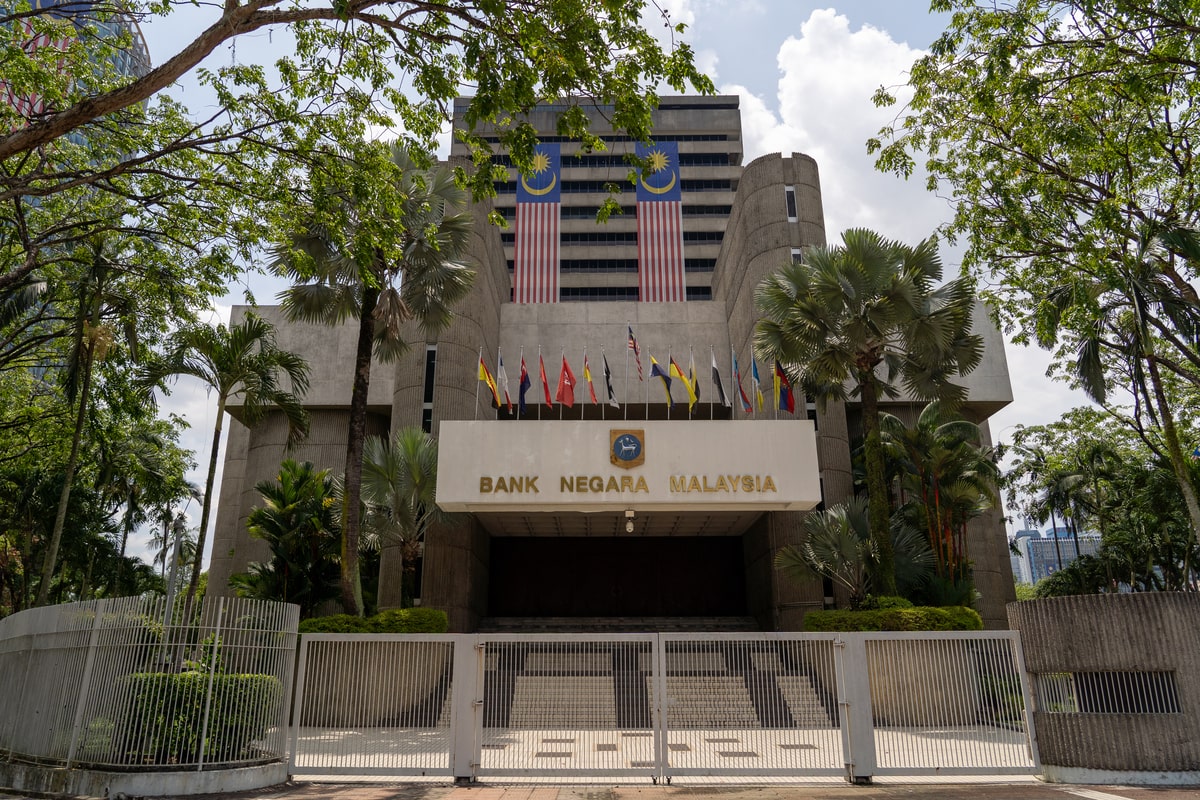
KUALA LUMPUR, August 22 — Bank Negara Malaysia’s (BNM) Reset strategy seeks a radical reform of private health care by positioning general practitioners (GPs) as the first point of contact for patients.
Business Times reported that GPs will be the primary entry point for treatment for referrals to private hospitals, so as to reduce Malaysians’ tendency of directly seeking specialist treatment, according to a Reset media workshop organised by BNM and the Ministry of Health (MOH) at Sasana Kijang here last Wednesday.
This is similar to the United Kingdom’s NHS, where people generally cannot self-refer to a specialist at a hospital, except when accessing emergency treatment or sexual health clinics. Specialists will only see patients with a letter of referral from their GP.
In Malaysia, patients have the freedom of seeing any specialist they wish in private hospitals on their own accord without having to see a primary health care provider first.
As for the government health service, many patients go to the emergency departments of public hospitals – even if their condition isn’t necessarily an emergency – to try to obtain faster treatment due to congestion in public health clinics.
It’s unclear how the government plans to operationalise or legislate the role of GPs as the gatekeepers to care, such as whether this will only be operationalised in a planned new basic medical and health insurance/takaful (MHIT) product by the government, without mandating this requirement for other payers.
Business Times reported that the central bank and the MOH plan to launch the new MHIT product with “standardised” premiums in the second half of 2026, targeting the M40 or middle class.
Premium pricing and benefit coverage will be determined based on “verified treatment cost data”, including common procedures and hospital cost comparisons.
The planned basic MHIT product will target mid-tier hospitals, while “premium” hospitals can be accessed through optional top-up plans “open to competition among insurance and takaful providers.”
The Reset media workshop also announced that the basic MHIT plan would use a diagnosis-related groups (DRG) reimbursement system. This rollout will be conducted in phases to avoid market disruption.
However, the government has yet to specify when it will table a bill in Parliament to amend the Private Healthcare Facilities and Services Act 1998 (Act 586) to impose a national DRG system, whether later this year or early next year, if the new MHIT product is to be launched by the middle of 2026.
All private hospitals in Malaysia use a fee-for-service model and, as such, issue itemised bills detailing various charges. Under DRG, providers are paid a fixed payment for an episode of care. Adopting this system would mean that private hospitals no longer have to issue itemised bills required under Act 586.
The Association of Private Hospitals Malaysia (APHM) previously warned that implementing DRG without sufficient data could lead to failure, noting that the United States took four years to pilot DRG before adopting it for Medicare and Medicaid.
According to the Reset media workshop, the new MHIT product may include coverage for preventive treatments, besides covering pre-existing conditions under certain conditions like waiting period and symptom control.
The Star Business reported a spokesperson at the workshop as saying that the government expects to finalise the design of the MHIT product this year, before piloting it in the middle of next year and rollout by the end of 2026.
Medical inflation was cited as the critical barometer of success.
“We expect some stabilisation in that rather than just continual, or steeper increases over time. So we should see that stabilised. That would be a key outcome measure,” the unnamed spokesperson was quoted as saying.
“We are also concerned about policy as well. So we are looking at things like how we can also capture data like re-admission based on that to measure quality of care as well.”
Even as the central bank’s Reset strategy touts the gatekeeper role of GPs to reduce utilisation of costlier hospital care, other ministries like the MOH and the Domestic Trade and Cost of Living Ministry (KPDN) have imposed policies that affect GP clinics.
Coupled with the government’s refusal to raise GP consultation fees, drug price display and other associated policies like mandatory prescriptions and itemised billing are perceived by doctors’ groups as a double whammy to the sustainability of GP clinics. Itemised billing runs contrary to DRG; in fact, GP clinics currently practise bundled payments.
The MOH is also planning to create a medicine “price catcher” app, called MyPriMeCatcher, to enable the general public to compare retail drug prices between private health care facilities and community pharmacies. Associations representing medical practitioners have slammed the app as a “Trojan horse” against private doctors.


