

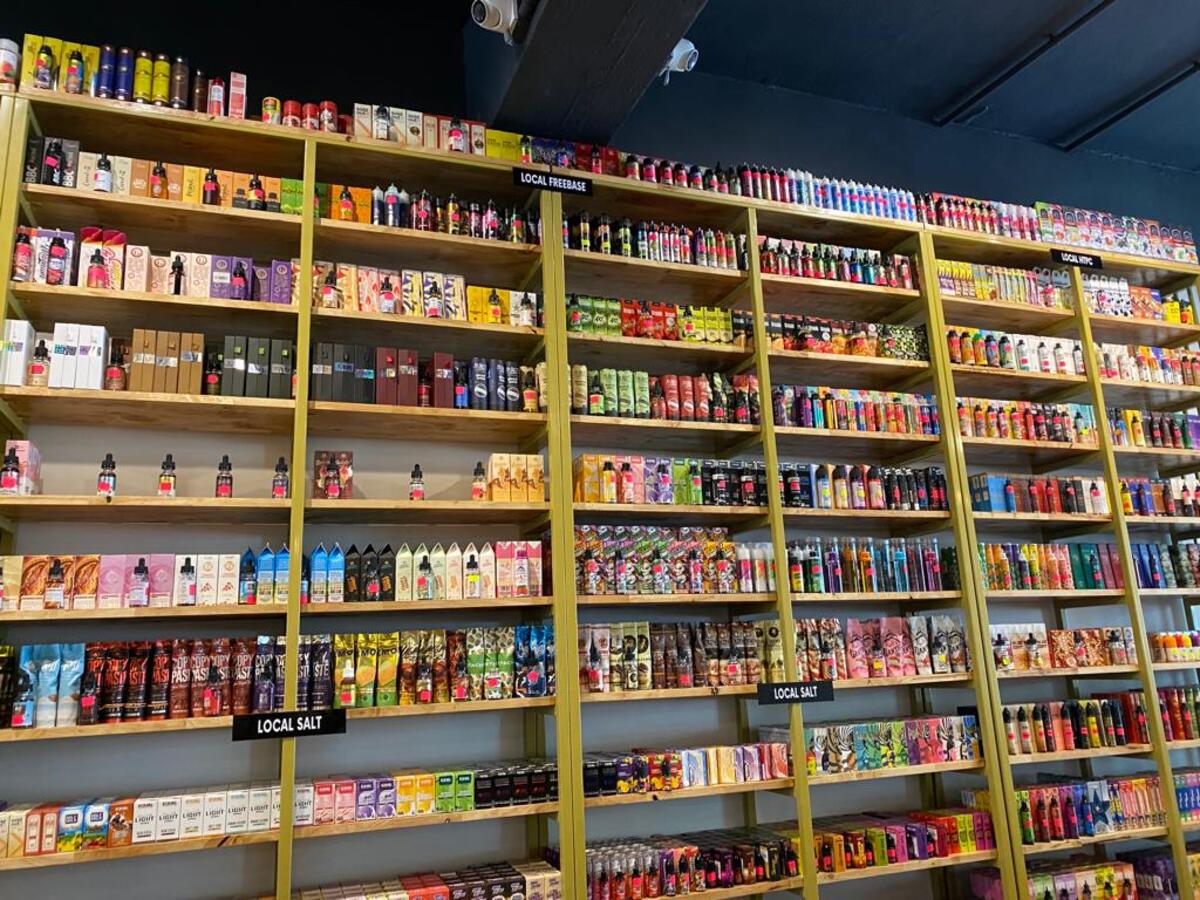
KUALA LUMPUR, June 9 — The Ministry of Health (MOH) is currently assessing applications for the registration of smoking products, including vape, under the Control of Smoking Products for Public Health Act 2024 (Act 852).
Dr Hairul Nizam Abd Hamid, senior principal assistant director at the MOH’s disease control division, said the registration window — which opened in October 2024 and closed in April 2025 — has concluded, and the ministry is now in the evaluation phase. Approvals are expected to be finalised by October 1 this year.
“At the moment, we’ve not approved any product registrations. We’re still in the evaluation phase. Come October 1, any unregistered products will not be allowed on the market,” Dr Hairul Nizam said during a public briefing organised with Kuala Lumpur City Hall (DBKL) on Act 852 last Thursday (June 5).
He added that several vape products are already under review. Once approved, these products may be sold through authorised outlets, such as convenience stores or licensed specialty vape shops.
“They have to be sold properly — not at pasar malam (night markets) and such,” he said.
Dr Hairul Nizam stressed that any retail premises, including convenience stores or electronic outlets, must ensure that the smoking products they carry are registered with the MOH.
“We must screen the products before issuing a registration certificate. If there’s no certificate from MOH, local authorities like DBKL can reject the premise’s licence,” he said.
He also reminded local authorities that licensing approvals for retail premises must comply with existing spatial regulations. “Shops must be at least 40 metres away from institutions of higher learning like universities. For kindergartens or commercial areas like 7-Eleven, the minimum distance is three metres,” he added.
Dr Hairul noted that all smoking products intended to be imported, manufactured, or distributed in Malaysia must first obtain MOH registration and approval. “If you see products in the market that haven’t been registered under MOH, they legally cannot be manufactured, imported, or distributed.”
He explained that all products submitted for registration must include laboratory test reports and will be screened for prohibited or suspicious substances. “If the product contains anything questionable — for example, [magic] mushrooms — we will reject it outright,” he said, referring to illicit drugs.
Dr Hairul also clarified that e-cigarette devices without any substance or chemical ingredients do not fall under Act 852. “If it’s just a ‘device’ without any questionable content, then it doesn’t fall under our Act,” he said.
Under Act 852, MOH is responsible for licensing smoking products — including approvals for manufacturing, advertising, distribution, and sale — but not “devices”, which were excluded from the final version of the law. E-cigarette devices fall under the purview of the Ministry of Domestic Trade and Cost of Living (KPDN) as they involve Sirim certification.
When enacting Act 852, the government did not set up a separate body, outside the MOH that is responsible for safeguarding public health, to license smoking products.
At the briefing, Dr Hairul also confirmed that Ispire Malaysia — a local unit of US-based Ispire Technology Inc. — has not submitted any product registration application to MOH. The company, which manufactures both cannabis and nicotine vaporisers in Malaysia for export, has reportedly indicated that its locally made products are not intended for the domestic market.
When asked whether Ispire Malaysia manufactures e-liquid pods in addition to devices, Dr Hairul said: “As I mentioned, if a product contains suspicious ingredients, we will reject it. But since the company hasn’t submitted any product registration application, we don’t know what ingredients are in their products.”
CodeBlue reported last week that Ispire Technology Inc. disclosed in its Q1 2025 filing with the US Securities and Exchange Commission (SEC) that it is currently manufacturing a wide range of cannabis hardware in Malaysia for export to the United States.
The company cited lower production costs in Malaysia compared to China due to tariff differences imposed under the US “Liberation Day” tariffs introduced in April.
At an investor event in Las Vegas, Ispire said its Malaysian facility in Senai, Johor, primarily produces cannabis-related devices, with only one of up to seven production lines allocated to nicotine products.
While Ispire claims it does not handle cannabis directly, Malaysia’s Dangerous Drugs Act allows authorities to seize drug-related equipment.
Ispire made headlines in Malaysia after announcing on May 22 that it had received what it described as the country’s first and exclusive interim nicotine manufacturing licence. Its local subsidiary, Ispire Malaysia Sdn Bhd, is registered as a medical device company.


