

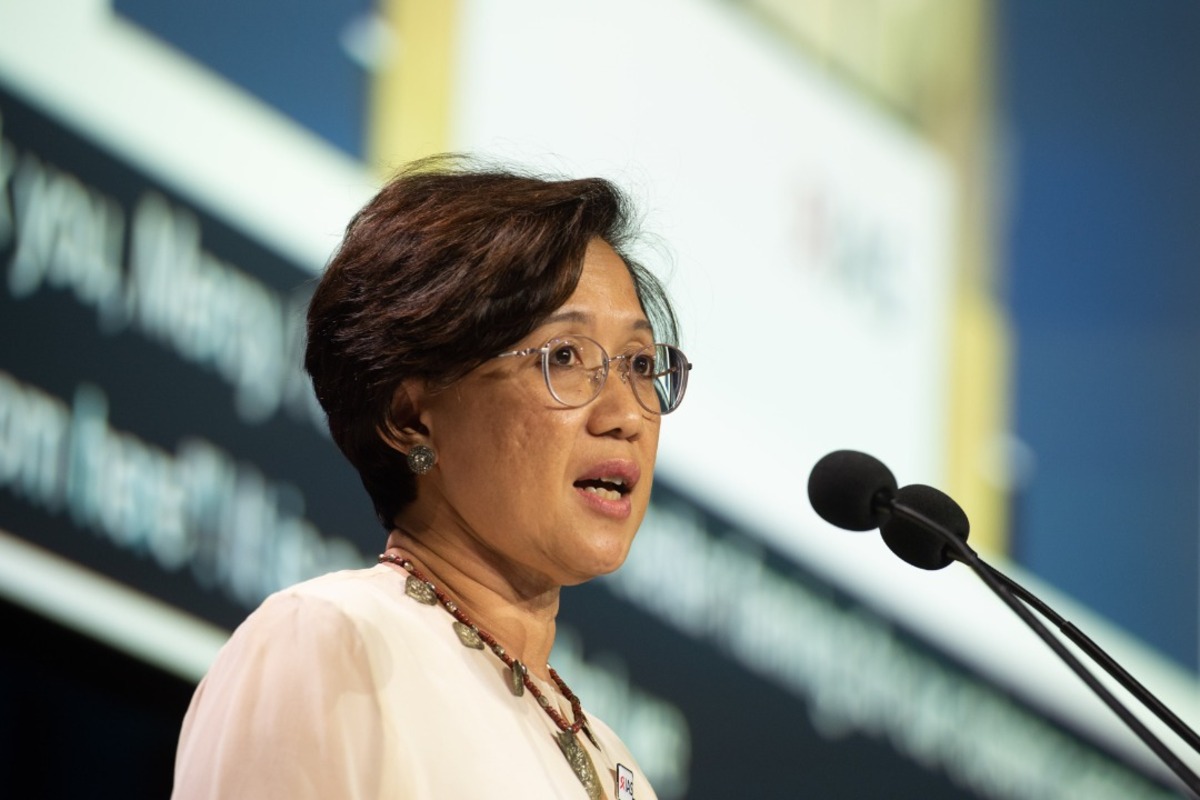
On March 6, 2025, at the Palais des Nations in Geneva, global leaders, activists, and experts convened for the 58th session of the Human Rights Council Panel discussion on sustainable HIV response with regard to the human rights of persons living with, at risk of or affected by HIV.
The discussions reinforced what we already know: stigma, discrimination, and punitive laws continue to fuel the epidemic. Ending AIDS requires more than medicines. It demands political will, legal reform, and an unwavering commitment to human dignity.
The Human Rights Crisis In HIV
The statistics remain stark. An estimated 39 million people are living with HIV worldwide, and in 2022 alone, 1.3 million people acquired HIV. Despite decades of effort, key populations, including people who use drugs, sex workers, LGBTQ+ communities, and prisoners, continue to be disproportionately affected.
These groups face not only higher rates of HIV but also systemic exclusion from healthcare services due to laws and policies that criminalise their existence.
Criminalisation fuels the epidemic. The data is undeniable:
- In countries where drug use is not criminalised, knowledge of HIV status is 15 per cent higher, and HIV incidence is 5 per cent lower.
- Decriminalising sex work is associated with a 10 per cent higher knowledge of status and a 4.5 per cent lower HIV incidence rate.
- LGBTQ+ communities in countries without criminalisation laws have a 7.6 per cent higher knowledge of status and a 3 per cent lower HIV incidence rate.
These numbers represent real people—mothers, fathers, sons, daughters, friends. They remind us that our policies either save lives or sacrifice them.
The recent Human Rights Council resolution (56/20) underscores the need for action. It calls on states to eliminate discriminatory laws and policies, integrate HIV services into primary healthcare, and ensure universal access to prevention, testing, and treatment. But resolutions alone are not enough. We need concrete legal reforms that align with human rights principles.
We know that when human rights are protected, health outcomes improve:
- Countries with legal protections against discrimination based on sexual orientation, gender identity, and HIV status see higher rates of HIV testing, treatment, and viral suppression.
- In places where civil society organisations have the freedom to operate, knowledge of HIV status is nearly 8 per cent higher.
- When countries implement differentiated service delivery models, ensuring that people can access HIV care in ways that fit their lives, treatment coverage increases by 22.5 per cent, and viral suppression rates improve by over 10 per cent.
Take harm reduction as an example. Needle exchange programmes, opioid substitution therapy, and safe consumption sites have been proven to reduce HIV transmission among people who inject drugs.
Yet, only 2 per cent of people who inject drugs live in countries where these services are widely available. This is a glaring failure in public health policy.
Similarly, integrating HIV services into broader healthcare systems, particularly primary healthcare, is crucial for sustainability. Universal health coverage must include HIV prevention, treatment, and care without stigma, discrimination, or fear of prosecution.
One of the biggest challenges remains funding. UNAIDS estimates a US$29.3 billion investment is needed by 2030 to stay on track to end AIDS. Yet, funding for HIV prevention and treatment in low- and middle-income countries has fallen, leaving a 90 per cent gap for key population programmes.
The abrupt termination of USAID-funded HIV/AIDS programmes has further exacerbated the crisis, disrupting essential services for millions.
Governments must increase domestic financing for HIV, ensuring that resources are allocated to the populations most in need. This includes investing in community-led responses, which have proven to be highly effective in reaching key populations and providing stigma-free care. International donors, meanwhile, must honour their commitments rather than retreat from global health responsibilities.
As I stated in my remarks at the Geneva panel, the HIV response must be built on the principles of dignity, equality, and justice. We must ask ourselves: what kind of world do we want to live in? A world where people are criminalised for trying to survive, or one where every individual has the opportunity to live a healthy, dignified life?
The HIV response cannot succeed without human rights at its core. We need governments to take bold, decisive action, repealing harmful laws, fully funding HIV programs, and ensuring that those most affected have a seat at the table in policy-making. The time for incremental change is over. We must act decisively to remove legal, financial, and social barriers if we are to truly leave no one behind.
Ending AIDS is not just about achieving a public health goal. It is about reaffirming our shared humanity. If we choose compassion over cruelty and justice over neglect, then we can finally end this epidemic, not just for some, but for all.
Prof Adeeba Kamarulzaman is President and Pro Vice-Chancellor of Monash University Malaysia. She is also a leading global expert on HIV/AIDS, Vice-Chair of the WHO Science Council, and a member of the Global Council on Inequality, AIDS, and Pandemics.
- This is the personal opinion of the writer or publication and does not necessarily represent the views of CodeBlue.


