


Time moves fast after Covid-19. It has now been five years. If anyone asks again, the health care ground operations team would say, “never again.”
A salute to Malaysians – our people remained calm and helped each other. If one wants to see the drama of Covid-19, then watch the movie Juang.
As the team working closely with primary care and hospitals, these are our observations:
Perception of operations: The Ministry of Health (MOH) has its National Influenza Pandemic Preparedness Plan (NIPPP). It focuses more on the Public Health Response System and Pharmacy Stockpile management, but very little on hospital response strategy.
What could have been done better: Business Continuity Plan on hospital management, extension, and diversion of services as compulsory education for all Hospitalists.
Perception of operations: There is a lag period from recognition of deficit in logistics at the operation site to the actual supply of the needed logistics.
Many times, operational teams were informed that the purchasing process was still ongoing or had not been approved. Luckily, the Malaysian community supported hospitals by donating the required items. These donations arrived faster than the bureaucratic purchasing process.
What could have been done better: The MOH needs to establish a Major Incident Management System (MIMS) team that incorporates all sections in response. There should only be one Commander, while Section Leaders within the Ministry work together as operations enablers.
The operational team focuses on mission objectives, while planning, finance, and administration facilitate the needs of the operational team in a timely manner.
Perception of operations: The MOH continued its usual hierarchical communication and decision-making structure, even though it appointed key leaders in the operational section/region.
These appointed leaders’ alerts and suggested solutions were not conveyed to or taken up by top management, thus leading to the formation of new teams on top of previous teams to find solutions.
Each new team formed merely took plans that were previously ignored by top management and moved it along the administrative bureaucracy. This delayed the whole process in getting essential logistics in a timely manner.
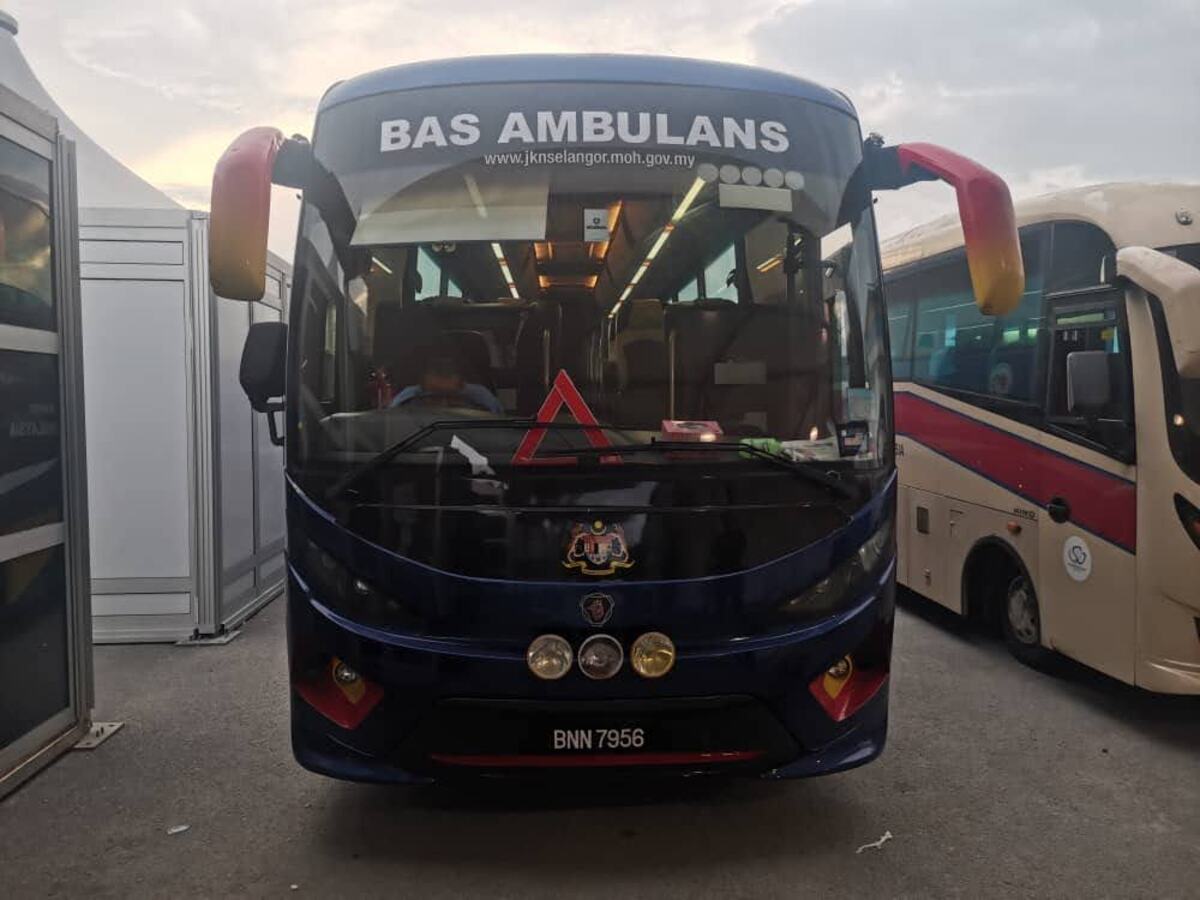
Examples are the utilisation of Google Data Studio as a Regional Bed Management System, “Ambulance Bus” equipped with oxygen, and setting up a temporary oxygen microfiller plant in the Klang Valley.
What could have been done better: The MOH requires a more robust accelerated pathway on the communication of needs, planning of logistics deployment, and administrative tasks to support operational needs.
There should have been individuals specially assigned within the Administrative and Finance Section to manage Covid-19 logistical needs. The concept of “gunasama” is non-existent within the MIMS.
Perception of operations: Clinical teams had to multi-task between clinical work and non-clinical tasks, such as administrative paperwork and statistical data collection at the peak of the pandemic. Its organisational structure workings failed to assist the ground operations.
What could have been done better: There were many success stories on the hospital and primary care side, where administrative personnel were reallocated to assist clinical personnel in non-clinical tasks. Many more hospitals obtained assistance from their surrounding community in non-clinical tasks. These should now be incorporated in the Hospital Response Plan.
Perception of operations: The Emergency Department was always stuck between Hospitalist non-adaptive systems and the prime directive to Primary Care from their Public Health Leaders – admit everyone.
Working within its own silos, the hospital couldn’t cope with the demand resulting from the Public Health directive of admitting every one.
Fortunately, appointed leaders in Kuala Lumpur Hospital and the Selangor State Health Department were able to perform a much needed mutual aid cooperation. This cooperation allowed the two states to share resources with the common goal of managing Covid and non-Covid patients.
What could have been done better: Mutual aid cooperation between States or a Regional Command System is an adaptive system element that was missing in our NIPPP. It would allow states to share resources with the common goal of managing Covid and non-Covid patients.
Perception of operations: The MOH focused on Command and Control in its leadership to solve problems during the pandemic. Operations had to wait for leaders to provide commands before embarking on a solution.
There was an incident where oxygen concentrators donated to the MOH were deployed to Pusat Kuarantin dan Rawatan Bersepadu Covid-19, MAEPS 2.0, but they allegedly could not be used immediately as there was a delay in getting the necessary command from the MOH for testing and commissioning.
What could have been done better: Adaptive Leadership should be the focus of future disaster training, where section leaders are given the confidence to mobilise a group of individuals with the mission to handle difficult challenges.
These individuals are given the necessary authority to ensure their mission is successful within a stipulated time. Thus, there is no red tape for them to navigate in order to achieve their objective in a timely manner.
Positive Aspects Of Covid Operations Then

Even though we have mentioned what could have been done better, we would also like to mention the good things that happened on the operations side:
- When teams were given the right information and understanding, they worked closely together, despite coming from different agencies. Saying the truth about current situations pushed us closer.
- Malaysians were always supportive of everyone in many ways, from personal necessities and food to medical equipment.
- Not all leaders were political. There were good ones who were very encouraging and supportive of ideas. Whenever they could, they guided us on how to adapt and move forward using what we had. Such leaders were very experienced before they got promoted in MOH.
- Many, regardless of specialties, worked as a team. We saw consultants using sewing machines to help with personal protective equipment. We saw surgeons managing Covid-19 in the halls of MAEPS 2.0.
- Staff from different categories developed camaraderie, with their relationships lasting until now.
Post Covid-19

After working endlessly and tirelessly giving our hearts for the success in Covid-19 management within the MOH, we now find ourselves demoralised. We have accepted that:
- Health care workers are not special; we are merely servants to the MOH.
- Politics and bureaucracy within the MOH are our greatest challenge for operational teams to channel their ideas for successful output (unused ideas and talent). Thus, we have to use channels such as health news site CodeBlue (thank you) as our method of communicating ideas to the MOH.
- Waktu Bekerja Berlainan (WBB) and 45 compulsory working hours in a week are only the beginning of many more non-evidence-based solution directives to the health care workforce in the MOH.
Reflection Of Lessons From Covid-19
Despite our feelings above, the greatest lesson and memory that we will always have is this piece of wisdom related to us by a respected Regional Commander and State Health Director, “You must do it now. Be innovative in doing it using what you have. If not, people in the community will die at home.”
Special thanks to everyone from various ministries – we did it. We turned a Low-Risk Quarantine Centre (MAEPS 2.0) into a full functioning field hospital that accepted more than 100,000 Covid-19 admissions.
The authors are physicians in the public health service who were mobilised during the Covid-19 pandemic. CodeBlue is providing them anonymity because civil servants are prohibited from writing to the press.
This article is part of a special CodeBlue series marking the fifth anniversary of the World Health Organization declaring Covid-19 as a global pandemic on March 11, 2020.
- This is the personal opinion of the writer or publication and does not necessarily represent the views of CodeBlue.


