

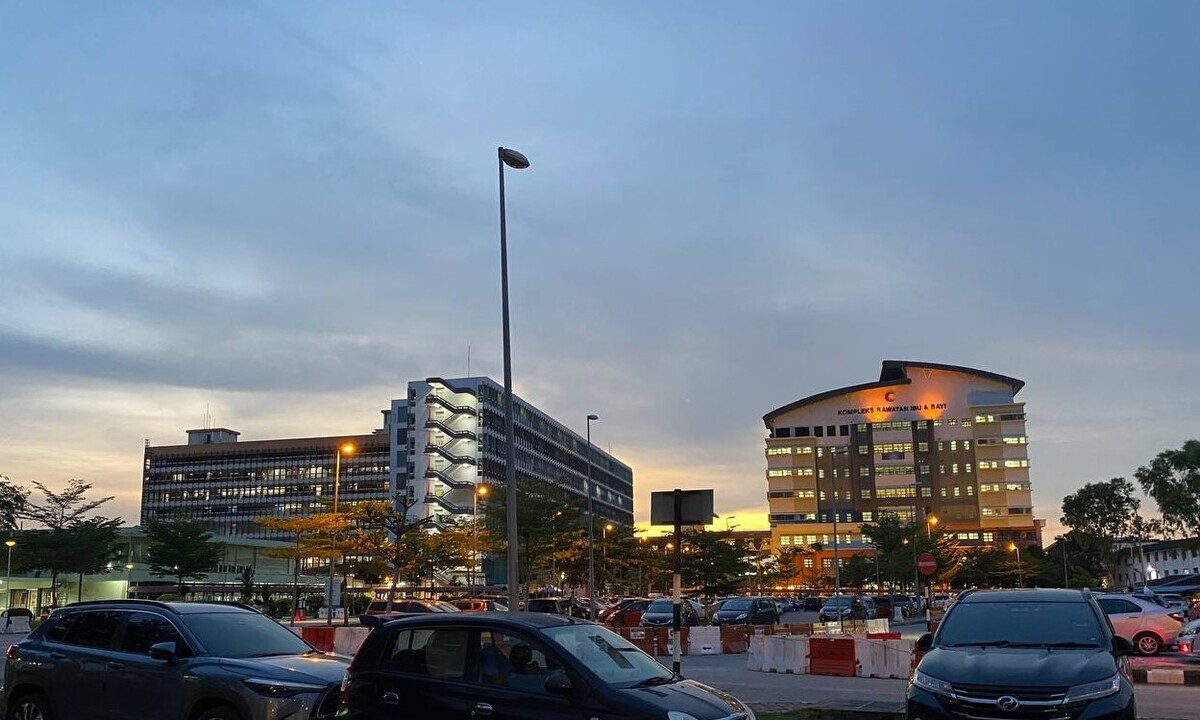
KUALA LUMPUR, Feb 12 — The government has not been entirely successful in cutting non-critical emergency cases at Tengku Ampuan Rahimah Hospital (HTAR) in Klang under the Special Task Force on Agency Reform (STAR) project, a parliamentary report showed.
HTAR data from a Health parliamentary special select committee (PSSC) report revealed that Green Zone cases at the emergency department of the Selangor state hospital – categorised as non-critical patients – fell by less than four per cent year-on-year between March 2023 and March 2024.
The STAR project, launched on March 25, 2023, involved redirecting patients with mild symptoms or non-emergency cases from HTAR to Klinik Kesihatan Bandar Botanik, located 4km away. The initiative was intended as a model to ease congestion at major hospital emergency departments nationwide.
The project initially showed promise, with Green Zone cases dropping from 3,328 in March 2023 to 2,110 by May 2023. Then-Health Minister Dr Zaliha Mustafa highlighted this early success three months into the project. However, the numbers began climbing again, hitting 2,985 by July 2023 and surpassing 3,000 by January 2024. By March 2024, cases had risen to 3,201.
In April 2024, HTAR recorded 3,053 Green Zone cases, averaging about 102 cases per day. Weekend traffic was the heaviest, with Saturdays averaging up to 119 cases (426 total) and Sundays up to 134 cases (481 total), while mid-week cases dropped to as low as 76 daily.

Despite these challenges, the average waiting time for Green Zone patients to be seen by a doctor within two hours exceeded targets, reaching 85.5 per cent in April 2024 compared to the 70 per cent benchmark. HTAR attributed this improvement to the redirection project, additional funding for locum doctors, and the deployment of management medical officers in Green Zones.
Interestingly, higher patient traffic appeared to result in shorter waiting times. Sundays, with the heaviest patient load, saw 93.27 per cent of cases addressed within two hours, compared to 81 per cent mid-week. This suggests shorter consultation times on busier days.
These findings were included in the Health PSSC’s report on the digitalisation of Malaysia’s health care system, tabled in Parliament on November 14 last year. The report included a summary of the committee’s visit to HTAR, the Klang district health office, and Bandar Botanik Klinik Kesihatan on May 21, 2024, led by Health PSSC chairperson Suhaizan Kaiat.
The number of Green Zone patients redirected from HTAR’s emergency department to Bandar Botanik Klinik Kesihatan, 4km away from the government hospital, averaged 554 per month during the first four months of the STAR project. By March 2024, this had dropped to just 70 cases, as more people became aware of Bandar Botanik Klinik Kesihatan’s extended hours and began going there directly.

Admissions at HTAR rose year-on-year from about 70,000 in 2021 to around 86,000 in 2023. By discipline, general medicine had the highest monthly admissions through the emergency department in 2023, ranging from 1,551 to 2,048 cases. This was followed by paediatrics (696 to 916 cases), surgery (324 to 471 cases), orthopaedics (206 to 276 cases), and obstetrics & gynaecology (24 to 51 cases).
Daycare treatment visits also increased over the same period from under 21,000 patients in 2021 to over 23,500 in 2023, while specialist clinic visits grew from fewer than 250,000 in 2021 to nearly 350,000 in 2023.
The number of surgeries at HTAR rose from about 15,000 in 2021 to nearly 25,000, returning to pre-Covid levels. Maternity admissions (childbirths) increased from around 11,500 in 2021 to about 12,250 in 2023.
Waiting times for beds at HTAR have equally surged, climbing from 8.4 hours (504 minutes) in March 2023, when the STAR project was introduced, to 12.2 hours (732 minutes) in April 2024. This marks a significant deviation from the Ministry of Health’s (MOH) benchmark of 4 hours (240 minutes).
HTAR’s average bed occupancy rate (BOR) increased from 77.5 per cent in 2021 to 89.54 per cent in 2023. Its average length of stay (ALOS) dropped from 5.11 days in 2021 to 4.71 days in 2022, before slightly increasing to 4.78 days in 2023. Bed turnover time decreased from 1.48 days in 2021 to 0.56 days in 2023, though no reasons were provided.

At Bandar Botanik Klinik Kesihatan, patient visits have been steadily increasing since the STAR project, particularly after office hours following the extension of its operating hours on weekdays to 9.30 pm. In 2023, monthly patient visits ranged from 16,310 to 33,578, with about 20 per cent occurring after hours.
From January to April 2024, visits ranged from 24,720 to 28,756, with about 16 per cent occurring after hours. The vast majority of cases during this period were neonatal jaundice (yellowing of the skin in newborns), followed by gastroenteritis (stomach flu) and colitis (inflammation of the colon), acute pharyngitis (sore throat), injuries, and viral infections.
Other cases include gastritis, asthma, urinary tract infections, special examinations, personal history of unspecified conditions, type 2 diabetes, uncomplicated varicella (chickenpox), headaches, neonatal jaundice due to breast milk inhibitors, as well as dizziness and lightheadedness.
The waiting times at Klinik Kesihatan Bandar Botanik also increased slightly between June-July 2023 and January-April 2024. While the majority of patients (11,516, or 70 per cent) still wait less than 30 minutes, the percentage waiting 30 to 60 minutes rose by 4 per cent to 20 per cent (3,323 patients), and those waiting longer than 60 minutes increased by 1 per cent to 10 per cent (1,649 patients) during these two periods.
In summary, while the STAR project led to some improvements, such as the initial decrease in Green Zone cases and shorter bed turnover time, its overall impact on reducing emergency department congestion and redirecting non-critical cases has been limited.
HTAR has implemented other initiatives to manage patient traffic, such as designating “purple zones” for asthma patients and developing an in-house bed management system called “Bedwatcher” that helps track bed availability more effectively.
The Health PSSC recommended that several initiatives, such as the bed management system, patient discharge processes, and strengthening collaboration between HTAR and nearby health clinics in the Klang district, be used as models for other government hospitals.


