

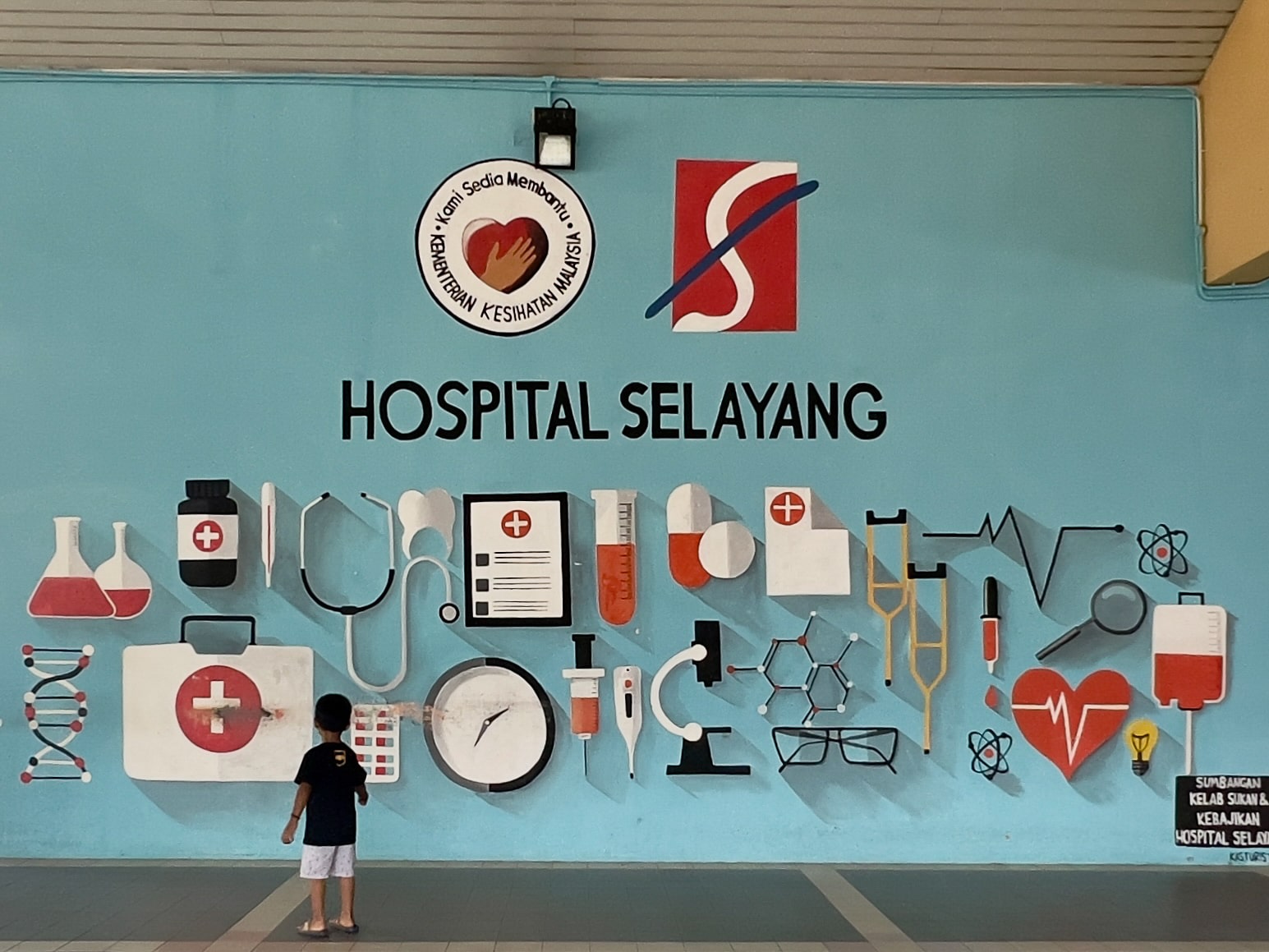
KUALA LUMPUR, Jan 30 — Once hailed as a model IT hospital in Southeast Asia, Selayang Hospital now relies on manual processes to handle up to 4,000 laboratory samples daily.
Dr Mahesh Appannan, the Ministry of Health’s (MOH) director of digital health, said the outdated IT infrastructure in Selayang Hospital, Selangor, illustrates the urgent need for an overhaul in the MOH’s approach to digital maintenance and adoption.
“We actually studied this in depth. When we look back on our maintenance culture, I think we need a paradigm shift,” Dr Mahesh told Parliament’s Health special select committee (PSSC) last July 16.
“We tend to treat the digital world like the physical world. We think we can build something and someone else can maintain it. That has always been our approach, but in the IT and digital world, handing over maintenance to a different team requires a steep learning curve to fully understand the system. This is what we’ve come to realise.
“That is the reason why we are moving towards a new approach that is subscription-based, like how we subscribe to Microsoft Office. Every year there will be patches, there will be advancements. We do not have to come back and redevelop and what not,” Dr Mahesh added, based on the Hansard of the session chaired by PSSC chairman Suhaizan Kaiat.
“Maintenance was certainly an issue. But to be fair, that system (at Selayang Hospital) operated without trouble for 15 years. That means maintenance was done, but we couldn’t keep patching. We couldn’t cope with all the latest developments.”
Dr Mahesh also pointed to difficulties in adapting to growing storage requirements and the challenges of transitioning to new systems.
“In 2016, we tried to introduce a new system, but it became a change management challenge. The medical practitioners there were already very familiar with the existing system, so the transition was a very difficult process.
“This is one of the challenges we face, especially in hospitals and facilities that already have established systems. That’s why we need to carefully plan and ensure that we cannot fail this time,” Dr Mahesh said.
“We hope to kembalikan zaman kegemilangan (restore the glory days of) Selayang Hospital,” he added. Health director-general Dr Muhammad Radzi Abu Hassan was also present at the proceeding.
Dr Mahesh revealed that the MOH was in the process of advertising a tender to implement electronic medical records (EMR) and a laboratory information system for 16 hospitals across Kuala Lumpur, Selangor, Sarawak, Sabah, Perlis, and Negeri Sembilan, including Selayang Hospital.
“We hope that within two to three months, we will have at least a laboratory information system for Selayang Hospital,” he said.
When asked by Suhaizan about global examples of successful digital hospitals, Dr Mahesh pointed to Saudi Arabia, the United Arab Emirates (UAE), and Qatar as key references.
“For Saudi Arabia, they only use one system for all their health care facilities. Secondly, the UAE. Thirdly, Qatar. Qatar has different systems, different products, but they complement each other. So, these two countries are very good.
“Besides that, if we want to take one step further and look at health financing, how digitalisation affects financing, countries like Korea and Taiwan would be examples. So, how this digitalisation actually helps the financing mechanism.
“Western countries are a bit more challenging because if we look at them, there are also Western and European countries that are not yet fully digitised,” Dr Mahesh said.


