

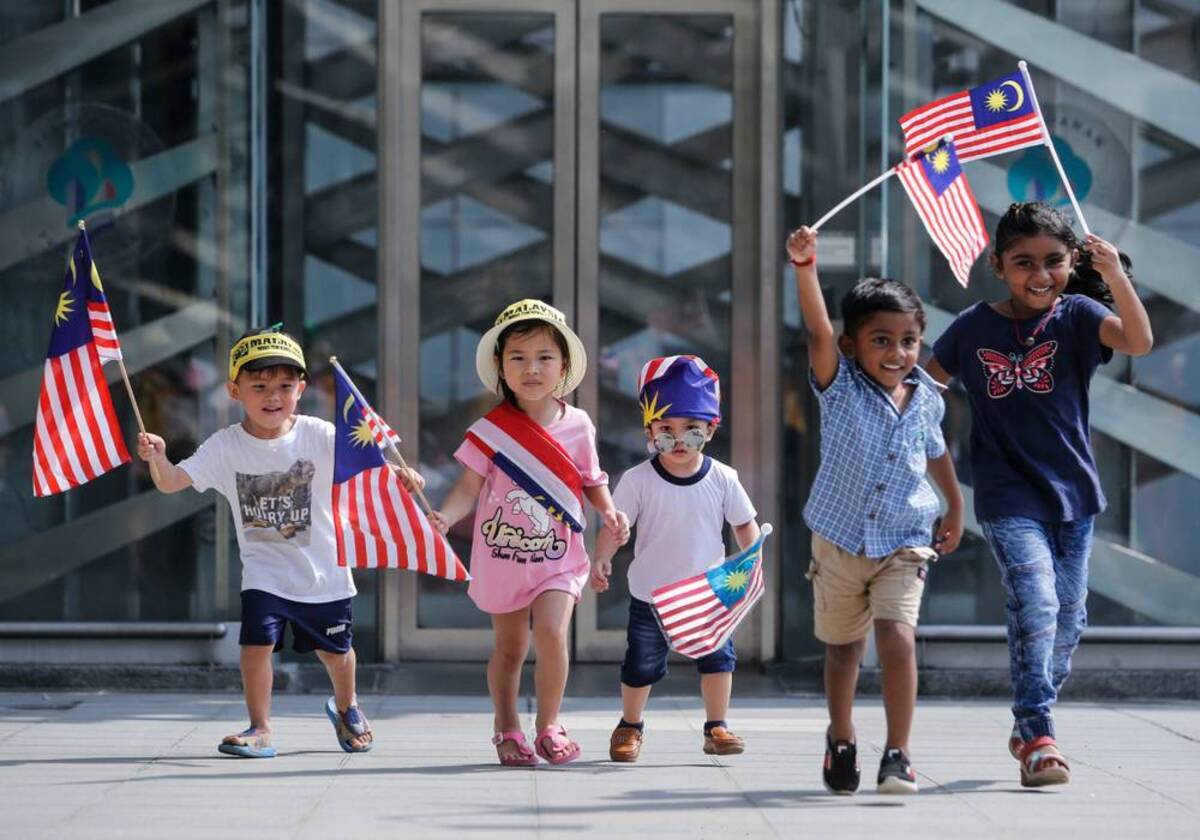
World Children’s Day 2024 is celebrated internationally on November 20, 2024 by all United Nations member countries, including Malaysia. The theme for 2024 is “Inclusion, for Every Child”, emphasising equal rights for every child, the eradication of discrimination and the welcoming of all children in society.
This Children’s Day, and every day of the year, my heart breaks for every child who is not able to go to school or drops out of school, who is still living in poverty or goes to school hungry, who is denied an identity or a home, who is abused by the very systems developed to protect children, and who is denied her/his basic rights.
The reality is that most children in Malaysia are not even aware of their rights, let alone experience them fully. We conducted a study (in press) in Malaysian children aged between 7 and 17 entitled “Are Malaysian children aware of their rights?”. Overall awareness of children’s rights was low (below 50 per cent) both for children and their parents, regardless of age group and socio-demographic status.
It is not just children (and parents) who are unaware of their basic rights, some government agencies and even politicians seem unaware of them. After almost 35 years we have still failed to realise the meaning and aspirations of the UN Convention on the Rights of the Child (UNCRC) in Malaysia.
The basic rights of all children are envisioned in the UNCRC. These are not some foreign ideals or concepts, but the basic rights we would expect for any and every person, found in all cultures, major religions, and any humane society.
In a nutshell, the rights cover protection, provision and participation. It recognises that all children are equal, that all children have the same rights, regardless of their race, sex, language, religion, disability, social status, or other factors.
As our Child Act 2001 states: “Recognising every child is entitled to protection and assistance in all circumstances without regard to distinction of any kind, such as race, colour, sex, language, religion, social origin or physical, mental or emotional disabilities or any other status.”
The moment the system or a politician/leader values one child more than another, we have degraded children’s rights, lost part of our humanity as a nation, and have a diminished understanding of God’s love for all children. There are no minorities, no stateless, no VIPs children. All are valued, have equal rights, and should be accorded these rights.
The voices of children are poorly heard in our country. Children in our nation cry out via their pressing needs and struggles, but this does not translate into sustainable, concerted action.
We do have a National Children’s Representative Council (MPKK), the Office of the Children’s Commissioner Children’s Consultative Council, and a number of Child Councils set up in cities with the aid of UNICEF. But their voices are limited and not taken seriously.
I had conducted an anonymous assessment of parents, predominantly educated and middle or upper middle-class professionals, as to their implementation of child rights pertaining to listening to children i.e. Articles 12, 13 and 14 of the UNCRC.
While 93 per cent responded affirmatively to enabling their child and other children to express their thoughts and opinions (Article 13 on freedom of expression), only 75 per cent said they listened to the views of their child and other children and took them seriously (Article 12 on respect for the views of the child), and only 73 per cent believed that their child and every child has the right to think and believe what they choose (Article 14 on freedom of thought, belief and religion).
These honest responses do not augur well for us as a nation. I wonder what we would find if we did such an assessment among our elected representatives.
It is time, as a nation, that we fulfil all our responsibilities and give all children in Malaysia their basic rights.
This means creating routine, sustainable avenues for children to express their opinions and concerns, and for these to be heard and acted on by the government.
It means removing all our reservations to the UNCRC and ensuring that all laws relating to children are in line with the UNCRC.
Ensuring the rights of all children includes the provision of universal health, education and social (protection) services for all, regardless of status.
Finally, children and families require the government and society to create safe and healthy environments, mitigating the climate emergency.
A government and society that does not listen to its children is not one that cherishes them. It is in fulfilling these responsibilities and rights that the government and society can create an environment where all children can thrive and reach their full potential.
We need a compassionate and inclusive government that treasures all children and leaves none behind.
Dr Amar-Singh HSS is a consultant paediatrician and child disability activist.
- This is the personal opinion of the writer or publication and does not necessarily represent the views of CodeBlue.


