

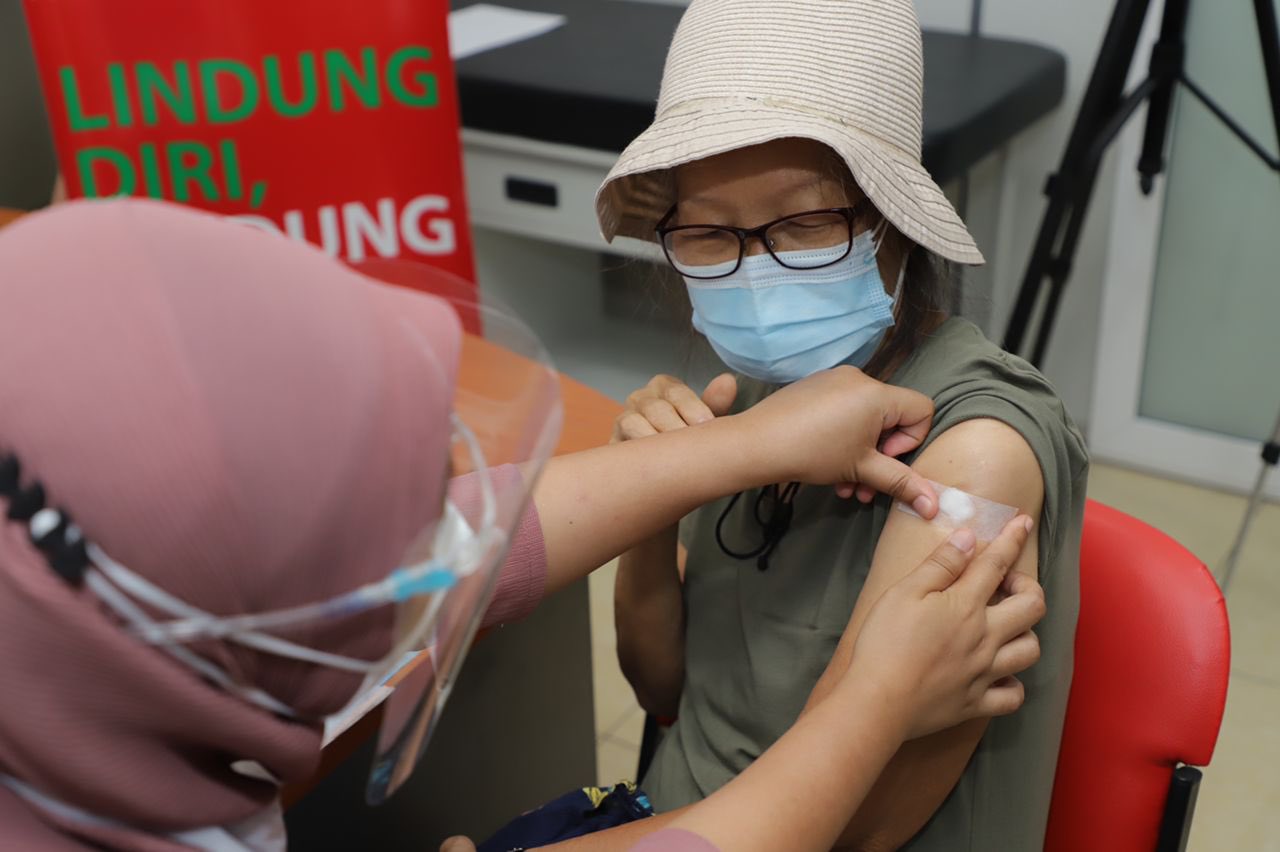
I was lucky enough to be able to get my 2023/24 Covid-19 vaccine, the monovalent XBB.1.5 shot, in Singapore in January this year, since the updated shot wasn’t available in Malaysia.
However, a reader recently emailed CodeBlue, saying it appears as if the updated Covid vaccine is no longer available in Singapore for private purchase by Malaysian residents.
Now, there are updated versions of the Covid vaccine for 2024/25. Last August, the United States’ Food and Drug Administration (FDA) approved updated mRNA vaccines by Pfizer and Moderna, a monovalent shot that targets the Omicron variant KP.2.
Both the European Medicines Agency (EMA) and the World Health Organization (WHO) have recommended, for 2024/25, monovalent Covid vaccines targeting the JN.1 variant.
Malaysia is still stuck with outdated vaccines – the Sinovac shot that targets the ancestral strain of SARS-CoV-2 five years ago – after multiple updated versions have already come and gone in other countries.
The Ministry of Health (MOH) must bring updated Covid vaccines into the country – whether the JN.1 or KP.2 shots, whichever is appropriate based on the circulating variants here – to protect the elderly and other high-risk populations.
Earlier this month, Japan launched a Covid-19 vaccination drive with the JN.1 vaccine, targeting seniors aged 65 years and older, with out-of-pocket expenses for the elderly capped at ¥7,000 (RM201). The Japan Times reported that from this fiscal year, Covid-19 vaccinations are conducted as an annual routine vaccination programme similar to influenza inoculations.
According to the United States’ Centers for Disease Control and Prevention (CDC), over 95 per cent of adults hospitalised in 2023-2024 due to Covid-19 had no record of receiving the latest vaccine.
Since the MOH is willing to provide free influenza shots to the elderly under the National Immunisation Programme (NIP) next year, why can’t a similar allocation be set under Budget 2025 for Covid-19 inoculation for the same high-risk group of people?
From a programmatic aspect, it would be practical and cost-effective for the MOH to run an annual routine vaccination programme for senior citizens that combines updated flu and Covid shots.
Even though there is likely to be little public appetite for a national Covid-19 vaccination drive, the government has a responsibility to protect the most vulnerable populations. For younger adults, they can choose to pay out of pocket for updated Covid shots in the private market.
The KKMNow dashboard recorded an average of 50 to 70 daily hospital admissions for Covid-19 in the past three months. These take up precious beds, amid shortages of beds and health care workers in various public hospitals.
In a recent letter to CodeBlue, a physician observed that in major specialist hospitals within major cities of each state and the Greater Klang Valley, patients are placed on beds in corridors not intended for clinical care areas; some even lie on disaster camp beds because physical beds are no longer available.
In this “temporary setback or disaster” situation, staff multi-task and work double shifts, while patients face prolonged waiting time.
The main purpose of vaccination is to prevent severe disease and hospitalisation – which is what the Covid vaccine does. It would be penny-wise and pound-foolish to not allocate funding for vaccines, as vaccination can help free up beds and human resources to treat non-Covid patients.
Health Minister Dzulkefly Ahmad has reiterated, multiple times, the importance of preventive care. The Ministry of Finance (MOF) should heed this.

Boo Su-Lyn is the co-founder and editor-in-chief of CodeBlue.


