

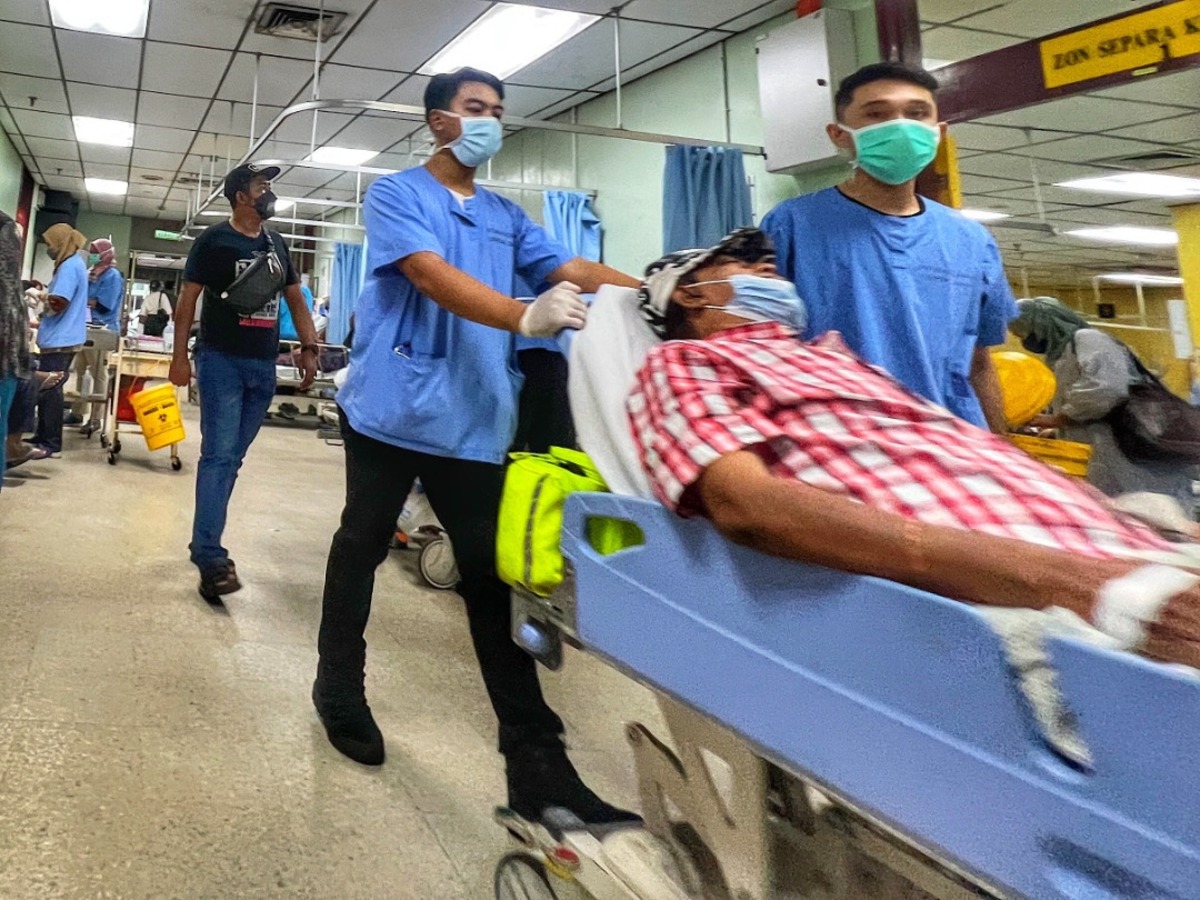
Ask any nurse, doctor, medical assistant or pharmacist working in the public health care sector whether there is any excess or underutilised capacity in treatment and care services at the government’s hospitals and clinics, and they will probably answer that they wish there were so that they could spend more time with family and friends, and focus on their wellbeing.
They would also likely challenge any claim that there is currently such a surplus in manpower and equipment. The public health system has been repeatedly described as understaffed, underfunded and overcrowded by at least two Health Ministers. Has anything changed?
Using investments from government-linked investment companies (GLICs), the government is reportedly planning to expand the existing full-paying patient (FPP) programme as part of proposed health reforms. It intends to utilise some of the revenue generated from it, under a new RakanKKM programme, to be invested back into the broader public health service.
There are many questions, particularly since consultation with key stakeholders, especially frontline staff, seem to be limited. This policy initiative is expected to be announced in the upcoming tabling of Budget 2025 by Prime Minister Anwar Ibrahim.
The FPP programme is currently available in 10 Ministry of Health hospitals. It offers patients the ability to choose their specialist doctors, stay in first class wards or equivalent, and benefit from improved treatment and care, all at competitive rates that are lower than private hospital charges. Patients are charged at full rates.
Within the same hospital, the FPP programme shares human resources, equipment and other services with the non-FPP side. It covers outpatient, inpatient, and daycare services, and excludes emergency care. It is also subject to the availability of resources, expertise, and facilities.
The FPP programme is managed by participating hospitals and regulated via the Fees (Medical) (Full Paying Patient) Order 2007 and the Guidelines for Implementation Fee Order (Medical) (Full Paying Patient) 2007 (Revision 2015). It is not considered a form of privatisation or commercialisation of public hospitals.
When the full-paying patient services were first introduced in 2007, Malaysia’s population was 27 million, the total budget and the health allocation for 2007 as presented by then Prime Minister Abdullah Ahmad Badawi were RM134.8 billion and RM10 billion respectively, the diabetes prevalence rate was 8.6 per cent, and there were around 20,000 doctors in the service.
In 2023, there were 10 hospitals running the FPP programme. However, the population is now 35 million, the total budget and health share for 2024 as tabled last October were RM393.8 billion and RM41.22 billion respectively, nearly 2.3 million adults live with three non-communicable diseases (diabetes, hypertension, high cholesterol, or obesity), 16 per cent live with diabetes, and there were around 41,000 registered doctors in government employ. There are thousands of unfilled vacancies for doctors, nurses and other roles as health care workers continue to leave the public service.
Far from helping to alleviate the crippling financial burden faced by the public health system and reduce the patient load, the expansion of this programme, at this point of time, might trigger a number of unintended consequences, including resignations among senior nurses and medical officers, and increased frustration and pressure due to mismatched specialists and patient expectations.
This is due to a number of issues identified from more than a decade of experience of the FPP programme. These include sharing of medical equipment and specialists’ medication quota between public and FPP patients, and being unable to charge unlisted medicines or consumables. In some hospitals, dedicated FPP services may have even been suspended or disrupted due to the unavailability of relevant specialists or physical facilities.
Most concerning are the problems related to limited human resources where the same people who are running the FPP services are also managing the non-FPP side, which has a larger number of patients. Are specialists attending to their FPP patients after a full day of tending to the latter? The increase in workload, fatigue, and imbalance in supporting services have raised frustration and dissatisfaction among staff.
FPP hospitals experience significant challenges through the creation of another dichotomy within an already two-tiered health care system. How many of the 10 hospitals currently designated as facilities offering FPP are still doing so, and in what specialised areas? It might be useful to call up the front desk and ask. The answers might be surprising.
Then-Prime Minister Dr Mahathir Mohamad, who was also finance minister, pointed out in his 2004 Budget speech: “The government is not able to provide high remunerations for medical specialists. As such, the government has agreed to set up private commercial wings in government hospitals, to enable serving doctors to enjoy better remunerations and thereby, continue to serve with the government.”
“Through these measures, the government also hopes to attract specialists who have left the service to return and serve in government hospitals. In addition, this will enable those seeking better medical treatment to obtain such treatment at reasonable charges in government hospitals. It will also enable our government hospitals to be promoted abroad, in line with the objective to encourage health tourism.”
Dr Mahathir Mohamad, 2004 Budget speech
As the government’s medical service was experiencing a brain drain in the early 2000s, the programme’s primary design and intention was to help retain medical specialists in the system and provide financial incentives for them to stay and grow in their careers without leaving government service.
It was not intended to help deal with an increasing and crippling caseload of patients coming into the public health system, seeking and needing care. Will it be able to raise additional revenue sufficient enough to break even and subsidise the non-FPP side?
Was what was intended two decades ago able to be implemented as intended, achieve the intended objectives, and have the desired outcome or impact?
As a measure of outsourcing health care services, the government currently has public-private partnership agreements with at least 80 private hospitals where patients are referred to these facilities for their procedures, treatment and specialist care, which are subsidised by public funds. This was and is a smart and absolutely necessary move.
If the government is determined to expand the FPP programme, it should consider something similarly bold and forward-looking. Take the FPP out of public hospitals altogether and leasing entire wards, staff and equipment of existing private health care facilities for that purpose.
This would minimise capital expenditure namely acquisition, maintenance, upgrading of physical assets such as buildings, hospital beds, diagnostic equipment, and medical technology; headcount, particularly doctors, nurses, medical technologists, and other personnel; and other running costs.
This proposal would have the benefit of not stretching existing human resources and infrastructure in the public health sector to meet the needs of the FPP programme. It would make use of existing specialists, health care workers and equipment which may be underutilised in the private sector. Through multi-year agreements, the leasing could very well be more economically beneficial in the long term. As the government is leasing the facility, it can adjust the charges to fit its needs as an FPP facility.
Most importantly, the arrangement would address expectations from both patients and specialists regarding what such a service should be for the money that they will be paying.
This approach could be more sustainable and a better use of the GLIC funds, particularly if a commitment could be secured for at least 10 years. The upgrading of the public health care system needs billions in new funding and investment, and it should be across the board and for all, rather than benefiting a privileged few.

Azrul Mohd Khalib is the chief executive of the Galen Centre for Health and Social Policy.
This is the personal opinion of the writer or publication and does not necessarily represent the views of CodeBlue.


