

KUALA LUMPUR, Feb 23 — A specialist doctor at Miri Hospital has received a warning letter after highlighting doctor shortages on social media, raising concerns about possible reprisals against doctors who speak out.
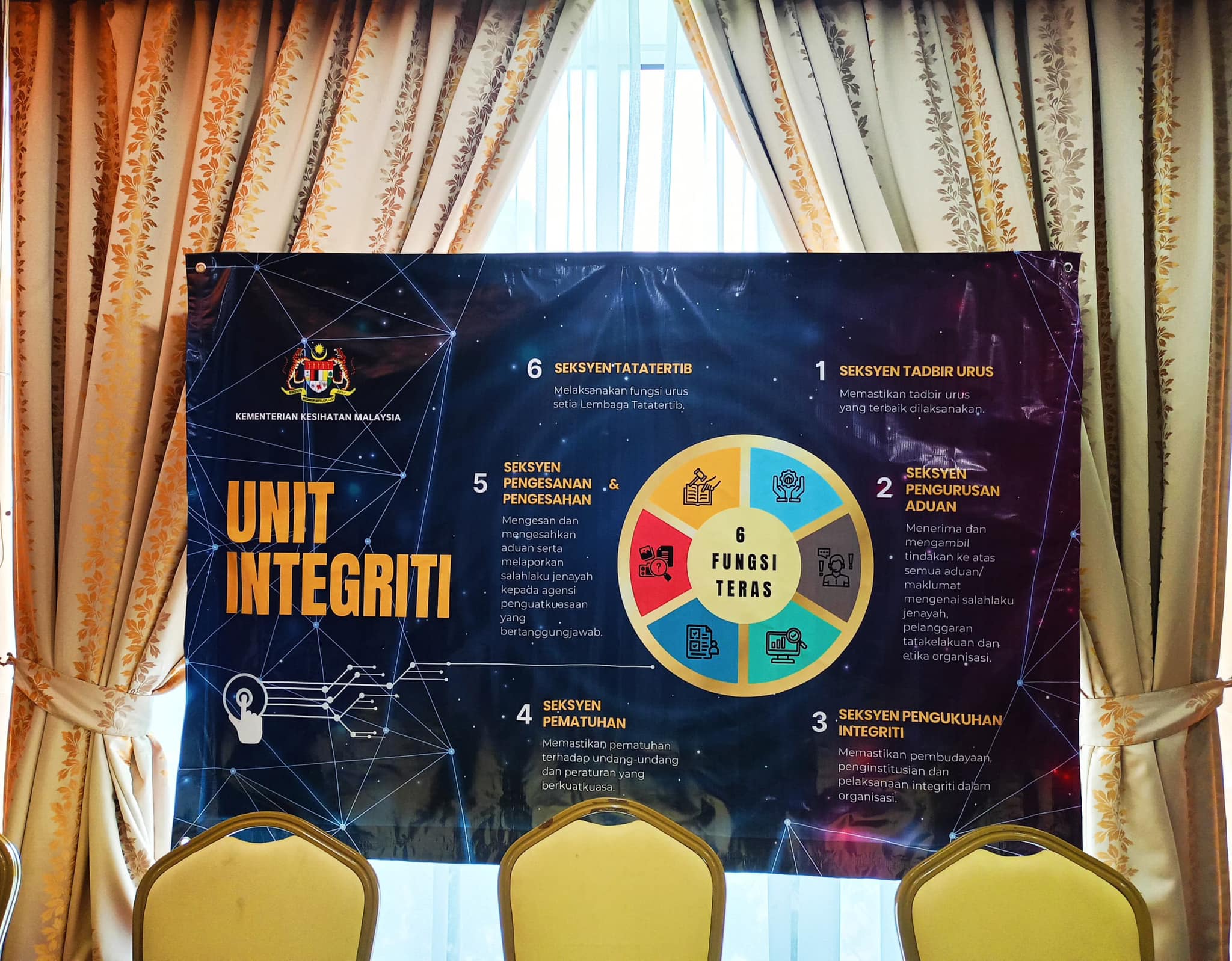
A source told CodeBlue that the Ministry of Health’s (MOH) integrity unit called the specialist last Thursday and told him to collect a letter.
“It’s most likely a surat amaran by Unit Integriti; often the first warning,” said the source.
The specialist has already deleted his recent viral post on Threads, which reportedly received 350,000 views, of a photograph of a crowd of people standing in a clinic in Miri Hospital, a district hospital with subspecialty services that serves Miri, Bintulu, and Limbang divisions of Sarawak.
“Our healthcare is collapsing [sic] or gonna collapse rather soon..My hospital in my dept each ward is left with one medical officer taking care of 50 pts [patients] each. So the specialists run the clinic and our pt turns out to be 200 per day. As shown in the pic, there is no even a place to sit,” the doctor wrote, without naming Miri Hospital.
“But who cares? Service comes first..Everyone goes home late at 7-8pm. But who cares again?? Service comes first..”
CodeBlue sighted messages circulated last week in internal WhatsApp groups at Miri Hospital, where a head of department (HOD) posted on Thursday a June 2025 letter by the Public Service director-general about a prohibition to civil servants under 1993 regulations against making public statements that can “embarrass or give the government a bad name”.
In earlier messages to Miri Hospital’s work WhatsApp groups last Monday, the HOD urged another specialist (a physician) – who sent CodeBlue an allegation about wage theft for passive on-call duties performed by subspecialists at the district hospital – to come forward and engage directly with him, as “admin see this issue seriously”.
CodeBlue published the physician’s letter to the editor earlier that day anonymously.
The HOD’s WhatsApp messages further warned of action against the specialist who posted on Threads about staff shortages. “As reminder to team, there is proper channel to voice your opinion on Hospital Miri and KKM and not in social media as it gives false impression to public.”
Three days later, the specialist received a phone call from the MOH’s integrity unit about his letter.
Miri Hospital’s HOD and hospital director declined comment when asked about the WhatsApp messages, referring CodeBlue to the MOH.
Health Minister Dzulkefly Ahmad’s office also declined comment when asked about Miri Hospital’s “witch hunt”, the ministry’s warning letter to the specialist, and the doctor shortage and wage theft complaints, referring CodeBlue to MOH secretary-general Suriani Ahmad’s office.
Suriani didn’t respond to a request for comment about the warning letter or manpower shortages at Miri Hospital; neither did MOH’s corporate communications unit.
In a statement last Friday, the Sarawak state health department (JKNS), led by state health director Dr Veronica Lugah, said initial investigations didn’t find non-compliance in on-call allowance (Etap) payment for doctors rostered for duty.
“For officers who aren’t rostered for duty but are called ad hoc, Etap payments will still be given, in line with the regulations and guidance in force. However, detailed investigations are still being carried out to ensure that issues or weaknesses, if any, can be identified and continuously improved,” JKNS wrote in a Facebook post with comments turned off.
The physician earlier claimed in his letter to CodeBlue that Miri Hospital administration initially refused to recognise subspecialty on-call claims, before offering a compromise for consultants to remain on daily stand-by (passive on-call) but to only claim on-call allowance if they receive a referral.
JKNS didn’t post a statement on its Facebook page in response to the other specialist’s complaint of shortages of medical officers and specialists at Miri Hospital.
An HOD at a government hospital in Sabah said separately that while attempts to identify complainants may occur, hospital management should prioritise verifying and addressing the issues raised.
“What is more important is the issue at hand – whether it is real or not. The administration should focus on that,” he told CodeBlue on condition of anonymity as civil servants are prohibited from speaking to the press.
He added that doctors should generally be allowed to express concerns on social media unless their posts are “overly provocative”. “’Luahan hati’ is fine,” he said.
The Sabah HOD said if concerns were raised within his own department, his first step would be to determine whether the issue was genuine and how to resolve it.
He noted, however, that internal “witch hunts” were not uncommon in the national health service. “Yes, it happens all the time, especially in government service, and is probably a stumbling block to progress.”
Miri Hospital administration’s reiteration to staff of the Public Service Department’s (JPA) warning last year to civil servants against speaking out appears to have leaked onto Facebook page Borneo Insider.
“Because if you silence the doctors, manpower magically improves — right?” Borneo Insider wrote sarcastically in a post last Saturday. “This is why Sarawak needs health care autonomy.”
In a comment, a consultant neurologist at Sarawak General Hospital (SGH) called for urgent and coordinated action for better recruitment, improved retention, fair working conditions, and policies that reflect the realities on the ground.
“Chronic shortages of doctors and nurses, overworked staff, and high resignation rates are not abstract problems; they are affecting patient care every single day,” he wrote.
“Frontline workers are stretched to their limits, yet many policies meant to address these issues remain slow to deliver meaningful change. Ignoring these structural problems will only worsen outcomes for both patients and health care professionals.”
The reported disciplinary action against the Miri Hospital specialist, alongside efforts to identify a whistleblower, is likely to heighten concerns among clinicians about potential repercussions for speaking out on workplace issues in the MOH.
Dzulkefly said in a statement last July that he believed “correcting the system is more important than building perceptions in leading the Health Ministry”.
Sarawak Deputy Premier Dr Sim Kui Hian told reporters Saturday that he would raise the state’s health worker shortages at the Technical Committee under the Malaysia Agreement 1963 Implementation Action Council this week.


