

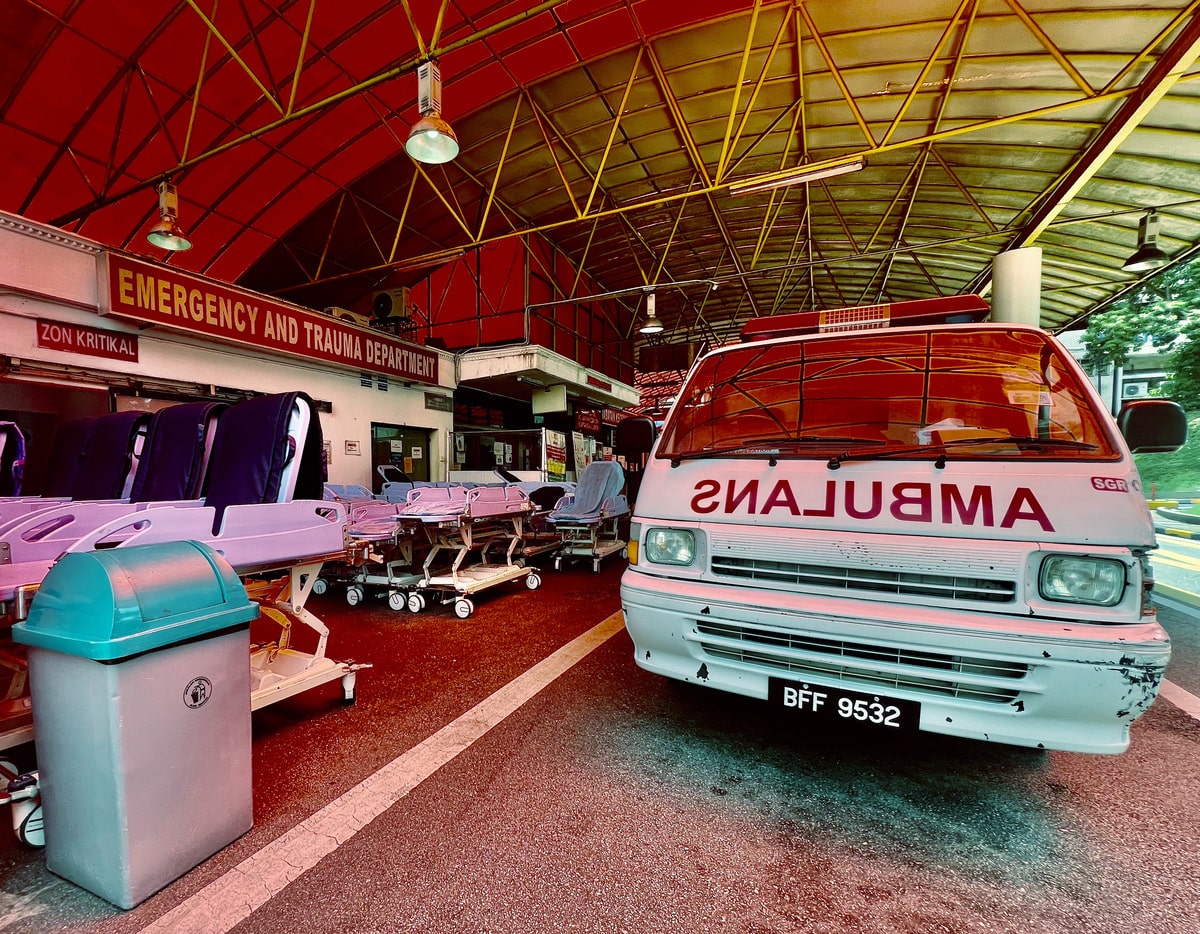
KUALA LUMPUR, Nov 13 — The Ministry of Health (MOH) is exploring collaborations with private hospitals to “Uberise” ambulance services that will operate like e-hailing services to expedite emergency responses.
MOH deputy secretary-general (finance) Norazman Ayob said the plan shifts away from the traditional view that hospitals must own their ambulances, creating a shared pool of government and private ambulances instead that is accessible through an app, rather than the 999 emergency hotline that caters only to public ambulances.
With this app, whichever ambulance (whether MOH or private) is nearest to the caller will attend to the emergency call and take them to the nearest hospital, be it government or private; people also have an option to choose whether to go to a public or private hospital.
“I think, as far as ambulances are concerned, the conventional thinking is that hospitals must own the ambulance. We are slowly moving away from that,” Norazman told the MIH Megatrends 2024 conference last October 25, organised by MOH in collaboration with KPJ Healthcare.
“We are in discussion with the MOH and the Ministry of Finance, and principally, they have agreed that the MOH will no longer own any ambulances. But that doesn’t mean we won’t have ambulances. We are going to lease these ambulances, along with drivers, and are considering whether to include paramedics.
“Not only that, we are throwing in an application to ‘Uberise’ or ‘Grab’ ambulance services, meaning now the patient or anyone needing the service won’t need to call an emergency number.
“You just download the app, press a button, and the ambulance will come to you. We call it ‘Uberise the Ambulance Services’, and we plan to partner with the private sector because we feel that private hospitals, like KPJ Healthcare, for example, don’t need their own ambulances either. They can partner with the MOH and create a shared pool of ambulances, and perhaps we can share costs. That’s the beauty of it.”
Association of Private Hospitals Malaysia (APHM) president Dr Kuljit Singh, who was the moderator for Norazman’s session, commented: “I think that is one of the sore points we have in both the public and private sectors. Many times, when an ambulance responds to a call at a particular house, it refuses to take a patient to a private hospital, saying it’s an MOH ambulance.
“They’ll say we can only direct the patient to a government hospital, even if they requested a private facility. Only after reaching an MOH hospital can they be transferred to a private hospital, which is actually a waste of time and resources.”
Norazman later clarified in a post on X that there will be no charges if people use the ambulance app to go to government hospitals; only those taken to private hospitals will have to pay for the ambulance service.
In Malaysia, ambulance ownership is not limited to public and private hospitals; it also includes non-governmental organisations (NGOs), corporate entities, and local councils.
Norazman explained to CodeBlue that the proposed ambulance app enables callers to choose whether to go to a government or private hospital, besides allowing users to track the ambulance’s journey and estimated time of arrival. The patient’s next-of-kin can similarly track the ambulance on its way to the hospital.
As a pool of MOH and non-MOH ambulances accessed via an app would operate like commercial e-hailing services, this could expedite an emergency response because the caller has direct access to nearby ambulances, instead of going through a 999 operator that handles all sorts of emergencies beyond medical cases.
For emergency cases requiring ambulance services, 999 calls need to be further diverted to the particular public hospital’s Medical Emergency Coordinating Centre (MECC) that will then send out an ambulance.
Hence, an ambulance service app could potentially skip two steps: the 999 operator and the MECC – assuming that paramedics remain in ambulances at all times, even when they are not currently responding to an emergency call.
A national audit report released last year revealed that the MOH fell short of its 50 per cent target for responding to Priority 1 cases, achieving only 31.5 per cent to 41.8 per cent between 2017 and 2021. Priority 1 cases refer to life-threatening emergencies requiring immediate medical attention, such as strokes, breathing difficulties, and accidents.
The shortfall was attributed to two main factors: delays in activating the response team at the nearest hospital and significant distances between emergency sites and hospitals, ranging from 60km to 443km.
Editor’s note: The story has been updated with the 10th paragraph on Norazman’s clarification in a post on X on November 14.


