

KUALA LUMPUR, Oct 15 — A health economist and hospital management expert expects the Ministry of Health (MOH) to “fully” privatise its full-paying patient (FPP) service under the new RakanKKM programme.
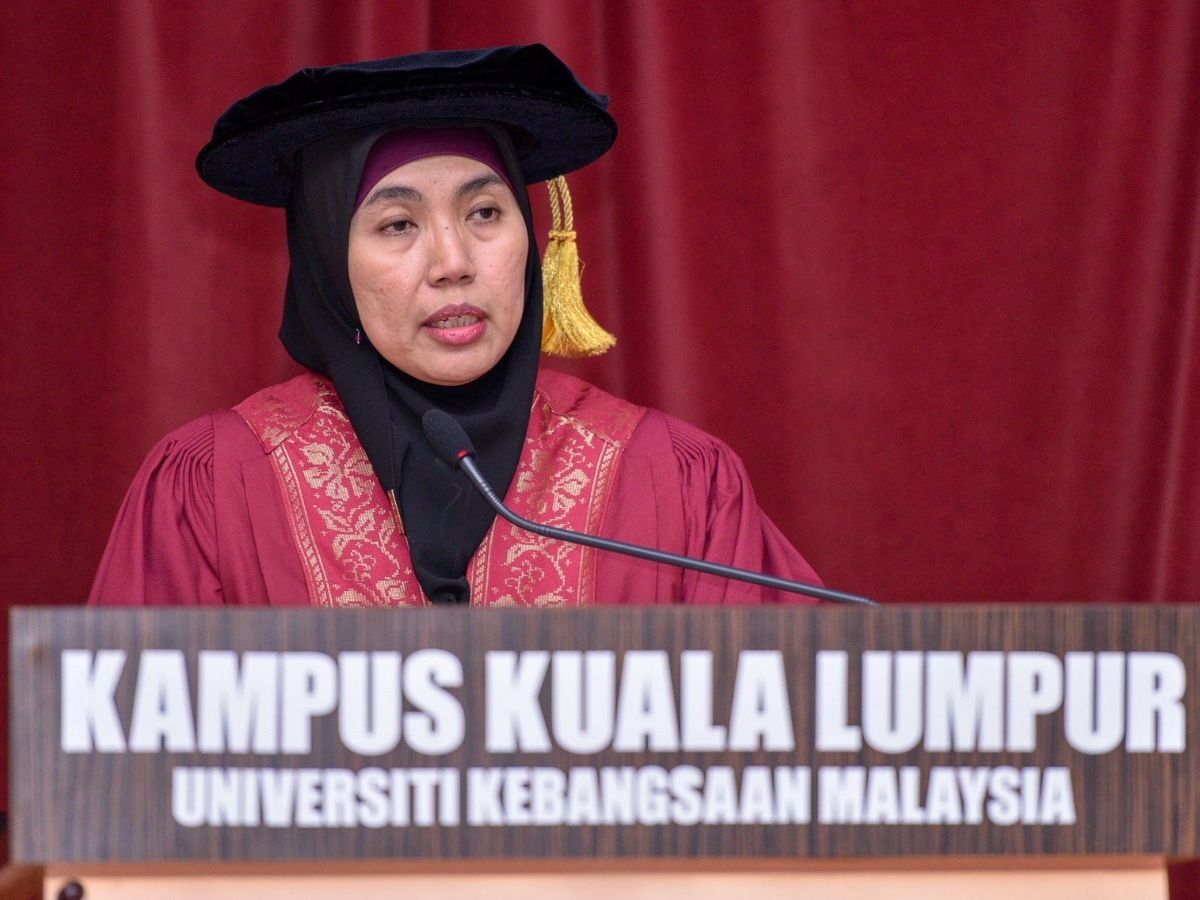
Prof Dr Sharifa Ezat Wan Puteh from the Faculty of Medicine at Universiti Kebangsaan Malaysia (UKM) – who published a study in November 2023 on MOH’s FPP service in four selected government hospitals between 2017 and 2020 – said the current FPP that started in 2007 isn’t a fully private service yet as its charges are based on old budgeting approaches.
“But later on, as has been mooted by [Health Minister] Datuk Seri Dr Dzulkefly [Ahmad], there could be a fuller form, a higher form of FPP, where it’s going to be completely following not only budgeting, but payment charges based on private,” Dr Sharifa told BFM’s Health & Living podcast, hosted by producer Tee Shiao Eek and co-hosted with Galen Centre Health and Social Policy chief executive Azrul Mohd Khalib.
“That would be complete privatisation. From what I heard from the government, this is where they’re heading.”
In the podcast aired last Thursday, BFM discussed Dzulkefly’s recent proposal to expand “private wings” or the FPP service in MOH hospitals to raise revenue and retain specialist doctors under RakanKKM.
Dzulkefly told a cancer congress in Geneva, Switzerland, that the government plans to set up a special-purpose vehicle (SPV) for this programme, based on investments from government-linked investment companies (GLICs). In a post on X last Sunday, the health minister said the “RakanKKM Partnership” isn’t the same as the existing “FPP-Private Wing”, but did not give further details about the new programme.
RakanKKM is expected to be announced in Prime Minister Anwar Ibrahim’s Budget 2025 speech this Friday during tabling of the national budget in Parliament.
When Azrul asked if the health minister’s proposal could be characterised as a form of privatisation of the health service, Dr Sharifa replied: “It is totally that, Azrul. That’s the scary part.”
“If we do not regulate or control it, it will lead to more privatisation and in the end, it will create problems of inequality. There won’t be good access for the lower income, but of course, there will be better access for the higher income and also the insured population.”
Dr Sharifa said many studies on other countries that provide similar services to MOH’s FPP have shown that in those public hospitals, quality of care may be jeopardised and waiting times may increase for public patients, as most specialists or consultants go to the private wing.
“We’re not saying this has happened yet in MOH, but it has happened in many countries,” she said.
“What’s left in the public sector is the so-called lower levels of doctors – they might be post-grad, registrars, or just medical officers and housemen who cannot do much. So the intensity of care that’s given in the public sector might be downgraded, or there might be some jeopardy. That has to be deterred by each hospital and the government very carefully.”
The UKM professor in health economics, hospital, and health management said under the FPP service, in general, 60 per cent of revenue goes to the government or MOH overall, and 40 per cent to the specialist. In public teaching hospitals that also run private specialist centres, some revenue is returned to the hospital itself.
“In a way, both parties benefit from this relationship,” said Dr Sharifa. “The only one that does not benefit, in my opinion, is the patient, especially patients who are not able to pay.”
The researcher pointed out that most of the time, private wings in public hospitals in Malaysia share infrastructure and assets with the public service.
“So that creates another issue because, in a way, you have to compete with public patients for say, CT scan, ultrasounds, OT (operating theatre) beds, and things like that.
“By right, it should be a dedicated area, but most of the time, the resources are being shared. This is where some of the inequality or quality of care can be jeopardised.”
The health economist said cardiovascular services are especially “lucrative” in FPP services, with a high number of procedures. “You have to compete for OT beds, OT time, and things like that.”
She stressed that private patients under the FPP should pay extra for beds because they’re “taking away time and money from the public sector.”
“The public sector receives money from the government for sustenance, OT lights. If FPP patients come in, by right, they should be paying more for that. These charges have to be inputted so that you can make more beds, more OT, specifically for the private sector,” Dr Sharifa said.
“If it’s not properly defined and allocated, you will create inequality.”
Dr Sharifa said the four FPP hospitals in her study generated profit of about RM15 million, a “drop in the ocean” compared to the MOH’s RM41 billion budget this year. This necessitates an increase in charges for the FPP service by reviewing the Fees (Medical) (Full Paying Patient Service) Order 2007.
Part of the revenue from the FPP service, she argued, should also go to the hospital itself, not just to the MOH in general or the government, besides the specialist doctors.
Dr Sharifa, whose expertise is in health economics and financing, called for a national health insurance scheme. Its pool of funding can come from contributions by state governments, citizens, or other payers to cover private care for everyone insured.
“Just privatisation here and there doesn’t actually work. Of course it helps, but that’s not the grand agenda for the whole Malaysian population.”
She acknowledged that the government might be afraid of public backlash from introducing national health insurance that requires contributions from citizens, particularly from the lower income.
“How do we ensure that everyone pays the premiums? Maybe the M40 and T20 won’t have an issue, but what about B40? They have to be subsidised; this would be a huge number. Would premiums be affordable?”
Azrul similarly described RakanKKM as a “stop-gap” measure, as he proposed a national health and social insurance scheme that covers both health and aged care.
Dr Sharifa observed that surgical and medical procedures are most commonly provided in FPP services due to demand, particularly obstetrics & gynaecology (O&G) and cardiology.
“We do see some of the hospitals have decreased their [FPP] services because they want to concentrate on public service. With post Covid, there’s a lot of backlog and post-Covid syndrome, so some of the services have been reduced,” Dr Sharifa said.
“Some have been halted because there’s not many patients; it’s not cost-effective to do that anymore. If demand is there, they will proceed, but the rest of them may actually reduce their services or even halt their services for a while.”
CodeBlue reported that at least three of 10 MOH hospitals initially listed as providing FPP have ceased the service for years since the Covid-19 pandemic, namely Pulau Pinang Hospital (HPP), as well as Sultanah Aminah Hospital (HSAJB) and Sultan Ismail Hospital (HSI) in Johor Bahru.
This leaves FPP only available in the Klang Valley, Sabah, and Sarawak. Most of the seven hospitals that still run the service today limit it to obstetrics or cardiology.
HPP and HSAJB are two of the four FPP hospitals in Dr Sharifa’s study that also reviewed two cardiac centres, Sultan Idris Shah Serdang Hospital in Selangor and the Sarawak Heart Centre in the Sarawak state capital of Kuching.


