

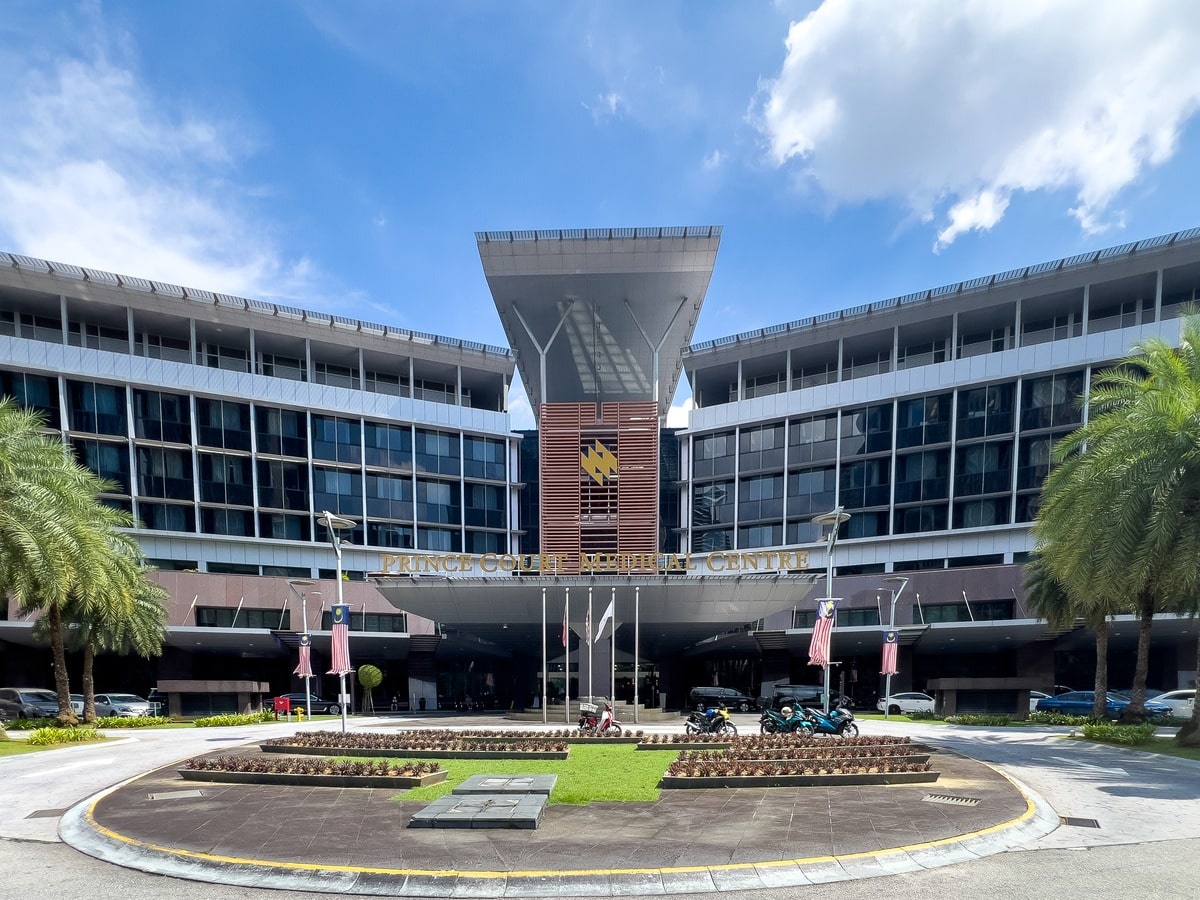
KUALA LUMPUR, Feb 24 — Last month, the High Court here dismissed a medical negligence lawsuit brought on behalf of a premature baby born at Prince Court Medical Centre (PCMC) in 2016.
In the neonatal septic arthritis case, from which the infant healed in a fortnight, Justice Leong Wai Hong awarded costs of RM350,000 each to consultant neonatologist and paediatrician Dr Anna Padmavathy Soosai and consultant paediatric orthopaedic surgeon Dr Mohd Azli Abdul Hamid, both of whom worked at the private hospital in Kuala Lumpur, as well as RM300,000 to PCMC, totalling RM1 million.
The medical negligence trial – which was heard over 33 days from May 8, 2023 to October 2, 2025 – involved the plaintiff, one of twins born prematurely on April 2, 2016, at PCMC who was diagnosed with left shoulder septic arthritis and treated for it. His twin sister didn’t develop the condition, a painful bacterial infection in a joint that can quickly and severely damage the cartilage and bone within the joint.
The plaintiff’s mother filed suit against Dr Anna (first defendant), Dr Azli (second defendant), and PCMC (third defendant) on behalf of her child on April 1, 2022, nearly six years after the baby was discharged on May 1, 2016, following full recovery.
The High Court rejected the plaintiff’s allegations against Dr Anna and Dr Azli of a delay in the diagnosis of septic arthritis, failure to take care to avoid the infections that led to septic arthritis, delay in the treatment of the plaintiff’s condition and/or failed to treat properly, plus a fourth allegation against Dr Azli of failure to ensure the treatment at the neonatal intensive care unit (NICU) was safe.
First Allegation: Delay In Diagnosis Of Septic Arthritis
According to Justice Leong’s 25-page written judgment released last January 22, after his verdict on January 19, the plaintiff’s own expert witness, paediatrician and neonatologist Prof Madya Dr Choo Yao Mun testified during cross-examination that there was “no delay” in the diagnosis of septic arthritis on April 17, 2016.
Based on notes of April 16, 2016, Dr Choo found that the plaintiff’s vital signs were normal and stable. Before he was shown these notes, the expert witness initially said the documentation wasn’t sufficient for him to say whether the septic arthritis could have been detected earlier than April 17.
Dr Anna said in her witness statement that she diagnosed the plaintiff with left shoulder septic arthritis on April 17, based on test results and her examination of the newborn earlier that day, in which she found him unable to move his left upper limb, with a mildly swollen left shoulder.
Justice Leong also rejected testimony by the plaintiff’s second expert witness, consultant orthopaedic surgeon Dr Mohamed Faizal Sikkandar, who initially opined in his report that sepsis should have been suspected and investigated earlier as there were, according to him, suggestive signs present at that stage.
However, under cross-examination, Dr Faizal conceded that the issue was beyond his expertise as an orthopaedic surgeon.
“The area lies with a neonatologist who specialises in newborn babies,” wrote Justice Leong in his judgment. “In my view, the Court should reject testimony by an expert who is testifying outside his area of expertise.”
Second Allegation: Failure To Take Care To Avoid Infections That Led To Septic Arthritis
Dr Anna’s expert witness, paediatrician and neonatologist Prof Madya Dr Neoh Siew Hong, opined that the first defendant didn’t fail to take care to avoid the infections that led to septic arthritis in the plaintiff.
The plaintiff’s own experts, Dr Choo and Dr Faizal, did not say there was such a failure by Dr Anna, Dr Azli, and PCMC.
“In conclusion, it is my view that the plaintiff has failed to prove his allegation there was a failure by Dr Anna to take care to avoid the infections which led to septic arthritis,” wrote Justice Leong.
Third Allegation: Delay In Treatment And/Or Failed To Treat Properly
Dr Anna’s expert, Dr Neoh, testified that Dr Anna didn’t delay treatment of the plaintiff and/or that she had failed to treat the infant properly. Even the plaintiff’s own experts, orthopaedic surgeon Dr Faizal and neonatologist Dr Choo, testified that there was no delay in treatment.
“In all fairness however, antibiotics were commenced as the signs became more evident, and the referral to the orthopaedic surgeon was done appropriately,” Dr Faizal said in his expert report.
Dr Choo agreed during cross-examination that there was no time gap between the time when septic arthritis was diagnosed and the antibiotics started.
“In conclusion, it is my view that the plaintiff has failed to prove the allegation that Dr Anna delayed in the treatment of the plaintiff’s condition and/or failed to treat properly,” wrote Justice Leong.
Incomplete, Inaccurate Notes Don’t Automatically Mean Negligence
Justice Leong noted that it is trite law that a medical practitioner who keeps incomplete or inaccurate notes is not “ipso facto negligent”, saying the plaintiff must still prove that the prescribed medicine or treatment wasn’t given to the plaintiff and thus caused the damage complained of.
The judge pointed out that the plaintiff’s own experts, neonatologist Dr Choo and orthopaedic surgeon Dr Faizal, had opined that the newborn was treated in a timely manner and that the infection had resolved.
The first defendant’s expert, neonatologist Dr Neoh, opined that “Dr Anna’s overall care of the plaintiff’s conditions was appropriate, reasonable and adequate at all material times”. She also found that the “plaintiff was managed in accordance with the standard neonatal protocol for premature infants”.
“Having gone through the evidence, my view is that the alleged failures to document care for 10 days and the alleged failure to monitor medication administration by the nurses [even if true, which are not proven] did not affect the treatment to the plaintiff,” Justice Leong wrote.
“The evidence shows the treatment administered to the plaintiff was effective. The plaintiff’s condition improved and he was discharged on 1 May 2016 when he was no longer suffering from sepsis.”
Allegation Of Performing Procedures In Ward Instead Of Sterile OT
The High Court similarly dismissed the plaintiff’s allegations against paediatric orthopaedic surgeon Dr Azli, which were the same as those against Dr Anna, plus a fourth allegation against Dr Azli of failing to ensure the treatment at NICU was safe.
The plaintiff’s witness, orthopaedic surgeon Dr Faizal, initially alleged that Dr Azli had erred and not acted in accordance with the usual and accepted practice when he performed five procedures in the ward and not in a sterile operating theatre (OT).
However, under cross-examination, Dr Faizal expressly admitted that the procedures performed by Dr Azli could actually be done either in the ward, clinic, or OT.
He agreed that it wasn’t wrong or unacceptable for Dr Azli to wash out and perform joint aspirations (draw fluid from the joint) in the NICU.
According to Justice Leong’s judgment, Dr Faizal “agreed and admitted that his statement is merely a bare statement and there are no statutory provisions, and neither are there any medical literature, guidelines, or any authority from any recognised body attached to his opinion, in support of his view.”
Allegations Of NICU Contamination With ‘Dirty Pampers Everywhere’, Nurses Not Wearing Gloves
Dr Anna, Dr Azli, and PCMC denied the plaintiff’s mother’s allegation of contamination in the NICU “with dirty pampers everywhere and dirt everywhere”. The High Court found the allegation to be unproven due to the lack of documentary evidence like photos or videos.
Furthermore, a “feedback” letter sent by the plaintiff’s parents to the private hospital didn’t complain of dirty diapers or dirt in the ward.
Justice Leong noted that the plaintiff’s twin sister and other babies didn’t develop septic arthritis.
On the plaintiff’s claim that PCMC previously acknowledged that one of the nurses at the NICU had attempted to pick up a newborn without using gloves, the judge characterised the plaintiff’s submission as inaccurate.
“The Hospital, in their letter dated 26 May 2016, had stated that a nurse attempted to pick up a newborn child (not the plaintiff) without using gloves, and she was immediately reprimanded by the NICU nurse manager,” said Justice Leong.
He also said the fact that there was no evidence of the plaintiff’s twin and other babies developing septic arthritis must mean that the allegation of nurses not wearing gloves wasn’t credible.
PCMC hospital records from 2015 to 2017 showed no septic arthritis cases or other hospital-acquired infections in the NICU, apart from the plaintiff’s case.
The High Court dismissed alleged monitoring and documentation system failures and systematic concealment of evidence by the private hospital.
“These allegations are not proven as the plaintiff had healed in a timely manner as I had narrated above,” wrote Justice Leong.
“In my view, the fact that the plaintiff recovered with no issue must mean there was no failure by the nurses to give the medication as prescribed. Further, the Hospital has shown the medicine was indeed administered.”
Premature Babies At Higher Risk For Infection, Germ Could Have Come From Family Members
On the possible cause of septic arthritis, Dr Anna’s expert, neonatologist Dr Neoh, testified that the plaintiff, being a premature baby, had a higher risk for infection due to his immature immune system.
The organism causing septic arthritis is Staphylococcus aureus (staph), a common bacterium that colonises the skin and mucous membrane of 30 per cent to 50 per cent of healthy adults and children. Health care workers and family members who are colonised may also serve as reservoirs for transmission, according to Dr Neoh.
However, she said there was no evidence that the plaintiff’s infection was caused by the defendants, as the preterm baby was well on April 16, 2016, when Dr Anna saw him, at 35 weeks corrected age.
The plaintiff was initially planned for discharge on April 18, but due to his septic arthritis diagnosis on April 17, the infant was discharged two weeks later on May 1, after completion of IV antibiotics. He was noted to be stable and could move his left upper limb.
Under cross-examination, Dr Neoh testified that the staph that infected the plaintiff could have come from anyone, even family members. When pressed if the bacterium was most likely transmitted by health care professionals at that time, Dr Neoh replied: “Not necessary.”
Plaintiff’s ‘Prolix’ Cases Against Two Doctors, Hospital
Justice Leong criticised the plaintiff’s pleaded cases of negligence and breach of contract against Dr Anna, Dr Azli, and PCMC as being “convoluted and prolix”.
Within the context of law, prolixity is defined as an unnecessary and superfluous statement of facts in a case.
Citing the late Sandra Day O’Connor – who was sworn in as the first female justice of the Supreme Court of the United States on September 25, 1981, under President Ronald Reagan – Justice Leong said lawyers should not engage in “prolix, repetitive, and unnecessary cross-examination” in a trial.
“While counsel has a duty to advance his client’s case zealously, counsel equally owes a duty to the court to do a structured cross-examination in the interest of the timely administration of justice.
“Unnecessary days taken for one trial will necessarily mean that other trials cannot proceed,” he wrote.
Justice Leong quoted from O’Connor’s book, “The Majesty of the Law: Reflections of a Supreme Court Justice”, in the first paragraph of his written ruling:
“Lawyers must do more than know the law and the art of practising it. A great lawyer is always mindful of the moral…aspects of [his] position as an officer of the court. The Constitution requires lawyers to represent their clients zealously…but nothing in the Constitution justifies advocacy so zealously that it exceeds the bounds of the law.”
As the trial took 33 days – which involved four expert doctors on a “difficult medical issue”, who were subject to “searching” cross-examination – Justice Leong described costs of RM350,000 each to Dr Anna and Dr Azli, and costs of RM300,000 to PCMC, as “fair and reasonable”.
The High Court also dismissed the hospital’s indemnity claim against its two doctors, besides Dr Anna’s counterclaim against PCMC.


