

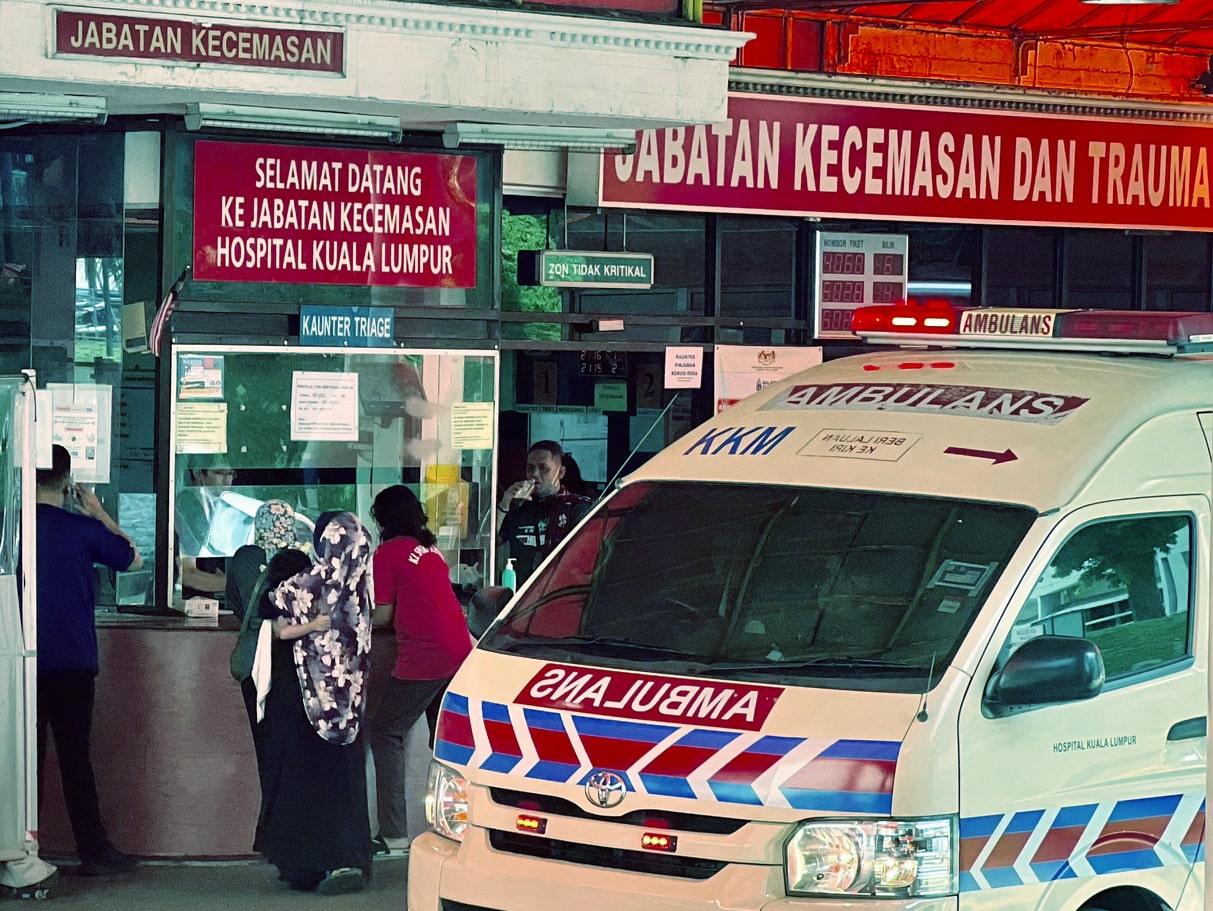
Much of the discussion in the comments section on CodeBlue’s Facebook post of its article titled “PTDs Play ‘Important’ Complementary Role In Health Service: PTD Association” appears to conclude that administrative and diplomatic officers (PTDs) are somehow a hindrance to the public health care system. That is a weak and misleading conclusion.
PTDs are not external actors interfering with health care delivery. They are themselves users and beneficiaries of the same public health care system. It would make little sense for any civil servant to deliberately undermine a system that serves their own families.
The confusion often stems from a misunderstanding of institutional roles.
PTDs do not formulate clinical policy, determine treatment protocols, or manage hospital operations. Those responsibilities sit with medical professionals and the Ministry of Health’s technical leadership.
The role of PTDs is administrative and supportive. They handle governance, budgeting processes, inter-ministerial coordination, procurement frameworks, human resource systems, and broader economic policy alignment. These are enabling functions, not clinical functions.
In complex public systems, support functions are often invisible. When they work well, they are taken for granted. When problems arise, it is easy to conflate structural bottlenecks with the individuals who administer parts of the system.
Public health care challenges, such as capacity constraints, funding trade-offs, demographic pressures, and procurement delays, are systemic issues. They reflect fiscal realities, policy design trade-offs, and long-term structural pressures. They are not the result of one cadre “standing in the way”.
If anything, administrative and economic officers are part of the machinery that keeps the system functioning within fiscal limits.
Criticism of health care policy without consideration for systemic health care challenges oversimplifies a complex governance structure.
One major issue that I see often in the comments section is with regards to promotion. This is a challenge for all services and not just the medical scheme. It is the nature of public service to be hierarchical, with a bigger base.
Even PTDs are not exempted from this issue. Its something that all civil servants have to accept that opportunities for promotions in a large organisation like the public sector is limited. Having said that, that does not mean that those who don’t obtain promotions do not get other benefits.
While the public sector cannot compete with the higher scale of private sector, the public sector do have major benefits of public service that the private sector may not offer. Among them are recession-resilient monthly income, regular salary revisions (like SSPA, SBPA, SSM, SSB), yearly increment regardless of economic standing, access to almost free education and health care (RM5 is considered free. Nowhere else in the world can we get top class health care service for RM5).
Another scheme not provided in the private sector is the GCR and Golden Handshake that all civil servants get at the end of their service life. These are gratuities for service.
A civil servant also get almost free housing and low housing interest rates (LPPSA). Education scholarship recipients get full ridership or partial. Free training when necessary. Paid conference attendance. International participation. Medical doctors have grade 56, which even PTDs don’t have.
Ultimately, the public health care system is not sustained by one scheme or one profession alone. It functions because every scheme operates together within a shared institutional framework.
Disagreements about policy, remuneration, or structural reform are normal in any evolving system. But reducing complex systemic challenges to inter-service blame does not strengthen the system; It weakens institutional cohesion and public confidence.
Civil servants, regardless of scheme, operate within a structure that demands professionalism, discipline and collective responsibility. When we speak publicly, our views are often interpreted as reflective of institutional positions, as if we metaphorically carry the Jata Negara on our chest. That carries both privilege and responsibility.
The conversation should therefore shift from assigning blame to improving coordination, enhancing mutual understanding and strengthening governance design. Public health care reform requires stronger cohesion and coordination.
At the end of the day, all of us serve the same rakyat and rely on the same system. The objective is not to pit one scheme over another. The objective is to ensure that the system remains sustainable, credible and capable in delivering quality care for the rakyat, including civil servants themselves.
The author is a civil servant. CodeBlue is providing the author anonymity because civil servants are prohibited from writing to the press.
- This is the personal opinion of the writer or publication and does not necessarily represent the views of CodeBlue.


