

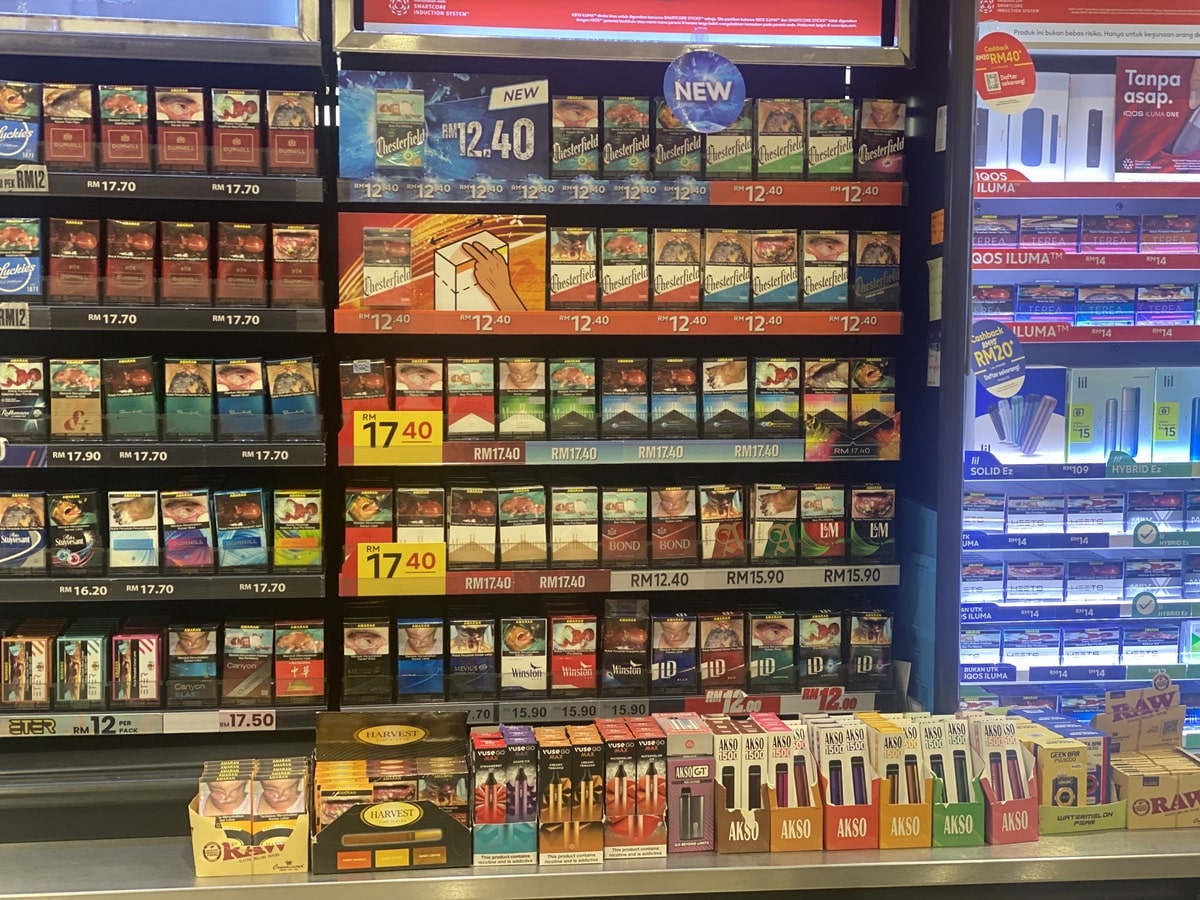
The Galen Centre for Health and Social Policy calls upon the Malaysian government to immediately increase excise duties on cigarettes, cigars, heated tobacco products, and all other tobacco products, following Singapore’s announcement of a 20 per cent across-the-board increase in tobacco excise duty effective February 12, 2026.
Singapore’s move is a clear reminder that higher tobacco taxes are a proven, effective way to reduce smoking and protect public health. The World Health Organization (WHO) has repeatedly affirmed that raising tobacco excise taxes and prices is among the most effective and cost-effective measures to reduce tobacco use.
Malaysia should not lag behind. Price gaps between neighbouring countries can unintentionally fuel cross-border demand and criminal smuggling networks.
If Malaysia keeps tobacco relatively cheaper, we risk becoming a convenient “supermarket” where tobacco products are legally purchased here and then smuggled into Singapore as contraband.
This would undermine both countries’ public health goals, depriving governments of revenue, and empowering organised crime.
Malaysia should not be a supply base, directly or indirectly, for illicit tobacco flows into our neighbours. A stronger excise regime reduces affordability, discourages uptake among youths, supports quitting, and narrows the price incentive that smugglers exploit.
What the Malaysian government should do now is initially increase excise duties on cigarettes by at least 20 per cent. Currently, on average, excise duties on cigarettes bring in RM3.3 billion annually.
An increase of 20 per cent on cigarettes alone would bring in an additional RM500 million per year in excise revenue. We can do with an additional half a billion ringgit for health care.
Currently, for every RM1 collected from tobacco taxes, Malaysia spends RM4 for the treatment and care of people stricken with smoking-related diseases such as lung cancer. The current tax collected is disproportionately lower than the cost of treating smoking-related diseases.
This additional revenue also needs to be earmarked or ringfenced for smoking cessation services, enforcement capacity, and prevention programmes, especially those focused on youth interventions.
The government needs to tighten anti-smuggling measures at key transit points (including Johor’s border corridors), and strengthen intelligence-led enforcement against syndicates.
Malaysia has already signalled willingness to adjust excise duties in recent fiscal policy measures. The next step must be bolder and sustained because the health and economic burden of tobacco-related disease remains severe.
Azrul Mohd Khalib is the chief executive of the Galen Centre for Health and Social Policy.
- This is the personal opinion of the writer or publication and does not necessarily represent the views of CodeBlue.


