

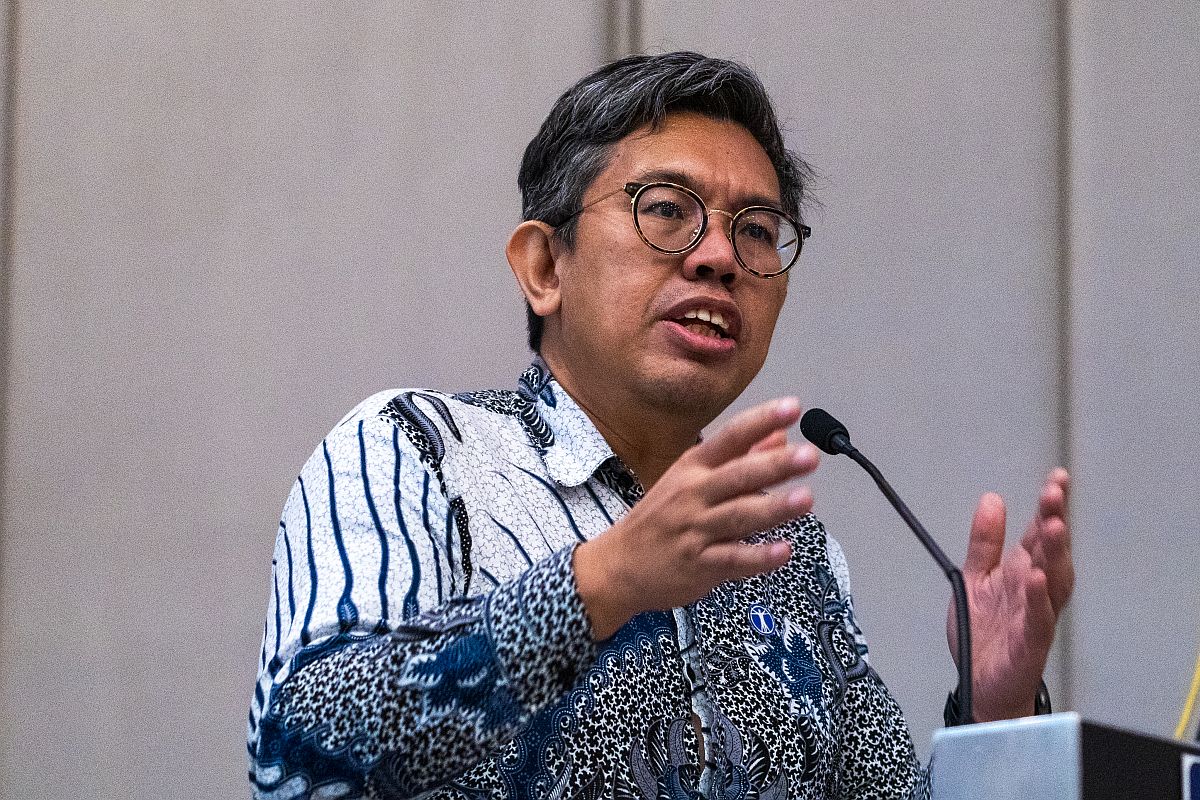
KUALA LUMPUR, Feb 27 — The Galen Centre for Health and Social Policy has called on the government to immediately begin recruiting foreign housemen and medical officers to address what it describes as an “existential” health workforce crisis in Malaysia.
Galen Centre chief executive Azrul Mohd Khalib said Malaysia should move without delay to establish accreditation and recruitment pathways to bring in foreign medical graduates, including from countries such as Indonesia, to serve in the public health system.
“Malaysia should immediately proceed with setting up accreditation and recruitment processes to allow housemen and medical officers from other countries to come, be trained, and work in Malaysia,” Azrul told CodeBlue.
“The shortage of health care workers is exceptional (as opposed to business as usual) and an existential issue which needs to be immediately addressed.”
Azrul added that Malaysia is not insulated from global competition for health workers, as many countries are now facing similar manpower shortages.
“Many countries around the world are facing similar issues and are forced to compete for health care workers to address limited manpower problems. Malaysia is not exempted from this challenge,” he said.
Azrul argued that recruiting foreign housemen and medical officers is a necessary immediate step, as longer-term measures to strengthen the domestic pipeline will take years to yield results.
“Fundamentally, there are also fewer students in secondary school interested in pursuing a career in STEM subjects, and even fewer in medicine, particularly with the worsening of prestige and work-life balance conditions in health care,” he said.
“Health care is competing with fields such as engineering, computer science, AI, space science, and even coding for the same students. With fewer STEM students, there will be fewer students taking medicine and health sciences, fewer students doing biomedicine, fewer lab technicians, fewer housemen who will successfully become medical officers, and fewer of them become specialists.”
Azrul warned that the downstream impact of declining interest in health careers could undermine the functioning of the health system.
“With fewer doctors, nurses, medical assistants, and other health care workers, hospitals and clinics will not be able to be operational. The manpower situation in Malaysia has become existential. Addressing the manpower shortage will take at least a decade if we start today,” he said.
Beyond immediate foreign recruitment, Azrul said Malaysia must broaden how it develops its future health workforce, particularly by strengthening incentives for students to pursue science and health-related fields.
“One key area is the need to provide incentives to encourage students to do STEM subjects and embark on careers in health care. The government needs to increase the availability and diversity of health related scholarships and loans to include nursing, allied health, biomedical sciences, laboratory sciences, AI in medicine, hospital management, and many others,” Azrul said.
“It cannot solely be focused on medicine to produce doctors. That is antiquated thinking.”
The call comes amid mounting concerns over workforce shortages in the public health system. The Ministry of Health (MOH) reported recently that only 53 per cent of housemanship posts nationwide are filled, with about 6,500 positions occupied out of a capacity of 12,198 across 48 training hospitals.
Despite appointing all 579 applicants in the first intake of 2026, the cohort filled only about 10 per cent of total vacancies, underscoring a widening gap between workforce needs and incoming supply.
The MOH has attributed the shortfall to a combination of declining numbers of medical graduates entering the public system and longstanding maldistribution of health workers across facilities. It has also maintained that housemen should not be treated as an “extra pair of hands”, but trained based on structured learning outcomes.
The government is pursuing longer-term structural reforms, including phasing out the contract doctor system, improving staff welfare and incentives, and strengthening workforce planning with higher education institutions.
Health Minister Dzulkefly Ahmad recently said that all medical graduates who applied for housemanship have been placed in government training hospitals, despite overall fill rates remaining just over half of total capacity.
However, the worsening shortfall in house officers, with nearly half of training posts unfilled nationwide, is increasingly straining service delivery in public hospitals and raising urgent questions about how quickly gaps in frontline care can be addressed.


