

In principle, I support employer-employee contributions for a National Health Fund (NHF), as health and social care need specific or earmarked funding to complement annual government allocations from general taxation.
I believe that mandatory income deductions will dramatically increase demands for accountability from the national health service and simultaneously encourage individual Malaysians to take greater responsibility for their health.
But the government cannot assume automatic public support for statutory contributions to NHF.
While Health Minister Dzulkefly Ahmad has repeatedly cited difficulties in asking the finance minister for allocations to raise the public health care budget to 5 per cent of the country’s gross domestic product (GDP), I daresay that asking millions of Malaysians and businesses for mandatory income deductions is a much bigger request.
As editor-in-chief of CodeBlue, which has published countless articles on health worker shortages and dissatisfaction in the understaffed and underfunded national health service, I understand the need for a significant boost in funding.
But as a private citizen, I want the government to make some sacrifices of its own before asking the same of hardworking Malaysians.
Even if the government maintains that curbing corruption, leakages or inefficiencies isn’t enough to substantially boost the public health care budget, the one thing that Putrajaya can do to show solidarity with the people is to cut the perks and privileges of top senior civil servants.
Eliminate benefits like official cars, personal drivers, and business-class flights for official travel from secretaries-general, directors-general, and their deputies, among other senior government officials.
Senior civil servants in Singapore and the United Kingdom do not receive entitlements like personal chauffeurs. So why should Malaysia provide such privileges?
At the risk of generalisation, senior civil servants may feel that they’re not accountable to the people despite making policies that affect the lives of millions of Malaysians.
By virtue of their stature, which is visibly demonstrated through perks and privileges, senior civil servants sit in their ivory towers and only deign to see the hoi polloi when they want to. Some with a superiority complex are accustomed to using people as a means to an end, while presenting their personal agendas as public interest in a feigned maverick style.
I’m not asking for DOGE-like cuts, especially to a certain scheme that is roundly disliked by health care workers, but a small symbolic sacrifice by the crème de la crème of the civil service to show that we’re all in this together.
Although I believe that Members of Parliament are overpaid, with monthly allowances exceeding RM25,000, much of an elected representative’s pay goes back to their constituents, with handouts for emergencies or events like weddings and funerals.
An MP’s work mostly involves constituency duties, rather than policymaking, as backbenchers have a very limited role in the legislature where bills are generally drafted by civil servants and routinely passed by parliamentarians.
Statutory contributions to an NHF should be expanded to Malaysia’s entire workforce, including informal workers and civil servants. For the latter, the government must make contributions as their employer too.
The B40 should not be exempted from NHF statutory contributions either. They can pay lower rates, but they must still contribute a sum, even if it’s as little as RM10 a month.
Expecting the middle class to shoulder the cost of public health care services that are mainly utilised by the lower income is unfair and will likely create feelings of resentment, especially when the middle class pay for personal health insurance to access private health care.
Dzulkefly’s proposal for “targeted” payroll deductions for health comes at an inopportune moment when the Inland Revenue Board (LHDN) is harassing middle class individuals and businesses for taxation, like the CP500 notice which I myself received after faithfully declaring my rental income for years.
So it’s all the more crucial for NHF statutory contributions to be made across the board — naturally the rich pay more and the poor pay less. But everyone pays for health.
The government can fully subsidise unemployed or minimum-wage workers for NHF contributions; this isn’t an exemption, as their contributions are paid for by the State. After their wages rise, the government subsidies can end.
When everyone contributes, this creates a shared sense of ownership over the public health care system.
If the government wants to introduce a bill in Parliament for statutory contributions for public health care, it must offer tangible and immediate benefits. I personally do not want to contribute my income, only to see it disappear into a black hole in the Ministry of Health’s (MOH) budget.
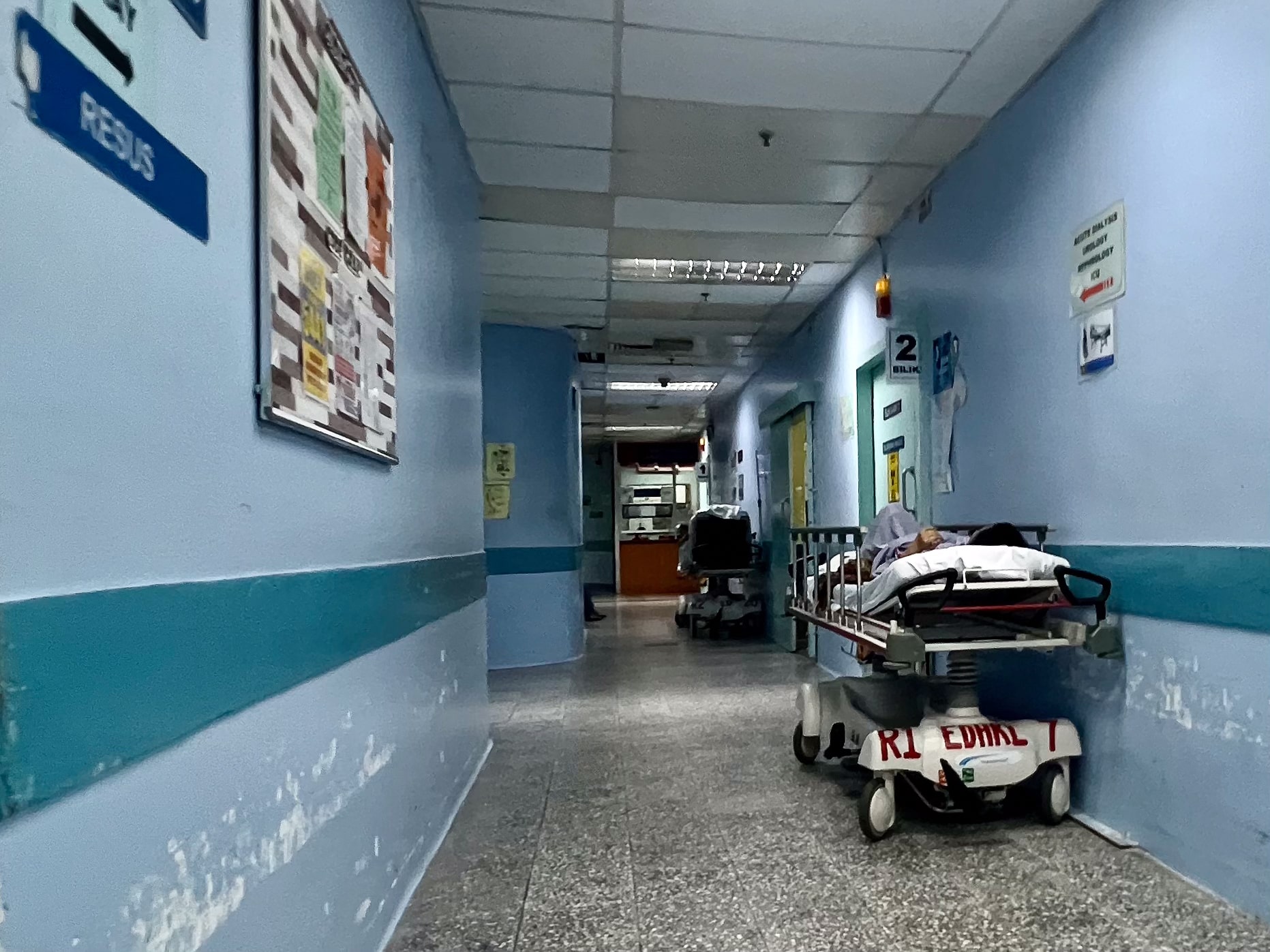
For starters, obviously public health care facilities can no longer be in dilapidated conditions, like black mold on a toilet ceiling in a hospital.
Realistically, a shorter waiting time – which is the main reason why Malaysians seek private health care – cannot be immediately delivered upon establishment of the NHF.
So the government should offer coverage of general practitioner (GP) visits or annual health screenings or vaccinations in private health care facilities as a start. The MOH’s Hospital Services Outsourcing Programme (HSOP) can be expanded with NHF funding.
The NHF should also cover social or aged care, as there is a dearth of such services in the public sector.
A Health Service Commission (SPK) – which will regulate health care professionals separately from other civil servants under the Public Service Commission (SPA) – can also be established with NHF funding.
MOH deputy secretary-general (finance) Zahrul Hakim Abdullah previously told the Health parliament special select committee in March 2025 that an SPK would incur significant financial implications.
A separate service commission can create new remuneration schemes to retain doctors, nurses, and other health care professionals.
With statutory contributions to NHF, the public will expect far better services in public health care facilities, as the government can no longer say that health care just costs RM1. So MOH must be prepared to meet those demands.
If I’m required to contribute my income to NHF, I expect the government to end its generic-first policy and to provide innovative medicines in public health care facilities. While generics are safe and effective, people’s bodies are different. Clinicians and patients must be free to choose drug regimens that yield the best patient outcomes — this is the value-based health care frequently touted by Dzulkefly.
Procurement tenders by the MOH must also be much more transparent.
Proposing an NHF with payroll deductions is a bold move two years before a general election. But Dzulkefly’s target of implementing it this year or the next is unrealistic because such a major proposal requires public town halls across the country, unless the Madani government intends to disrespect voters with fait accompli stakeholder engagements.
Before tabling a bill mandating wage deductions for health, the health minister should aim for low-hanging fruit and first get a constitutional amendment bill passed in Parliament to enable revenue from pro-health taxes – tobacco, vape, alcohol, and sugar-sweetened beverages (SSB) – to be earmarked and diverted to the NHF.
This can be done as early as this year. Parliamentarians are likely to support the bill since it doesn’t directly impact the rakyat.
There is no shortcut to reform. The Madani government must seek genuine consultation with ordinary Malaysians, businesses, and MPs before introducing statutory NHF contributions.
But if the government of the day isn’t prepared to cut top senior civil servants’ perks and privileges, commit to transparency, or put its own skin in the game with employer contributions for civil servants and subsidies for the impoverished, then it should drop the health care financing proposal.

Boo Su-Lyn is the co-founder and editor-in-chief of CodeBlue.
- This is the personal opinion of the writer or publication and does not necessarily represent the views of CodeBlue.


