

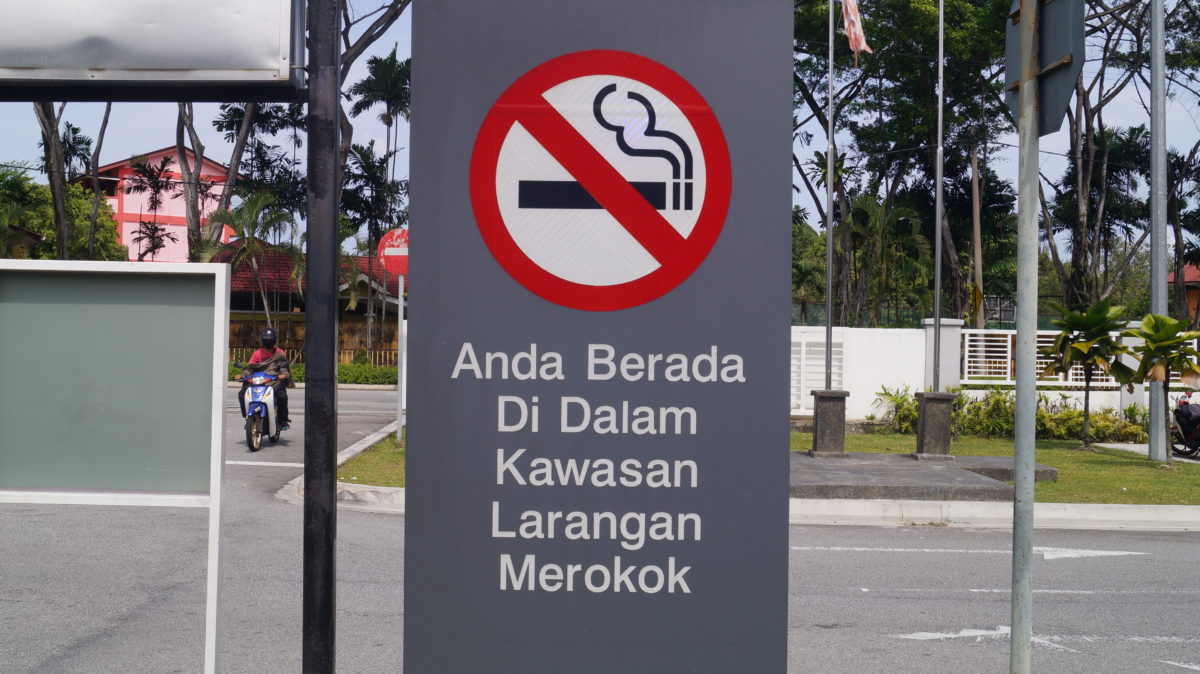
The prohibition of smoking in public places and workplaces is not merely a matter of discipline or comfort, but is firmly grounded in strong scientific evidence on the harmful effects of tobacco smoke on public health.
Recent medical studies confirm that there is no safe level of smoking, including light or occasional smoking.
Even in the absence of early symptoms such as coughing or shortness of breath, doctors affirm that as little as one cigarette per day or five to six cigarettes per month is sufficient to cause significant damage to the lungs and cardiovascular system, beginning at the blood vessel level and potentially leading to serious and life-threatening diseases.
In this regard, the public is reminded that the definitions of “area” and “building” for smoke-free zones are broad and comprehensive, in accordance with the Control of Smoking Products for Public Health (Declaration of Smoke-Free Areas or Places) Order 2024.
- “Area” refers to the entire premises, including all spaces within the building and surrounding areas within the boundary fence or land lot of the premises, including underground parking areas.
- “Building” refers to all areas within the building, including walkways and areas within three metres from the building line, including areas under any permanent additional roof structures connected to the main building.
This means that smoking outside a building but still within the designated boundary remains an offence.
From an air quality perspective, scientific findings show that tobacco smoke does not dissipate immediately from a smoker’s lungs. Hazardous fine particulate matter PM2.5 in the lungs may take more than eight hours to be fully released.
Consequently, even if a smoker smokes outdoors, smoke retained in the lungs continues to be exhaled when the smoker returns indoors, repeatedly throughout the day.
Monitoring of PM2.5 levels in smokers’ homes has demonstrated that indoor air quality remains unsafe, significantly increasing the risk of tobacco-related diseases among family members, colleagues, and the general public.
Furthermore, international findings including those from the United States’ Centers for Disease Control and Prevention (CDC) consistently show that designated smoking areas, even with ventilation systems, fail to protect indoor air quality.
Tobacco smoke and PM2.5 particles are found to spread into adjacent non-smoking areas, rendering separation or ventilation approaches ineffective. Research confirms that only comprehensive smoke-free policies can effectively protect public health and significantly improve indoor air quality.
This press statement also serves as a reminder that smoking is prohibited in workplaces and while performing duties, including among e-hailing drivers and food delivery riders. This prohibition is enforced under the Control of Tobacco Products Regulations 1993, Control of Tobacco Products Regulations 2004, and the latest provisions under the Control of Smoking Products for Public Health (Control of Sale) Regulations 2024 and the Control of Smoking Products for Public Health (Declaration of Smoke-Free Areas or Places) Order 2024.
The prohibition is further supported by the Industry Code of Practice on Indoor Air Quality 2010, the Occupational Safety and Health Act 1994, the Land Public Transport Act 2010 (Section 203), and the Food Hygiene and Safety Regulations 1994 under the Food Act 1983.
In line with this, Grab Malaysia has enforced a zero-tolerance policy on smoking for drivers and delivery partners during bookings or deliveries. Users are entitled to smoke-free services, and any violations—including cigarette odour or unhygienic vehicles—may result in suspension or permanent deactivation from the platform.
According to Malaysian Council for Tobacco Control (MCTC) president Dr Murallitharan Munisamy, full compliance with smoking prohibitions is essential to achieve three key objectives:
- Protect everyone from the dangers of tobacco smoke, including secondhand smoke and toxic residues.
- Reduce smoking prevalence and support smokers in quitting, as smoke-free environments are proven to facilitate cessation efforts and reduce addiction triggers.
- Protect children from infancy from being influenced and from normalising smoking behaviour in public spaces.
Meanwhile, MCTC secretary-general Muhammad Sha’ani Abdullah urges the public not to support business premises that allow employees to smoke, as a form of positive social pressure towards a smoke-free Malaysia.
He also recommends that e-hailing drivers, taxi drivers and food delivery riders who smoke be reported through platform rating systems.
In addition, he emphasises the importance of implementing Treasury Circular 4.1, which assigns security personnel at government premises the responsibility to advise and enforce smoking prohibitions effectively in all smoke-free areas.
Smoking prohibition is a public health measure grounded in science, law, and shared social responsibility. Compliance by all parties is the key to creating a safer, healthier and smoke-free environment for present and future generations.
This press release was issued by the Malaysian Council for Tobacco Control.
- This is the personal opinion of the writer or publication and does not necessarily represent the views of CodeBlue.


