

KUALA LUMPUR, Dec 26 — Capacity constraints in Malaysia’s organ transplant system are driving some patients, largely those who can afford it, to seek transplants overseas, often at far higher cost and with limited legal oversight.
In a report tabled in Parliament on November 27, the Health Parliamentary Special Select Committee (PSSC) said shortages in domestic facilities and specialist capacity have pushed an estimated 20 Malaysians every month to undergo transplant procedures abroad, most of them wealthy or high-profile individuals.
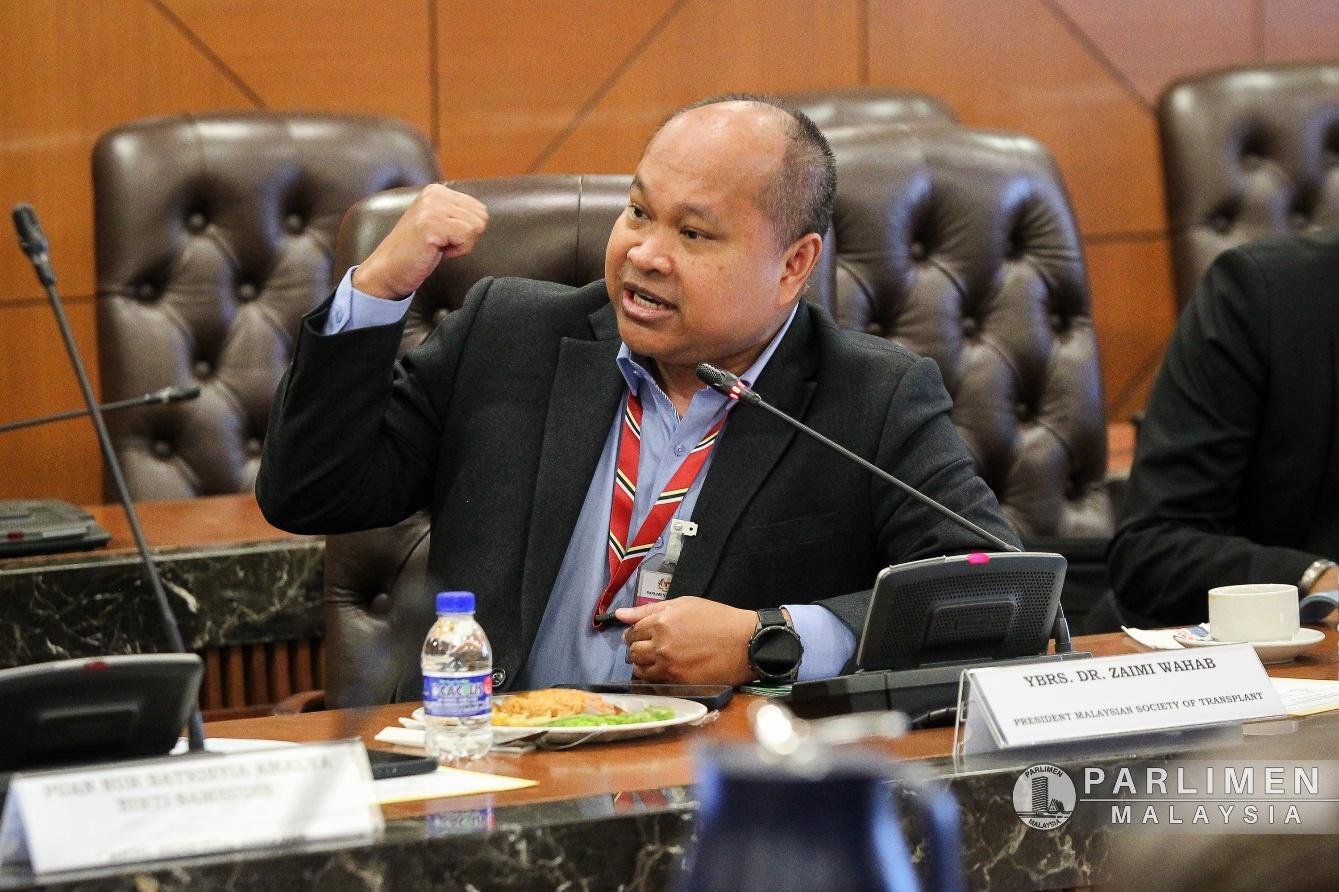
At a committee proceeding on October 29, Dr Mohamad Zaimi Abdul Wahab, president of the Malaysian Society of Transplantation, cited data showing that kidney transplantation remains more cost-effective than long-term dialysis, despite high upfront costs.
Based on a 2010 study, he said, a kidney transplant in Malaysia costs about RM83,000 in the first year, followed by roughly RM17,000 a year for post-transplant care. Dialysis, by contrast, costs about RM40,000 per patient annually.
“But this study is quite old,” said Dr Mohamad Zaimi, who is also a transplant nephrologist at Kuala Lumpur Hospital (HKL). “We need new studies.”
During the Covid-19 pandemic, when public hospitals such as HKL were overwhelmed, the Ministry of Health (MOH) outsourced transplant procedures to private hospitals at negotiated, discounted rates.
“During Covid-19, we outsourced transplants to KPJ Tawakal because HKL was full with Covid patients,” Dr Mohamad Zaimi said, according to the Hansard in the Health PSSC’s report. “For that outsourcing, we negotiated the price and paid only RM25,000 to KPJ Tawakal for one transplant. At Sunway, we paid only RM30,000 per pair, per transplant.”
Those prices no longer apply, he said. “If you do it in the private sector now in Malaysia – at Prince Court, for example – you have to pay about RM160,000 for living donor plus recipient,” Dr Mohamad Zaimi said. “At Sunway, it’s around RM180,000.”
By comparison, patients travelling overseas, particularly to Cambodia, which Dr Mohamad Zaimi described as a current hotspot, can pay as much as US$250,000, or nearly RM1 million, for a transplant.
Beyond the cost, patients who undergo transplants abroad also face limitations in post-operative care once they return home. “It is illegal to buy kidneys,” Dr Mohamad Zaimi said. “But as I said, we have no law to govern that.”
While they remain eligible for follow-up treatment in Malaysia, they do not receive government-funded immunosuppressive drugs – lifelong medication required to prevent organ rejection.
“The MOH has a policy. Because we don’t support these activities, they will not get immunosuppression from us. We can provide other treatments, but the anti-rejection drugs, they have to purchase themselves,” Dr Mohamad Zaimi said.
Without those medications, transplanted organs are likely to fail, raising concerns about patient outcomes and long-term costs.
How Organs In Malaysia Are Allocated
Dr Mohamad Zaimi said Malaysia’s organ allocation system has historically prioritised patients by time on dialysis, resulting in long waiting periods that have pushed some who can afford it to seek transplants overseas.
Under this earlier system, allocation was based largely on how long a patient had been on dialysis. “If you have been on dialysis for 20 years, you are number one,” he said.
But that approach had serious clinical drawbacks. “We also know that the longer you are on dialysis, the poorer your transplant outcome will be,” Dr Mohamad Zaimi said. As a result, Malaysia’s post-transplant survival rates – measured at one and five years – have lagged behind those of other countries.
Until 2020, he said, Malaysia did not use a formal points-based system commonly adopted elsewhere, partly because of limitations in immunology services. “By right, you need a point system. That is what is implemented in other countries,” he said.
Malaysia has since shifted to a new method known as the Estimated Post-Transplant Survival (EPTS) score, which prioritises patients most likely to benefit from a transplant. The system applies to patients aged 18 to 60 – about 30,000 people – from whom only the top 40 per cent are deemed eligible to enter the transplant waiting list of roughly 10,000 patients.
Dr Mohamad Zaimi said the combination of long waiting times, limited eligibility, and uncertainty over outcomes has led some patients, particularly those who can afford it, to seek transplants overseas rather than remain in the domestic queue.
There are currently 10,736 patients in Malaysia awaiting transplants: 10,707 for kidneys, five for livers, 12 for hearts, three for lungs, and nine for combined heart-lung transplants.
Shortage Of Specialists Limits Transplant Capacity
MOH officials said a shortage of highly trained specialists further limits Malaysia’s ability to expand transplant services.
Dr Adilah A. Bakar, senior assistant director-general at MOH’s medical development division, told lawmakers that transplant surgery is not a standalone specialty, but part of a long training pathway within existing disciplines.
For liver transplants, she said, a doctor must first complete four years of general surgical training, followed by another four years of subspecialty training in hepatobiliary surgery before being qualified to perform transplants.
“We try to place urology surgeons and hepatobiliary surgeons in every state,” she said. “But many of our specialists move to the private sector, so even maintaining coverage in each state is very challenging, let alone running transplant programmes.”
She added that transplant surgeons are also responsible for a wide range of other complex procedures, including cancer surgery and stone surgery, which further limits capacity. “Our effort is to ensure that all urology and hepatobiliary surgeons are able to perform transplants,” she said, “but at the same time we must strengthen laboratory support.”
Dr Adilah further noted that kidney transplantation depends heavily on compatibility testing, requiring specialised laboratory services, pathologists and immunology subspecialists – another bottleneck in the system.
“This is not a specialty where after four years of training, you can immediately do transplants,” Dr Adilah said. “It is very challenging for our health system to produce transplant specialists and to retain them.”
She said resignations among specialists pose a recurring problem. To address this, the MOH is broadening training pathways so more surgeons are qualified to perform transplants and building succession plans to ensure continuity. Retired specialists are also being reappointed on sessional or contract terms to support existing teams.
“We are looking at this from many angles,” she said. “The specialists themselves agree that we need to strengthen the system so it can be sustained.”
The Health PSSC recommended that the MOH, the Ministry of Higher Education (MOHE), and the Public Service Department (JPA) strengthen human capital development and career pathways for transplant specialists.
This would include developing specialised curricula, advanced training, and shared on-call systems across public hospitals, university hospitals and the private sector to ensure continuity of expertise.
The Health PSSC also recommended that the MOH and the Ministry of Finance (MOF) recognise transplant programmes as a national priority area, with dedicated annual budget allocations to safeguard the sustainability of transplant operations, training, and research nationwide.


