

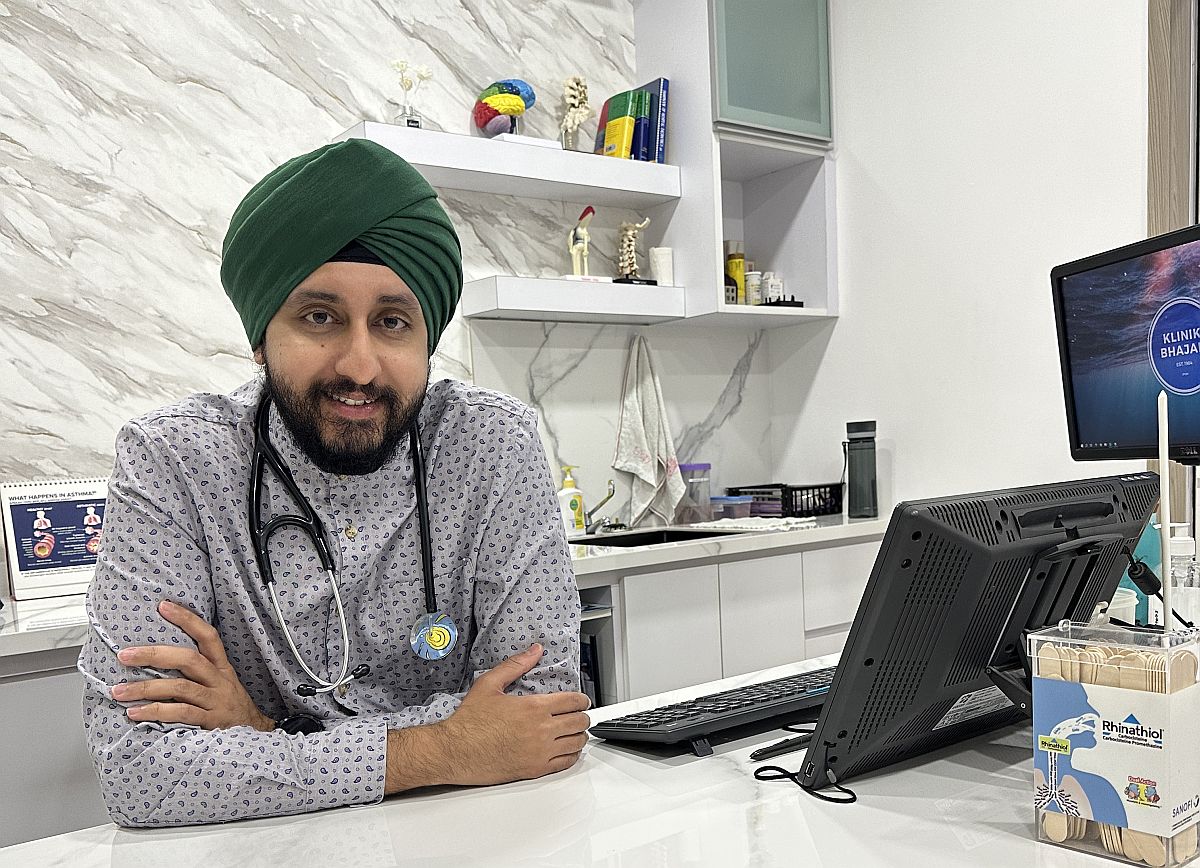
I grew up in a household where both my parents were general practitioners (GPs). Our family clinic has been serving the same community for more than 40 years.
I literally grew up among patients, prescriptions, and the quiet smell of Dettol and records stacked high behind the counter. Over the last few decades, I have seen general practice in Malaysia evolve from a respected cornerstone of community health care into a profession that’s increasingly overregulated, underpaid, and under siege.
When the Prime Minister recently announced that GP consultation fees could now go up to RM80, many assumed this was a long-overdue victory for private practitioners.
But for those of us on the ground, it felt like yet another half-measure, a policy dressed up as reform, but hollow in substance.
Because at the same time, the government chose to retain the RM10 minimum fee. And that decision, frankly, makes a mockery of the profession.
When the announcement was made, my phone started buzzing non-stop. Many of my non-medical friends messaged me saying things like, “Finally, your struggle is over,” and “Wah, now you kaya lah!”
They meant well, they thought the issue had been solved.
But that’s just it: they saw the RM80 ceiling, not the RM10 floor. They didn’t realise that the announcement changes almost nothing for most GPs.
It was another illusion of progress, one that sounds good in headlines, but means little in practice.
Who pays a professional RM10 in 2025? What other skilled field in this country values a qualified professional’s time, training, and responsibility so cheaply?
The Reality On The Ground
Most GPs today cannot freely charge RM80 even if they wanted to. We are bound by corporate and insurance panel schemes controlled by third-party administrators (TPAs) who dictate consultation fees.
Many of these TPAs still pay clinics a pitiful RM25 per consultation, whether the visit lasts ten minutes or an hour. To make things worse, they take another five to ten percent off as an “admin fee.”
These TPAs are supposed to facilitate access to care, but in reality, they have become profit machines that siphon earnings from both patients and doctors.
They collect payments from corporate clients, then pay GPs as little as possible while keeping a cut for themselves.
For years, we were told that a revision of the fee schedule would help correct this imbalance that by setting a higher ceiling and reasonable minimum, TPAs would be forced to pay fairly.
But with the RM10 floor still intact, nothing will change. In fact, it gives TPAs a legal justification to keep underpaying us.
This is not progress. This is exploitation made official.
Years Of Advocacy, And Still No Change
I have been a GP for nearly eight years now. During this time, I have attended countless advocacy meetings and discussions.
I have been part of the closed-door meeting with the current health minister during his first term. I joined the Putrajaya Walk, where hundreds of GPs gathered to voice our frustrations and hopes for fair reform.
We have engaged, negotiated, and waited patiently, professionally, respectfully. But nothing has changed. If anything, it has become harder to survive as a GP.
Instead of support, we have been buried under more oversight, more regulation, and increasing competition from the very sectors that were once supposed to be our allies.
Pharmacies now offer consultations, medical labs market directly to the public, and hospitals, despite their enormous profit margins, are encroaching on the bread and butter of primary care: chronic disease management, health screenings, and basic medical check-ups.
Even labs, who claim to be our “partners,” have quietly siphoned patients from our corporate clients, bypassing the referring doctors entirely. It’s a betrayal that has become normalised.
Every corner of the system seems designed to squeeze the GP a little more.
The Public Perception Problem
Over the years, every time an article advocating for fair GP fees gets published, I read the comments, and they sting.
The public, and sometimes self-proclaimed consumer rights groups, rush to accuse us of being “money-minded” or “greedy.” They claim that doctors already earn enough and that health care should remain cheap and accessible.
What they fail to see is that most GPs are small business owners, not corporate executives. We pay rent, staff salaries, insurance, taxes, and the ever-rising costs of medical supplies, often from our own pockets.
To be accused of greed for simply asking to be paid fairly for our time and expertise is not just unfair, it’s deeply hurtful. It makes us question how little our years of training, responsibility, and compassion are valued.
We enter this profession to heal, not to haggle. But when fair payment becomes a fight, it disheartens even the most dedicated among us.
I wish the public could see that our call for fair fees is not about profit, it’s about survival and sustainability. A GP who cannot sustain their practice cannot continue serving the community.
The RM10 Myth
The justification for retaining the RM10 floor is that it helps “protect the uninsured and low-income patients.” But that logic is deeply flawed.
A policy that forces doctors to undervalue their service does not protect the poor, it only ensures that clinics close, and access becomes worse for everyone.
If affordability is the concern, the solution should be subsidies or targeted government support, not a nationwide price ceiling that locks GPs into poverty rates. No other profession is told to serve the public good by devaluing their own work.
The irony is, the RM80 ceiling sounds generous, but very few clinics can even charge close to that under current TPA contracts. Without a fair minimum, the new fee structure does nothing to correct decades of imbalance. It is like repainting a house whose foundation has already cracked.
The Cost Of Staying Open
Running a clinic today is not simple or cheap. Rent, medical consumables, EMR systems, regulatory compliance, and staff wages have all increased. Yet, our consultation fees have barely changed for nearly two decades.
The math doesn’t work anymore. A RM10 or RM25 consultation barely covers overheads. In many cases, doctors see patients at a loss simply to keep their clinic running.
And when TPAs delay payments or reject claims for trivial reasons, the situation becomes even worse. Some clinics wait months to receive payment for services already rendered. Imagine running a small business where your biggest clients decide when, or if, they feel like paying you.
What We Need
It’s time to face the reality that the current model is unsustainable. The government needs to:
- Set a realistic minimum fee. RM10 is insulting. RM50 should be the baseline for a professional consultation in today’s economy.
- Regulate TPAs properly. No more arbitrary “admin fees,” delayed payments, or exploitative contracts.
- Introduce targeted subsidies for low-income patients, rather than forcing GPs to absorb the cost.
- Prevent anti-competitive practices by hospitals, labs, and pharmacies that encroach into GP domains under the guise of “public access.”
- Index consultation fees to inflation, so that we don’t wait another 17 years for the next revision.
A Plea From The Frontline
This isn’t about greed or money. It’s about survival and fairness. My parents built their clinic with care, trust, and long hours, not for profit, but for the people they served.
I continue that same mission, but the system now feels designed to wear us down rather than support us.
General practice is the backbone of Malaysia’s health care system. When GPs fail, the entire system falters.
Patients lose accessible, affordable, and continuous care. Hospitals become overcrowded. Preventive medicine suffers.
So no, this is not just about a consultation fee. It’s about the respect, sustainability, and dignity of the profession that keeps Malaysia healthy.
I have been quiet for all this time, but not anymore.
The writer is a general practitioner who has been in practice for over seven years. He represents the second generation of doctors in a 40-year-old family clinic and is an active member in the Perak Medical Practitioners Society, Malaysian Medical Association, and is a Independent GP Owners group founding member.
- This is the personal opinion of the writer or publication and does not necessarily represent the views of CodeBlue.


