

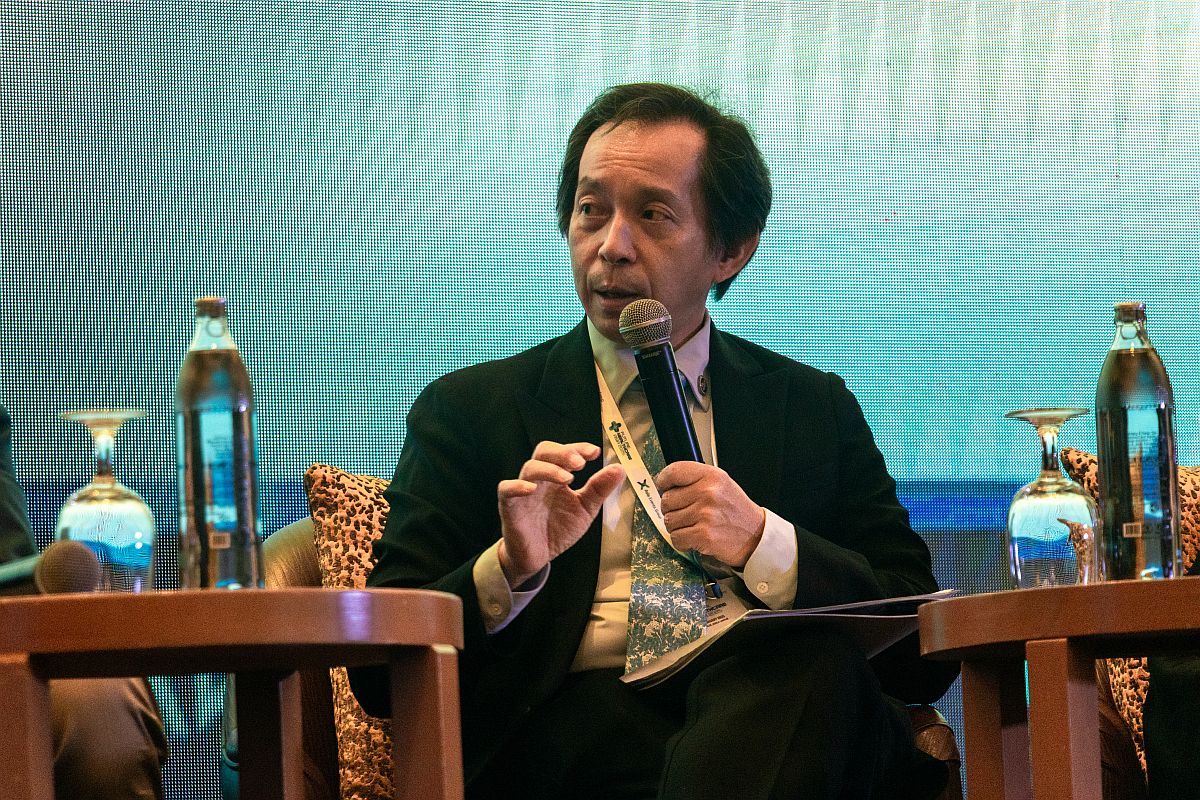
KUALA LUMPUR, April 16 — Many palliative medicine specialists in Malaysia cannot work full time in the field as they are required to divide their time with internal medicine, despite rising demand for end-of-life care.
Hospis Malaysia CEO Dr Ednin Hamzah said although about 46 hospitals in the country offer palliative care, coverage remains inadequate, with some hospitals having only one palliative medicine specialist.
“Many palliative care specialists in the country are not allowed to work full-time in palliative care. Half their time is spent on internal medicine, looking after NCDs,” Dr Ednin said during a panel discussion at Future Healthcare Asia 2025 last February 18.
“When we say we have palliative care, the reality is that the effort being put in is extremely low, apart from major cities. Outside of that, you virtually have no palliative care, so coverage is extremely low.”
According to Health Minister Dzulkefly Ahmad’s Dewan Negara reply on March 11, there are 67 geriatric specialists nationwide—37 in public hospitals, 14 in university hospitals, and 16 in private hospitals.
A total of 20 public hospitals offer geriatric subspecialty services, with 37 resident specialists and 20 geriatric units, except in Perlis, Terengganu, Putrajaya, and Labuan.
Beyond coverage gaps, Malaysia lacks legislation on palliative care, unlike the Philippines, Taiwan, and South Korea, Dr Ednin said. During the Covid-19 pandemic, many palliative care services in Malaysia were repurposed for internal medicine. In contrast, Singapore expanded palliative care significantly, particularly in community centres.
“We have a good health care system, an ageing population and a rising prevalence of NCDs. But the reality is that when you look at standards of end-of-life care, we were ranked 33 out of 40 in 2010,” Dr Ednin said.
“This was the Economist Intelligence Unit’s assessment of the quality of end-of-life care. In 2021, we dropped to 62 out of 80 countries. We are the second worst in Asia—everyone else is ranked higher.”
Dr Ednin added that policymakers often focus on “healthy ageing” but overlook end-of-life care.
“You’re healthy in your 60s, 70s, 80s, but are you immortal? I’ve attended many meetings with the World Health Organization (WHO) and others, and policymakers keep talking about healthy ageing. Interestingly, patient groups talk about healthy dying because we have not been able to achieve immortality. The aged will die.
“No matter how advanced technology becomes, people will develop Alzheimer’s, become dependent on others. Caregiving shortages, institutionalised care, loneliness, and isolation—these are major issues Malaysia must face.”
He said education and training are also lacking, with only about five of Malaysia’s 30-plus medical schools including palliative care in their syllabus. “Even then, it’s just one or two hours compared to other specialties,” he added.
Malaysia Must Invest In Aged Care Now

Galen Centre for Health and Social Policy CEO Azrul Mohd Khalib said Malaysia has made almost no investment in aged care, largely because it is viewed as a private or family responsibility.
“In the Asian context, if you’re old, your family is expected to take care of you once you’re above the age of 65,” he said. “But we don’t invest, we don’t set up proper structures, and as a result, the elderly are left at the mercy of their family members.”
Without systemic support, he said, many older Malaysians are at risk of neglect or abandonment.
“If you’re lucky, you have supportive family members,” he said. “If not, you end up neglected, infected, or abandoned in hospitals—something we saw happen recently during Chinese New Year.”
Association of Private Hospitals Malaysia president Dr Kuljit Singh, who moderated the discussion, said there is little awareness of the issue at the national, state, and local government levels.
“Palliative care may not be receiving the level of interest and concern we expect,” he said.


