

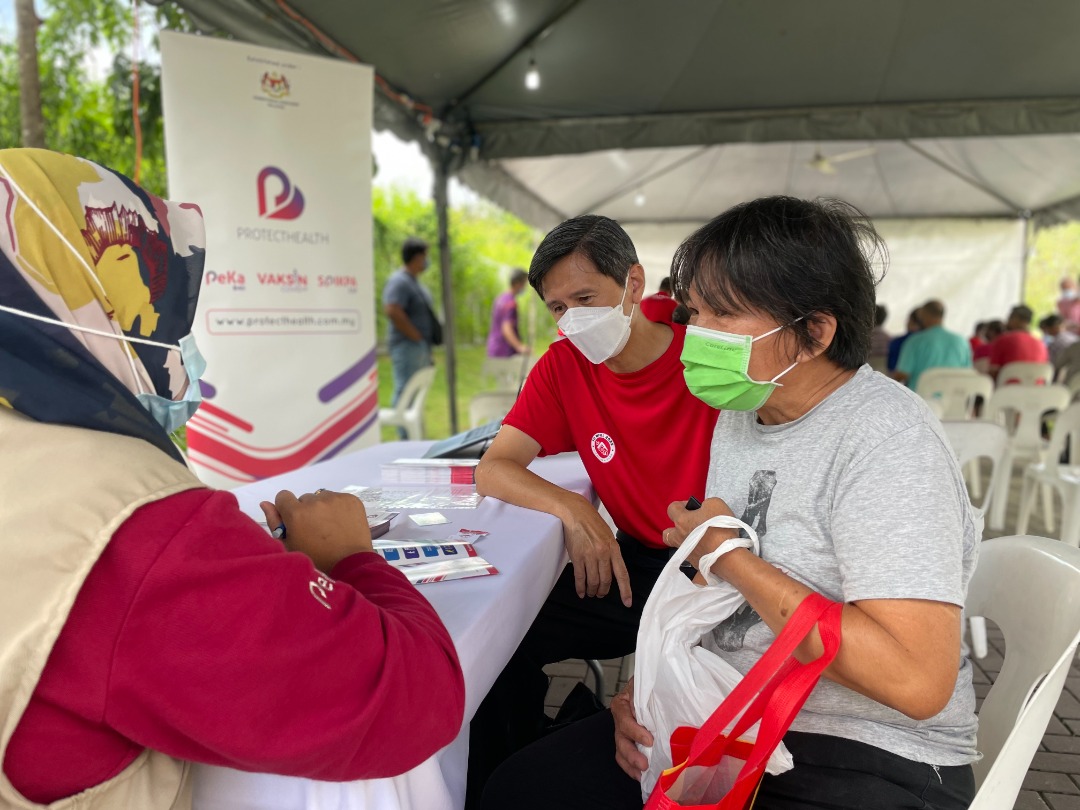
KUALA LUMPUR, March 19 — The health screening rate under the Peka B40 scheme has improved, reaching a national average of 22.04 per cent, but remains below 20 per cent in several states, including Selangor and Kuala Lumpur.
As of January 31, 2025, a total of 1.53 million individuals had undergone screenings under Peka B40, a government initiative aimed at early detection of non-communicable diseases (NCDs) among lower-income groups.
This represents 22.04 per cent of eligible recipients, Health Minister Dzulkefly Ahmad said in a Dewan Negara reply on March 12, marking an increase from 10 per cent in 2022.
However, in states like Selangor and Kuala Lumpur—home to millions of urban poor—screening rates remain under 20 per cent, well below the national average.
In contrast, smaller states and rural areas have seen stronger participation. Kelantan leads the country with 36.5 per cent of its eligible population screened, followed by Kedah (31.6 per cent) and Perlis (28.5 per cent). Sarawak, Perak, and Terengganu have all recorded participation rates above 25 per cent.
Meanwhile, several states remain below the 20 per cent mark, including Penang (18.65 per cent) and Johor (18.04 per cent). Selangor, the country’s economic hub, lags at just 14.1 per cent, while Kuala Lumpur is lower at 10.8 per cent. Labuan, a small federal territory, has the lowest participation nationwide at 10.2 per cent.
The disparity raises questions about access and awareness in urban areas, where health care services are widely available but preventive care is often overlooked.
While rural communities may be more receptive to government health drives, many city dwellers—often juggling long work hours and financial pressures—may not prioritise routine screenings.
Dzulkefly noted that 41 per cent of those screened were diagnosed with at least one NCD, such as hypertension, diabetes, or high cholesterol. “This proves that early health screenings play a crucial role in prevention, early detection, and improving the quality of life in the community,” the health minister said.
To boost awareness, ProtectHealth has launched several initiatives, including outreach programmes, promotional and awareness campaigns, media publicity, and strategic collaborations with ministries, agencies such as the Malaysian Communications and Multimedia Commission (MCMC), Senior Citizens Activity Centre (PAWE), and the Malaysian Medical Association (MMA), as well as NGOs to improve access for the B40 group, particularly in rural areas.


