

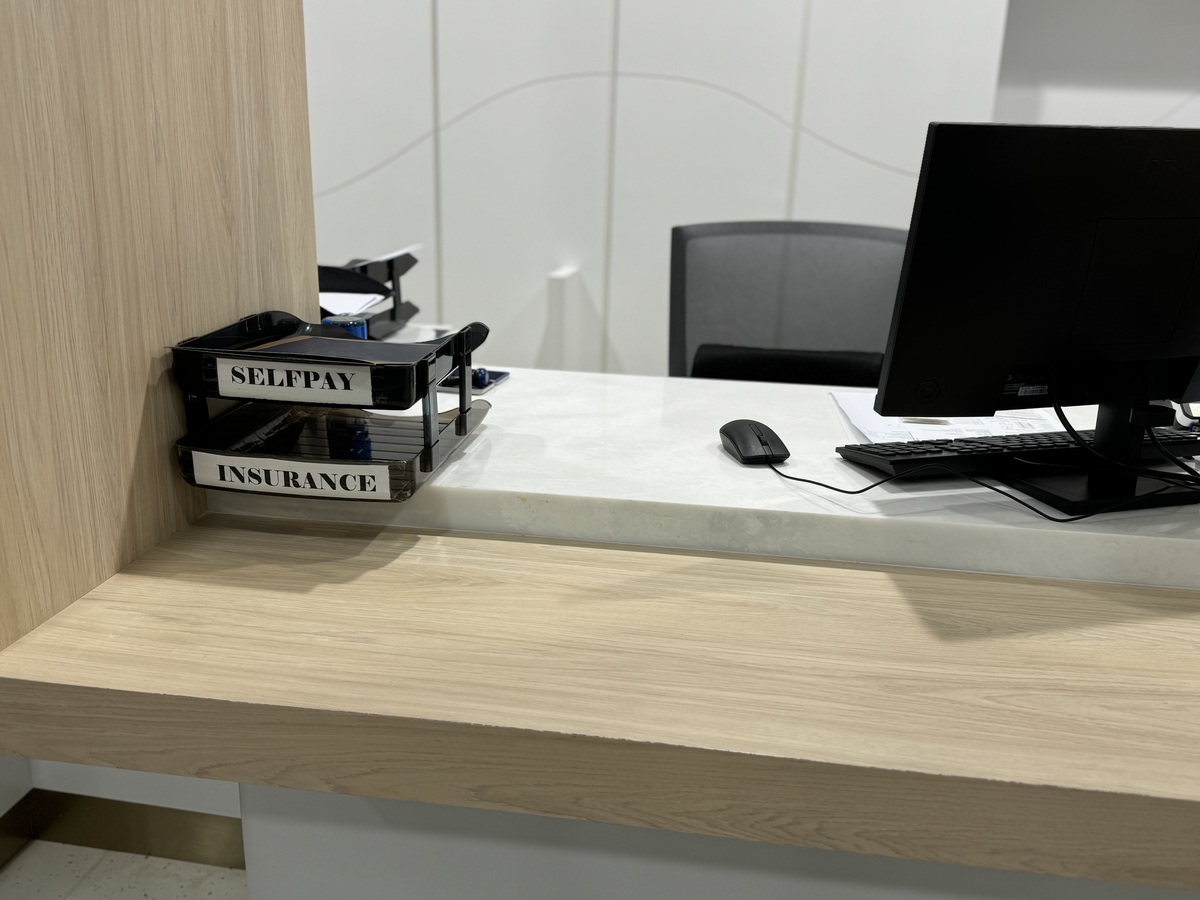
KUALA LUMPUR, March 14 — Insured patients often pay less for medical treatment than those paying out-of-pocket (OOP), as private hospitals provide insurers with discounts, according to the Association of Private Hospitals Malaysia (APHM).
The APHM, which represents private health care providers, cited a third-party study of 10,000 cases that found little difference in costs between patients covered by insurance and those who pay directly. In some instances, insured patients paid even less due to discounts negotiated by insurers, APHM president Dr Kuljit Singh said.
“This matter (different charges for insured and non-insured patients) is always brought up by the public and sometimes by the insurance side. But the truth is it doesn’t happen,” Dr Kuljit said on the Keluar Sekejap podcast co-hosted by Khairy Jamaluddin and Shahril Hamdan.
“In fact, what surprised us is that insurance patients actually pay less because we always give discounts to insured patients. This is because insurance companies always request discounts of 10 per cent, 20 per cent,” he added.
Dr Kuljit said comparisons on the discrepancies in hospital charges between insured and self-paying patients were often based on limited data from insurers and did not account for variations in treatment needs.
“I’ll give you an example. If it’s dengue, not all dengue cases are treated the same. Some dengue cases require more treatment, while others can be discharged within a day or two,” Dr Kuljit explained. “But when someone looks at two bills and tries to compare, they don’t understand that the cases may be different.”
APHM honorary secretary Anwar Anis said while hospitals under APHM charge the same rates for procedures regardless of payment method, treatment choices may differ. He said self-paying patients may opt for outpatient care due to cost concerns, while insured patients are more likely to proceed with hospitalisation if recommended by a doctor.
“What we are concerned about is that the comparison being made does not provide details on whether the comparison is between patients with the same length of stay—whether it’s three days, four days—or if the comparison is between inpatient admission and just daycare treatment.
“What can happen is—let’s say I’m a patient. I come to the hospital with dengue. If I have an insurance card, the doctor might say, ‘You need to be admitted—your haemoglobin is low, you need admission.’ So, okay. Maybe they will monitor, need admission for two to three days, and then discharge.
“But if I’m a cash-paying patient, the doctor might say I need to be admitted. But I say, ‘Doctor, I can’t afford admission. Can you just do a blood test, give me medication, and I’ll come back tomorrow as an outpatient to see if I really need admission?’
“So, it is how the treatment is rendered. It is not because hospitals intentionally charge differently for insured versus cash-paying patients,” Anwar said.
Shahril pointed out that insurance coverage could also lead to unnecessary admissions. Anwar acknowledged this but emphasised that hospitals must justify admissions to insurers.
“Yes, that can happen. I think we cannot deny that it can happen. But again, the reality is that to get an admission, the hospital has to provide data to the insurance company.
“We have to request a guarantee letter. Requesting a guarantee letter is not just the doctor filling out a form. We have to provide blood test results, and so on. Or, if it’s an admission for a fracture, we need to provide an X-ray.
“The insurance side will not issue a guarantee letter without proof that the patient requires admission. So, that process is already in place.
“What we are concerned about is that the data being presented does not have a solid framework stating that the comparison is indeed for admitted patients and for the same length of stay,” Anwar said.
Private health care costs in Malaysia have been under scrutiny, with lawmakers calling for greater transparency in billing practices. APHM said it has shared its findings with Parliament’s Public Accounts Committee (PAC) in a closed-door proceeding on March 10 and called for a more comprehensive analysis of medical billing data.


