


Three Chinese nationals who previously had close contact with an infected person in Singapore were the first cases of Covid-19 reported by Malaysia on January 25, 2020.
The first local case was confirmed 10 days later, on February 4, 2020. He acquired it whilst in Singapore, attending a conference. He passed it to his younger sister, who became the first case of Covid-19 acquired by local transmission.
This was the first wave of Covid-19, which had a total of 22 cases.
As of February 8, 2025, there have been 5,334,921 cases of Covid-19, with 37,351 (0.7 per cent) deaths.
Prevalence Of Covid-19 Cases In Children
In 2020, there were 7,730 cases among children less than 11 years old. In 2021, there were about 379,245. And for the first three months of 2022, there have been 119,719 cases.
This is probably an underestimate because children are often asymptomatic, less tested, less detected and therefore least reported.
The United States Centers for Disease Control and Prevention (CDC) seroprevalence studies showed that 38 per cent of children were infected with Covid-19.

Complications Of Covid-19 In Children
The infectious Omicron variant has led to several serious complications in unvaccinated children.
- The increased number of children infected has led to outbreaks in households, daycare centres, kindergartens and schools.
- 2.5-fold increase in children being hospitalised.
- Twofold increase in children admitted to the Intensive Care Unit (ICU) for serious Covid-19 infections, namely due to MIS-C (Multisystem Inflammatory Syndrome in Children).
- More deaths have been reported in children below 18 years old. In 2020, there were six deaths, which increased to 110 deaths in 2021. There were 22 deaths in the first three months of 2022.
- Notwithstanding, the case fatality rate (CFR) in the pediatric age group was 0.02 per cent as compared to 0.57 per cent in the adult population, which is 29 times more deadly. The risk of Covid-19 deaths in children less than 18 years is approximately 2 per million.
Risk And Benefits Of Covid-19 Vaccines For Children
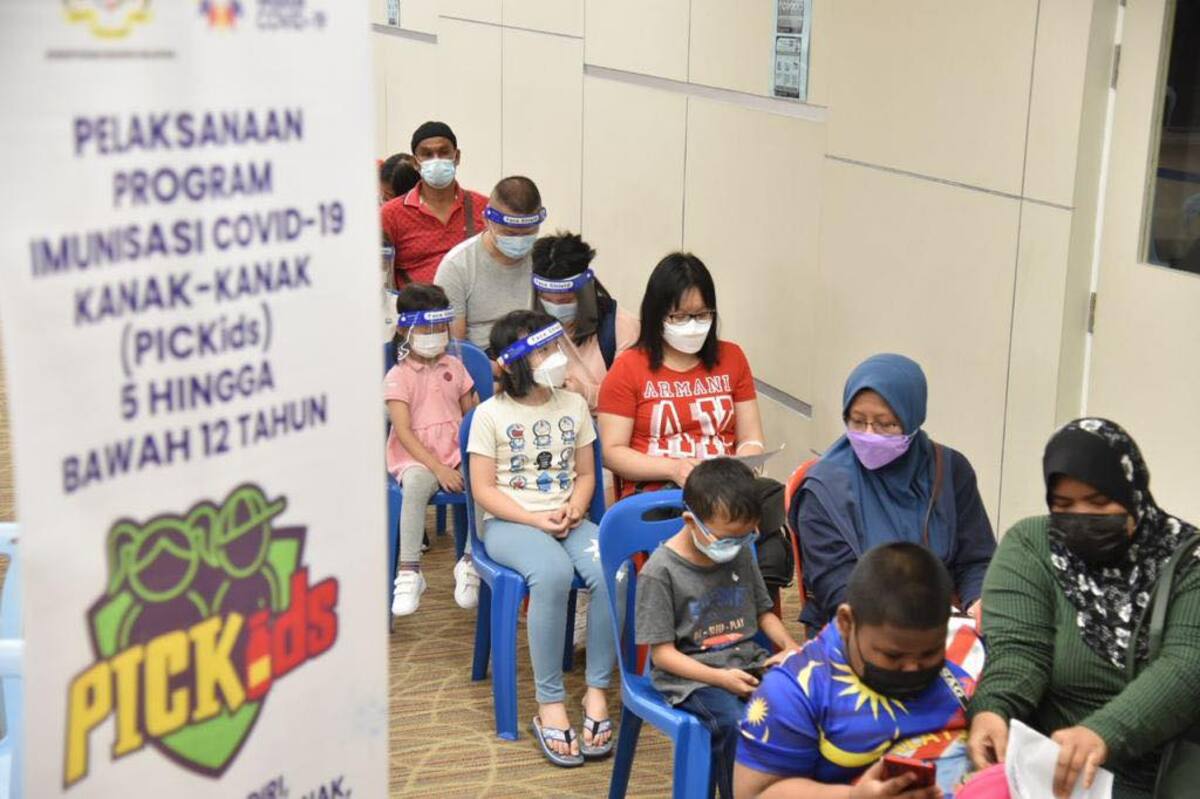
In the United States, about eight million doses of Pfizer-BioNTech Covid-19 vaccines have been prescribed to children aged 5 to 11 years, from November 3 to December 19, 2021.
Adverse Event Following Immunisation (AEFI) reported for children aged 5 to 11 years (N = 42,504) were mostly mild and brief, and consisted mainly of pain at the injection site, fatigue, and headaches.
There were 11 reported cases of myocarditis and all of the affected children recovered fully after 2 to 7 days. There were no causal links to any deaths.
The National Pharmaceutical Regulatory Agency (NPRA) reported the use of 1.1 million doses of mRNA vaccines up until March 11, 2022. There were 182 reports of AEFI, a rate of 0.17 per 1,000 children, which is very similar to reports from Canada and Australia. 97 per cent of the AEFI were non-serious and did not affect the child’s daily activities.
These were mainly fever, pain at the injection site, headaches, and body aches, which often disappeared after one to two days. There were five children with serious AEFI who were hospitalised and were later discharged.
All parents and guardians should be reassured by these facts and should not become victims of disinformation and misinformation disseminated by anti-vaccine groups.
Choice Of Covid-19 Vaccines For Children
Our local researchers studied the effectiveness of the Pfizer and Sinovac vaccines after a period of three to five months.
Protection gained from the Sinovac vaccine waned from 76 per cent following immunisation to 28 per cent after three to five months.
The mRNA (Pfizer) vaccine was more effective, dropping from 89 per cent to 68 per cent. The Ministry of Health (MOH) has recommended mRNA (Pfizer) as the vaccine of choice for children aged five to 11 years old.
If the child develops a severe reaction to the mRNA (Pfizer) vaccine or its contents, they should switch to the Sinovac vaccine.

Comparison Of Mortality Rates With Other Vaccine Preventable Diseases (VPD)
In the five years from 2015 to 2019, influenza has claimed the lives of 668 children in the US. On the other hand, Covid-19 killed 737 children in a span of two years from 2020 to 2021.
There were more deaths per year due to Covid-19 compared to other VPDs before the introduction of the respective vaccines.

MIS-C And Long Covid
These are two long-term consequences of Covid-19 infection in children,
The MIS-C Malaysia Study Group recorded 174 cases which usually develop two to six weeks after Covid-19 infection. 57 per cent involved children aged 5 to 11. MIS-C caused seven deaths (4 per cent).
The estimated effectiveness of two doses of the mRNA vaccine against MIS-C was 91 per cent. A US study from July to December 2021, during the Delta variant surge, found that 95 per cent of patients aged 12 to 18 hospitalised with MIS-C were unvaccinated.
No fully vaccinated patients with MIS-C required respiratory or cardiovascular life support, compared with 39 per cent of unvaccinated MIS-C patients who did.
Review of the largest studies to date estimated long Covid to affect about 10 to 20 per cent of children and young adults.
Symptoms could vary and affect one or multiple organs and systems, including the heart, brain, and lungs. Symptoms such as dizziness, an increased heart rate, or feeling tired, persisted for or developed at least four weeks after Covid-19 infection.
One in six children and younger persons in Singapore developed long Covid. Common symptoms were cough (7.4 per cent), nasal congestion (7.6 per cent), and fatigue (3.0 per cent), persisting three months after Covid-19 infection.
Long Covid was more likely to occur after a severe infection or infection with symptoms, such as coughing, headaches, or loss of taste or smell, but could occur after an infection without symptoms.
Children could also develop new conditions, such as diabetes, myalgic encephalomyelitis (ME), chronic fatigue syndrome (CFS), or MIS-C after an infection.
Conclusions
Malaysia has built a strong and resilient immunity wall, contributed by the wide coverage of vaccination and natural immunity acquired from Covid-19 infection (16 per cent).
84.4 per cent of the total population are immunised with two doses of the vaccines. 92.8 per cent of children 12 to 17 years old and 43.3 per cent of children 5 to 11 years old are vaccinated with the second dose.
With this formidable community immunity, Covid-19 has now become relegated to an endemic coronavirus, like the four human coronaviruses — HCoV-229E, -NL63, -OC43, and -HKU1 — which contribute a considerable share of upper and lower respiratory tract infections in adults and children.
This is in conformity with the thoughts of the majority of experts surveyed by the magazine Nature that SARS-CoV-2 was either very likely or likely to become an endemic virus.
Dr Musa Mohd Nordin and Dr Husna Musa are paediatricians.
This article is part of a special CodeBlue series marking the fifth anniversary of the World Health Organization declaring Covid-19 as a global pandemic on March 11, 2020.
- This is the personal opinion of the writer or publication and does not necessarily represent the views of CodeBlue.


